


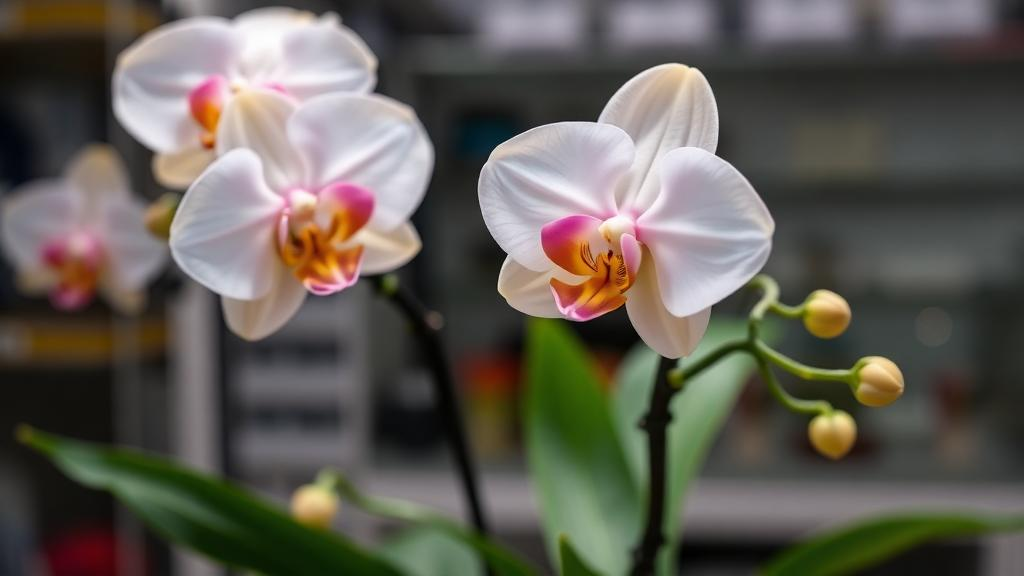
Vanilla is no ordinary flavoring. The smoky-sweet compound that perfumes ice cream, chocolate, and countless desserts traces back almost entirely to a single orchid species, Vanilla planifolia, a climbing vine native to Mexico whose seed pods contain vanillin, one of the most economically important aromatic molecules on the planet. Yet behind the familiar taste lies a plant in genuine trouble. Decades of cloning by cuttings have stripped cultivated vanilla of genetic diversity, leaving crops highly vulnerable to pests, fungal diseases, and drought. Wild populations have collapsed so severely that the species now sits on the International Union for Conservation of Nature Red List and is the only member of its genus listed under the Special Protection category of Mexico’s official conservation standard. The growing global appetite for natural vanillin has made it urgent to find faster, safer, and more reliable ways to multiply the best vanilla plants without pushing wild stocks further toward the brink.
Plant tissue culture, the art of growing whole plants from tiny pieces of tissue in sterile glassware, has become the workhorse strategy for mass-propagating promising vanilla genotypes. Micropropagation offers clear advantages over conventional cuttings: dramatically reduced propagation time, exclusion of pathogens, and the ability to conserve genetic lines for the long term. But the technique is far from perfect for this species. Vanilla explants can be stubbornly reluctant to form shoots, plantlet establishment rates can disappoint, and the fragile plantlets that do emerge often struggle during acclimatization, the stressful transition from the humid, sterile culture flask to the real world. Researchers therefore keep hunting for additives that can coax better growth out of vanilla cultures, and one unexpected candidate has now taken center stage: silicon, the second most abundant element in Earth’s crust and an increasingly celebrated biostimulant in plant science.
Silicon is not classed as an essential element for most plants, but a growing body of evidence shows it can enhance growth, nutrient uptake, chlorophyll production, and tolerance to both biotic and abiotic stresses. In orchids specifically, silicon supplementation has been shown to increase chlorophyll content and promote the deposition of hemicellulose and lignin, thickening cell walls and fortifying plantlets against the shocks of acclimatization. The catch is that silicon can be delivered in very different chemical forms, and the form matters enormously. The silicates most commonly dissolved into nutrient solutions, potassium silicate and sodium silicate, hydrolyze in water to produce silicic acid, the only form plants can readily absorb. Until now, almost nothing was known about how silicon affects vanilla in tissue culture, and a team of Mexican researchers has just published the first systematic test of the question.
Working at the Plant Tissue Culture Laboratory of the Institute of Biotechnology and Applied Ecology at Universidad Veracruzana, Javier Camacho-Morales and colleagues, writing in the journal Discover Agriculture, grew nodal segments of the vanilla morphotype known as Mansa on a growth-regulator-free Murashige and Skoog medium. Each one-centimeter segment carried at least one axillary bud, the microscopic meristem from which new shoots arise. The team compared two silicon sources, hydrated silicic acid and sodium silicate pentahydrate, across six concentrations ranging from zero to five millimoles per liter, in a completely randomized design with five replicates per treatment. After ninety days in a growth chamber held at 26 degrees Celsius under a sixteen-hour photoperiod, the researchers measured a full battery of variables: survival, plantlet size, the number and length of shoots, roots, and leaves, dry biomass, and the content of photosynthetic pigments extracted from leaf tissue and quantified by spectrophotometry.
The verdict was strikingly one-sided. Silicic acid outperformed sodium silicate at essentially every concentration tested. At the lowest dose, one millimole per liter, silicic acid lifted survival from roughly seventy percent in the untreated controls to nearly ninety-five percent, and produced the highest values for shoot formation, node production, shoot length, and root length of any treatment in the experiment. Sodium silicate, by contrast, hovered at or below control performance for most variables. Its single bright spot came at two millimoles per liter, where plantlets produced more roots and leaves while maintaining a length similar to the controls, but even this benefit failed to translate into taller shoots. At higher sodium silicate concentrations, growth deteriorated noticeably, with reductions in shoot number, leaf production, and plantlet length making it the most damaging of the two sources.
The dose-response pattern followed a classic biological phenomenon known as hormesis. Low concentrations of the compound stimulated beneficial processes, while higher concentrations progressively suppressed them. Dry matter accumulation told the same story: plantlets receiving the lowest silicic acid dose achieved the highest dry biomass percentage at 2.91 percent, indicating efficient organic matter accumulation, whereas high concentrations of either silicon source reduced dry matter, suggesting that excess silicon can actively inhibit development. Photosynthetic pigments followed suit. Although the differences did not reach statistical significance, total chlorophyll peaked at 4.36 milligrams per gram of fresh weight under one millimole per liter of silicic acid, compared with 3.46 in the controls, hinting at a genuine boost to photosynthetic capacity that faded as concentrations rose.
Why would two chemicals that both deliver silicon behave so differently? The answer lies in aqueous chemistry. Silicate salts dissolve in water to form extremely alkaline solutions with pH values between eleven and twelve, conditions under which silicon exists largely as monosilicate ions. As concentration rises, or when the solution is adjusted, silicon atoms begin linking together through siloxane bonds in place of silanol groups, forming dimers, cyclic ions, polymers with more than twenty distinct species, and eventually silica gels that lock the element away from any plant trying to absorb it. Silicic acid itself has limited solubility of roughly one hundred to one hundred thirty parts per million at neutral pH, but below pH eight it remains overwhelmingly monomeric, the form roots and meristems can actually take up. Supplying silicic acid directly therefore sidesteps polymerization entirely and avoids dumping extra sodium, potassium, or calcium ions into the medium, preserving the delicate ionic balance that tissue-cultured plantlets depend on.
The concentration ceiling also carries a warning. In other orchids, notably Dendrobium secundum and Cymbidium atropurpureum, high levels of monosilicic acid actually reduced seedling survival, and in Cattleya loddigesii moderate silicate doses increased root number and shoot expansion while higher doses inhibited growth. The Veracruz team observed hints of another phenomenon as well: some explants exposed to higher silicon concentrations developed translucent, thickened tissues characteristic of hyperhydricity, a physiological disorder of in vitro plants linked to excessive water availability and impaired gas exchange inside the culture vessel. The authors caution that these symptoms were not quantitatively assessed, and that anatomical and physiological follow-up work will be needed to determine whether silicon supplementation genuinely contributes to the disorder in vanilla cultures.
The implications reach well beyond the growth chamber. Better-developed plantlets with longer shoots, more roots, and higher chlorophyll content are precisely the attributes that predict successful acclimatization, the single most failure-prone step in translating laboratory micropropagation into field-ready vanilla vines. Because vanilla’s genetic erosion stems from its near-total reliance on vegetative cloning, any technique that improves the throughput and quality of in vitro plantlets strengthens conservation programs and breeding pipelines alike, allowing rare genotypes to be multiplied and banked before they vanish. The finding that the chemical form of silicon, not merely its quantity, governs the response adds a practical design principle for culture media: choose the monomeric acid, and dose it carefully.
There are honest limitations to acknowledge. Even under the best treatment, the mean organogenetic response remained below one shoot per explant, indicating that silicon alone cannot fully overcome the inherent recalcitrance of vanilla tissue, and the ninety-day observation window says nothing about long-term performance or the biochemical and molecular mechanisms at work. The researchers recommend extending the work to a wider range of concentrations and to ex vitro conditions to confirm silicic acid’s potential for commercial production. Still, as a first demonstration that this endangered flavor orchid can absorb and benefit from silicon at even modest doses, the study opens an intriguing new chapter in the science of growing the world’s favorite spice, one carefully measured millimole at a time.
Subject of Research: Effects of silicon source and concentration on the in vitro micropropagation of the vanilla orchid Vanilla planifolia
Article Title: Effects of different silicon sources on the plant tissue culture of Vanilla planifolia Jacks. ex-Andrews
Article References: Camacho-Morales, J., Iglesias-Andreu, L. G., Luna-Rodríguez, M., Perroni-Ventura, Y., Noa-Carrazana, J. C., & Hernández-Sánchez, S. (2026). Effects of different silicon sources on the plant tissue culture of Vanilla planifolia Jacks. ex-Andrews. Discover Agriculture, 4(1), Article 306. https://doi.org/10.1007/s44279-026-00743-9
Image Credits: AI Generated
DOI: 10.1007/s44279-026-00743-9
Keywords: Vanilla planifolia, silicon, silicic acid, sodium silicate, plant tissue culture, micropropagation, orchids, hormesis, chlorophyll, biostimulant, acclimatization, plant conservation
Cite Scienmag News
Alan Morgan. (September 30, 2026). A Dash of Silicon Supercharges Vanilla Orchids Grown in the Lab. Scienmag. https://scienmag.com/a-dash-of-silicon-supercharges-vanilla-orchids-grown-in-the-lab/
Alan Morgan. "A Dash of Silicon Supercharges Vanilla Orchids Grown in the Lab." Scienmag, 30 September 2026, https://scienmag.com/a-dash-of-silicon-supercharges-vanilla-orchids-grown-in-the-lab/. Accessed 4 October 2026.
Alan Morgan. "A Dash of Silicon Supercharges Vanilla Orchids Grown in the Lab." Scienmag. September 30, 2026. https://scienmag.com/a-dash-of-silicon-supercharges-vanilla-orchids-grown-in-the-lab/


