


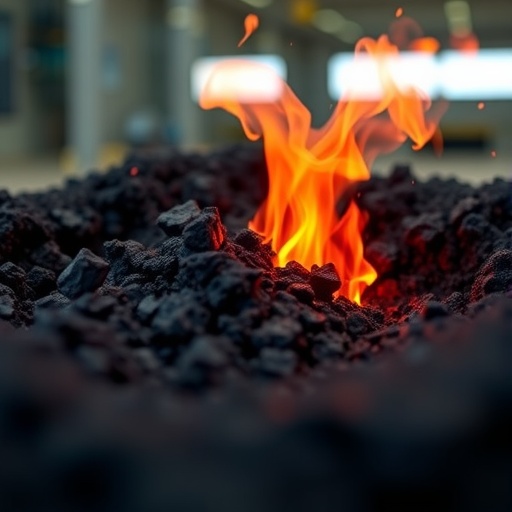
A persistent challenge in renewable energy production has been the generation of a troublesome by-product known as bio-tar, a viscous, toxic liquid that presents significant obstacles to biomass energy systems. Recent advances, however, are beginning to reframe this problematic substance, long considered a waste product, into a high-value material through a process of polymerization that transforms bio-tar into bio-carbon. This innovative approach, detailed in a comprehensive review published in the journal Biochar, promises to revolutionize the sustainable carbon materials landscape while simultaneously enhancing bioenergy efficiency.
Biomass energy production typically involves heating organic matter such as crop residues, wood, or other biological waste in controlled thermal processes to yield clean energy and biochar. During this pyrolytic or thermochemical conversion, bio-tar is generated as a viscous by-product rich in oxygen-containing compounds like carbonyls and furans. This sticky substance causes persistent operational issues by fouling pipes, corroding equipment, and emitting harmful pollutants if not properly handled. Historically, efforts have concentrated on removing or neutralizing bio-tar to protect infrastructure and reduce environmental harm.
In a compelling shift in perspective, scientists at the Chinese Academy of Agricultural Sciences propose that bio-tar’s complex chemistry can be leveraged to produce advanced carbon materials instead of being discarded. Central to this transition is the polymerization process, where smaller molecular entities within bio-tar chemically bond together, forming larger, more robust carbon frameworks. By meticulously tuning reaction parameters—temperatures, timescales, and catalytic additives—researchers can direct polymerization pathways to synthesize bio-carbon with specific structural and chemical properties tailored for diverse high-value applications.
This bio-carbon is characterized by a higher carbon content and lower ash residue compared to conventional biochar, together with unique morphological features that distinguish it as a superior material. Unlike ordinary biochar, bio-carbon synthesized through engineered polymerization offers enhanced performance in demanding roles such as adsorbents for environmental remediation. Its porous and chemically active surfaces excel in trapping heavy metal ions and organic pollutants from contaminated water and air, pointing toward crucial environmental benefits in pollution control strategies globally.
Moreover, bio-carbon shows immense potential as a novel electrode material in energy storage technologies, particularly supercapacitors. These devices require materials with excellent electrical conductivity, surface area, and stability, and bio-carbon’s structural attributes satisfy these criteria. Its development could catalyze advancements in renewable energy storage, enabling more efficient integration of intermittent energy sources such as solar and wind into power grids.
Beyond energy storage, bio-carbon can serve as sustainable catalysts. The shift away from fossil-fuel-derived catalysts toward bio-carbon-based alternatives aligns with broader decarbonization goals. By facilitating industrial chemical reactions under milder conditions and reducing reliance on scarce metals, bio-carbon catalysts contribute to greener manufacturing processes and lower associated environmental footprints.
Another promising avenue is the use of bio-carbon as a clean-burning fuel. Studies indicate that bio-carbon combustion produces significantly fewer nitrogen oxides (NOx) and sulfur oxides (SOx) emissions compared to conventional fossil fuels. This reduction not only mitigates air pollution but also curtails the formation of acid rain and related ecological damage. Transitioning energy systems towards bio-carbon-derived fuels could therefore offer substantial health and environmental dividends.
Despite its transformative prospects, the path to large-scale bio-carbon production is fraught with scientific and technical challenges. The heterogeneous nature of bio-tar complicates reaction control, making it difficult to achieve consistent polymerization outcomes that meet standardized quality benchmarks. This variability necessitates integrated strategies combining experimental work, advanced computational modeling, and machine learning algorithms to decode reaction mechanisms and optimize synthesis protocols.
Experts emphasize the necessity of bridging laboratory-scale developments with industrial applications. Scaling up polymerization processes requires innovative reactor designs and process intensification approaches that maximize yield while controlling energy input. Furthermore, comprehensive life-cycle assessments underscore bio-carbon’s net-positive impact on energy balance, economics, and environmental metrics, reinforcing its viability as a sustainable material solution.
This paradigm shift—from viewing bio-tar as a troublesome waste to harnessing it as a lucrative resource—represents a landmark advance in bioenergy technology. It creates avenues for circular economy models where biomass residues are fully valorized, curtailing waste and generating multiple co-products that enhance the profitability and sustainability of bio-refinery systems.
Principal investigator Dr. Zonglu Yao highlights the dual significance of this research, noting that the transformation of bio-tar into value-added bio-carbon alleviates technical bottlenecks in biomass energy conversion while unlocking novel opportunities to produce environmentally friendly materials tailored for cutting-edge applications. First author Yuxuan Sun further stresses the potential impact, envisioning bio-tar polymerization as a gateway to next-generation, sustainable carbon materials that support clean technology frontiers.
This extensive review sets a roadmap for future investigations, inviting collaborative efforts across disciplines to refine polymerization chemistries, explore functional applications, and advance manufacturing methodologies. Through these endeavors, bio-carbon derived from bio-tar may soon emerge as a cornerstone material in the global quest for sustainable energy and environmental solutions.
Keywords
Carbon, Polymers, Polymerization
Cite Scienmag News
Bethany Barker. (September 26, 2025). From Waste to Wealth: Scientists Convert Biomass Tar into Premium Carbon Materials. Scienmag. https://scienmag.com/from-waste-to-wealth-scientists-convert-biomass-tar-into-premium-carbon-materials/
Bethany Barker. "From Waste to Wealth: Scientists Convert Biomass Tar into Premium Carbon Materials." Scienmag, 26 September 2025, https://scienmag.com/from-waste-to-wealth-scientists-convert-biomass-tar-into-premium-carbon-materials/. Accessed 4 September 2026.
Bethany Barker. "From Waste to Wealth: Scientists Convert Biomass Tar into Premium Carbon Materials." Scienmag. September 26, 2025. https://scienmag.com/from-waste-to-wealth-scientists-convert-biomass-tar-into-premium-carbon-materials/


