


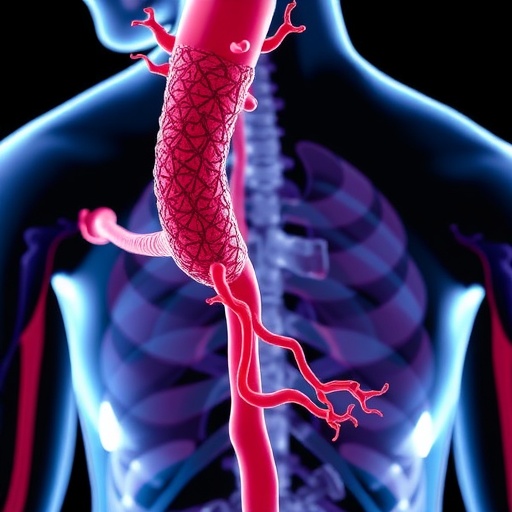
In a groundbreaking study published in the Journal of Biomedical Science, researchers Wang, Shih, and Wei, along with their colleagues, have delved into the intricate relationship between aging, fluid shear stress, and vascular endothelial metabolism—an area that is pivotal in understanding and combating atherosclerosis. Atherosclerosis is a leading cause of cardiovascular diseases, and unraveling these connections could pave the way for innovative therapeutic strategies aimed at enhancing vascular health.
The vascular endothelium serves as a barrier between circulating blood and the underlying tissue, playing a crucial role in maintaining homeostasis. It responds dynamically to fluctuating blood flow and shear stress, which are mechanical forces that the blood exerts on the vessel walls. This response is essential for various metabolic processes and cellular functions, including the modulation of inflammation, vascular tone, and nutrient exchange. However, as we age, our vascular function declines, paralleling an increase in the incidence of cardiovascular diseases.
Wang et al. present compelling evidence that aging significantly alters the metabolic profile of endothelial cells. They assessed various metabolic pathways within the endothelium that are influenced by both intrinsic factors, such as age, and extrinsic factors, such as blood flow dynamics. Their findings indicate that older endothelial cells exhibit a shift toward a pro-inflammatory state characterized by heightened oxidative stress and impaired nitric oxide signaling. This oxidative stress diminishes the cells’ ability to respond to shear stress properly, which is crucial for vascular health.
In their experiments, the researchers utilized advanced imaging techniques and metabolic assays to quantify changes in endothelial function and metabolism associated with age. They discovered that exposure to fluid shear stress not only activates protective pathways but also promotes the survival and function of endothelial cells. Importantly, this shear stress exposure was shown to mitigate some of the adverse effects of aging, suggesting that mechanical forces play a potentially therapeutic role in maintaining vascular health.
The study does not stop at delineating the effects of aging on the endothelium; it also investigates how elevated shear stress can promote angiogenesis, the formation of new blood vessels from pre-existing ones. This process is crucial in healing and regeneration but can turn pathological in the context of atherosclerosis. In advanced stages of atherosclerosis, the vascular environment changes significantly, with turbulent flow patterns contributing to the formation of plaques. Wang et al. meticulously describe how this turbulence modifies endothelial behavior, leading to an accumulation of inflammatory mediators and an acceleration of atherosclerotic development.
A particularly striking finding of this research is the role of aging in modulating the endothelium’s response to shear stress. The researchers observed that aged endothelial cells were less responsive to beneficial shear stress, resulting in reduced endothelial nitric oxide synthase (eNOS) activity. This enzyme is critical for producing nitric oxide, a potent vasodilator and anti-inflammatory agent. The impaired eNOS activity observed in older cells supports the hypothesis that the aging endothelium is less capable of responding to changes in hemodynamic conditions, thus fostering a more inflammatory and less adaptive vascular environment.
This decline in the endothelial ability to cope with shear stress also correlates with changes in lipid metabolism and cholesterol handling within the cells. The researchers provide evidence that aging endothelial cells are less effective at clearing lipoproteins, leading to increased lipid accumulation within the arterial walls. This accumulation is a fundamental step in the pathogenesis of atherosclerosis, highlighting a critical area for potential intervention.
In the broader context of cardiovascular research, the findings of Wang et al. emphasize the need for therapies aimed not just at managing the symptoms of atherosclerosis but also targeting the underlying endothelial dysfunction associated with aging. Lifestyle interventions such as exercise, which can improve endothelial function and enhance shear stress sensitivity, are critical in this paradigm. The researchers advocate that understanding the nuanced relationship between blood flow dynamics and endothelial health could lead to novel therapeutic approaches tailored to ameliorate age-related vascular impairments.
Interestingly, the work also opens up avenues for exploring pharmacological options that mimic the effects of shear stress or enhance endothelial cell metabolism. The potential for drug development targeting the endothelial response to fluid mechanics is vast. Currently, many cardiovascular medications focus on systemic effects rather than the localized endothelial response. By redirecting the focus toward endothelial health, future therapies may significantly improve outcomes in aging populations vulnerable to cardiovascular diseases.
Additionally, the research emphasizes the importance of early intervention. Atherosclerosis begins in youth, and understanding how aging and fluid dynamics influence its development can guide proactive measures to mitigate risk. The insights gained from this study can inform public health initiatives aimed at promoting vascular health from an early age, thereby reducing the burden of cardiovascular diseases later in life.
In conclusion, the work by Wang, Shih, Wei, and their team represents a significant advancement in the understanding of vascular biology and the mechanisms underlying atherosclerosis. Aging is an inevitable process, but the insights gained from this research could empower scientists and clinicians to devise strategies that enhance vascular resilience and combat the adverse effects of time on our cardiovascular systems. The intersection of aging, fluid shear stress, and endothelial metabolism presents an intriguing research frontier with potential implications for enhancing human health and longevity.
Overall, this research is a clarion call for the scientific community to prioritize investigations into the endothelial response to mechanical forces and age, paving the way for transformative strategies in cardiovascular medicine. By bridging knowledge gaps and translating findings into clinical practice, we can hope for a future where age-related vascular impairments are not an inevitable outcome, but rather a manageable condition.
Wang, WL., Shih, YT., Wei, SY. et al. Impacts of aging and fluid shear stress on vascular endothelial metabolism and atherosclerosis development.
J Biomed Sci 32, 83 (2025). https://doi.org/10.1186/s12929-025-01177-z
Cite Scienmag News
Beatrice Stafford. (September 1, 2025). How Aging and Shear Stress Influence Atherosclerosis. Scienmag. https://scienmag.com/how-aging-and-shear-stress-influence-atherosclerosis/
Beatrice Stafford. "How Aging and Shear Stress Influence Atherosclerosis." Scienmag, 1 September 2025, https://scienmag.com/how-aging-and-shear-stress-influence-atherosclerosis/. Accessed 3 September 2026.
Beatrice Stafford. "How Aging and Shear Stress Influence Atherosclerosis." Scienmag. September 1, 2025. https://scienmag.com/how-aging-and-shear-stress-influence-atherosclerosis/


