


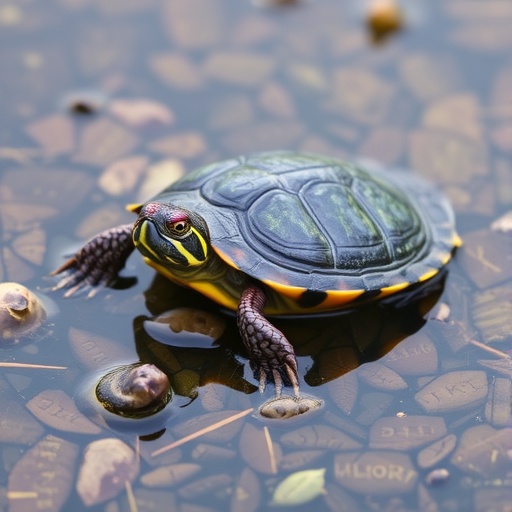
In the serene landscapes of Hungary, a remarkable study has emerged shedding light on the intriguing behavior of the European pond turtle, scientifically known as Emys orbicularis. This research, conducted in the picturesque Babat Valley near Gödöllő, delves into two key aspects of the species: nest site selection and fidelity. As climate change and habitat destruction loom as significant threats, understanding the nesting behaviors of such species becomes critical for their conservation and survival.
The study, spearheaded by researchers Kiss, Erdélyi, and Szabó, not only broadens our understanding of Emys orbicularis but serves as a vital contribution to the field of herpetology. With a focus on the nesting habitats and recurring patterns observed in female turtles, this investigation provides essential data that could inform conservation strategies and habitat management efforts in the future.
Nest site selection in Emys orbicularis involves critical decision-making processes that can impact the success of their reproductive outcomes. The study meticulously documents how female turtles navigate their environments, evaluating various factors such as temperature, moisture, and the presence of predators when determining where to lay their eggs. With climate conditions always fluctuating, it is essential for these turtles to find optimal nesting sites that can support embryonic development.
The researchers observed that female turtles exhibit specific preferences for certain types of vegetation and soil types when selecting their nesting sites. Sites with loose, sandy soil were favored as they provide the necessary drainage and warmth for incubating eggs. Additionally, the availability of ample sunlight plays a crucial role, as warmer temperatures can significantly enhance the development rates of turtle embryos.
One fascinating aspect uncovered by this study is the fidelity exhibited by female Emys orbicularis to their previously used nesting sites. The concept of fidelity in reptiles can vary significantly, and these findings contribute crucial information to the broader understanding of nesting behaviors in turtles. It appears that experienced females tend to return to familiar sites, which may offer successful outcomes based on historical nesting success.
The implications of such nest site fidelity are clear. By returning to previously successful locations, female turtles may maximize the chances of their offspring surviving to maturity. This behavior emphasizes the importance of preserving these natural habitats, as altering or destroying prime nesting sites could potentially lead to declines in turtle populations.
The research team conducted rigorous field studies, employing methods that included tracking individual turtles and analyzing their movement patterns through various terrains. This dynamic approach allowed them to paint a comprehensive picture of the turtles’ nesting habits and preferences. Each turtle’s nesting journey was meticulously recorded, which raises questions about how other environmental factors might influence their decision-making processes.
Moreover, the study highlights the potential effects of human activities on these nesting behaviors. Urban expansion, agriculture, and climate variability are ever-present threats that could disrupt the delicate balance required for nesting success. The authors advocate for greater awareness and protective measures to ensure that existing habitats remain intact, enabling future generations of European pond turtles to thrive.
As researchers share their findings with the broader scientific community, they inspire further inquiry into other turtle populations across Europe and beyond. Their work sparks curiosity about how geographical differences and ecological variables may affect nesting site preferences in various species.
As climate conditions continue to evolve, new research such as this becomes increasingly pertinent to conservation efforts. By understanding the intricate relationships and behaviors of species like Emys orbicularis, scientists can develop targeted strategies aimed at mitigating the adverse effects of environmental changes.
In conclusion, the study conducted by Kiss, Erdélyi, and Szabó not only elucidates the nesting behaviors of the European pond turtle but also underscores the urgent need for effective conservation strategies. As we venture into a future marked by unpredictable climate shifts, fostering a deeper understanding of such species will prove vital for preserving biodiversity and ensuring healthy ecosystems.
Through their meticulous research and unwavering commitment, the authors of this study pave the way for a brighter future for the European pond turtle, contributing invaluable insights that hold the promise of meaningful change. Their work stands as a beacon of hope and serves as a reminder of our responsibility to protect the delicate threads that weave the tapestry of life on our planet.
Kiss, I., Erdélyi, G. & Szabó, B. Nest site selection and fidelity of European pond turtle (Emys orbicularis) population of Babat Valley (Gödöllő, Hungary).
Front Zool 21, 20 (2024). https://doi.org/10.1186/s12983-024-00541-3
Cite Scienmag News
Drew Townsend. (August 30, 2025). Studying Nesting Habits of Hungary’s European Pond Turtle. Scienmag. https://scienmag.com/studying-nesting-habits-of-hungarys-european-pond-turtle/
Drew Townsend. "Studying Nesting Habits of Hungary’s European Pond Turtle." Scienmag, 30 August 2025, https://scienmag.com/studying-nesting-habits-of-hungarys-european-pond-turtle/. Accessed 1 September 2026.
Drew Townsend. "Studying Nesting Habits of Hungary’s European Pond Turtle." Scienmag. August 30, 2025. https://scienmag.com/studying-nesting-habits-of-hungarys-european-pond-turtle/


