


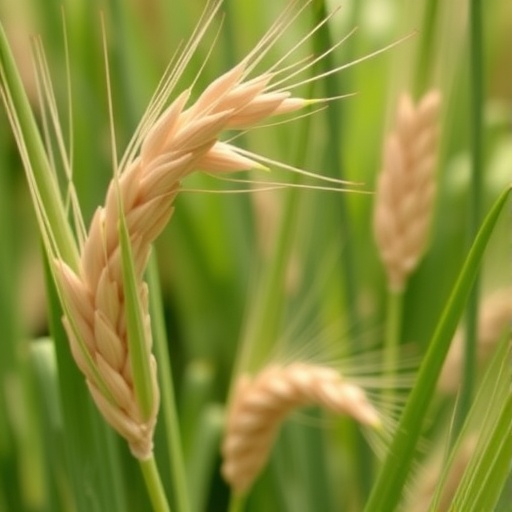
Recent research conducted by a team led by Y. Sun has provided significant insights into the complex metabolic pathways that enable oat plants (Avena sativa) to survive and adapt under conditions of heat stress. In an expansive study published in BMC Genomics, the authors employed an integrated approach that combined transcriptomic, metabolomic, and lipidomic analyses. This methodology allowed them to dissect not just the response mechanisms of oats to elevated temperatures but also the critical roles that various lipid metabolism pathways play in these adaptive processes.
Heat stress is a pressing concern in modern agriculture, particularly with the increasing incidence of extreme weather events attributed to climate change. Oats, being a staple crop in many regions, face challenges that can significantly impact yield and quality. The team’s study focused on evaluating how these plants manage their internal metabolic processes to mitigate the adverse effects of elevated temperatures. Understanding this could pave the way for developing more resilient oat varieties.
The researchers meticulously collected samples from oat plants exposed to controlled heat stress conditions. Through transcriptomic analysis, they were able to identify differentially expressed genes that play a vital role in heat tolerance. This expression analysis was complemented by sophisticated metabolomic profiling, enabling the team to decipher the alterations in primary and secondary metabolites under stress conditions. The integration of these data sets revealed interconnected biological pathways that highlight the resilience mechanisms of oat plants.
One of the standout findings of the study was the identification of specific lipid metabolism pathways that were significantly upregulated during heat stress. The authors noted that lipids are not merely structural components of cellular membranes but also play crucial roles in signaling and energy metabolism. This insight underscores the importance of lipids in the stress response, acting as key mediators that facilitate protective measures within the plant.
Additionally, the lipidomic analysis shed light on the composition of various lipid species produced by oat plants under heat stress. The researchers found altered profiles of phospholipids, fatty acids, and other lipids, indicating an adaptive reallocation of metabolic resources. This shift is likely essential for maintaining membrane integrity and fluidity, which is crucial for cellular function when temperatures rise.
Among the various lipid classes studied, the role of polyunsaturated fatty acids (PUFAs) emerged as particularly vital. The levels of certain PUFAs were found to increase significantly, suggesting their enhanced synthesis during heat stress as a means to cope with oxidative damage. This aspect of lipid metabolism is fundamental, as PUFAs can act as precursors for signaling molecules such as jasmonates, which are known to mediate stress responses in plants.
The implications of these findings extend beyond basic research; they hold potential applications in agriculture and plant breeding. By understanding how lipid metabolism contributes to heat stress tolerance, scientists can target these pathways for the development of improved oat cultivars. Such advancements may enhance food security, especially in regions where temperature fluctuations are becoming increasingly common.
Furthermore, the study emphasizes the need for a holistic approach in plant research. As the authors aptly conclude, integrating data from various omics layers provides a more comprehensive understanding of plant resilience. In an era where climate change poses an urgent threat to food production, such integrative studies are essential for developing adaptive strategies in agriculture.
The pioneering nature of this research represents a significant step forward in crop science. It not only unveils the intricacies of lipid metabolism in response to environmental stress but also sets a precedent for future investigations into other crops. By applying similar methodologies, researchers can broaden the scope of understanding how various plants cope with adverse conditions in a changing climate.
As we delve deeper into the biochemical pathways that underpin plant responses to stress, the future of agriculture may hinge on the application of such innovative research. The findings from Sun and colleagues highlight the critical intersection of molecular biology, agriculture, and environmental science, paving the way for more sustainable and resilient food systems.
Overall, this research encapsulates the vital role of advanced technologies in unlocking the mysteries of plant biology. The revelations about lipid metabolism pathways in oat plants not only contribute to our knowledge base but also equip farmers and breeders with the tools needed to face the challenges posed by global warming. As the scientific community continues to explore these dimensions, there is hope that the findings will foster an era of resilience in agriculture, ensuring food security for generations to come.
In conclusion, the study led by Y. Sun illustrates the pivotal role of integrated omics in elucidating plant stress responses. The focused examination of lipid metabolism pathways in oats under heat stress not only enriches our understanding of plant physiology but also lays the groundwork for practical applications in agricultural practices. With ongoing climate challenges, such research is essential for navigating the uncertainties that lie ahead in food production.
Sun, Y., Jing, H., Li, Z. et al. Integrated transcriptomic, metabolomic and lipidomic analyses uncover the crucial roles of lipid metabolism pathways in oat (Avena sativa) responses to heat stress.
BMC Genomics 26, 780 (2025). https://doi.org/10.1186/s12864-025-11972-5
Cite Scienmag News
Daisy Hatcher. (August 28, 2025). Lipid Metabolism Key to Oat’s Heat Stress Response. Scienmag. https://scienmag.com/lipid-metabolism-key-to-oats-heat-stress-response/
Daisy Hatcher. "Lipid Metabolism Key to Oat’s Heat Stress Response." Scienmag, 28 August 2025, https://scienmag.com/lipid-metabolism-key-to-oats-heat-stress-response/. Accessed 4 September 2026.
Daisy Hatcher. "Lipid Metabolism Key to Oat’s Heat Stress Response." Scienmag. August 28, 2025. https://scienmag.com/lipid-metabolism-key-to-oats-heat-stress-response/


