


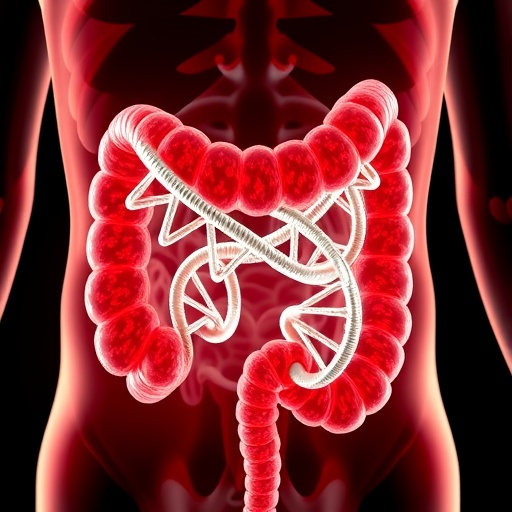
In a landmark advancement in colorectal cancer treatment, researchers have unveiled a groundbreaking platform study harnessing the power of circulating tumor DNA (ctDNA) to revolutionize adjuvant chemotherapy for colon cancer patients. Published in BMC Cancer, this pivotal research explores the potential of personalized postoperative treatment intensification guided by sensitive detection of minimal residual disease (MRD) through ctDNA analysis. The study addresses an urgent clinical challenge—the stratification of patients post-surgery to optimize therapeutic efficacy while minimizing unnecessary exposure to toxic chemotherapy regimens.
Colorectal cancer remains a formidable health burden globally, with a significant proportion of patients facing disease recurrence despite curative surgical resection. Traditional adjuvant chemotherapy protocols rely heavily on pathological staging and clinical risk factors, which, while informative, often lack the precision to tailor therapy according to residual tumor burden. This novel trial exploits tumor-informed ctDNA analysis, an innovative approach that tracks patient-specific somatic mutations, allowing unprecedented sensitivity in MRD detection at early postoperative stages.
The study design employs a multi-center platform trial framework registered under ClinicalTrials.gov identifier NCT05534087. It thoughtfully incorporates two parts: an initial prospective observational phase screening over 1,200 stage II and III colon cancer patients shortly after curative surgery, followed by a randomized controlled phase focusing on patients demonstrating postoperative MRD positivity. This strategic bifurcation ensures comprehensive evaluation of ctDNA’s prognostic and predictive potential and creates an evidence-based pathway to modify adjuvant chemotherapy intensity.
Central to the study is a hybrid-capture-based next-generation sequencing assay tailored to each patient’s unique tumor exome profile, enabling the tracking of up to 100 personalized somatic variants. By analyzing plasma samples collected 3 to 6 weeks after surgery, the research team can detect the presence of ctDNA fragments indicative of residual microscopic disease. This sensitive approach transcends traditional imaging and biomarker limitations, offering a real-time molecular snapshot of tumor dynamics poised to inform therapeutic decision-making.
Eligibility criteria meticulously define the patient cohort, encompassing adults aged 19 years and older, who have undergone curative resection for stage III or high-risk stage II colon adenocarcinoma and are candidates for standard adjuvant chemotherapy with FOLFOX or CAPOX regimens. Importantly, patients with no gross residual tumor focus are included, emphasizing the role of ctDNA as a molecular biomarker rather than a substitute for conventional pathological evaluation.
In the first phase, all enrolled patients receive a standard three-month course of adjuvant chemotherapy while awaiting MRD results, ensuring uniform initial treatment exposure. Subsequent molecular stratification determines further management: MRD-positive individuals qualify for enrollment in the interventional randomized trial, whereas MRD-negative patients are managed per physician discretion. This approach balances rigorous scientific inquiry with personalized clinical judgment.
The randomized controlled trial in Part 2 rigorously evaluates whether intensifying chemotherapy with a modified FOLFIRINOX regimen for an additional three months enhances outcomes compared to continuing standard FOLFOX/CAPOX therapy. Designed to enroll 236 MRD-positive patients, the trial is powered to detect a hazard ratio of 0.64 for three-year disease-free survival (DFS), with well-defined secondary endpoints including five-year overall survival, treatment-related toxicity, compliance, and patient-reported quality of life measures.
Critically, this study heralds a shift toward precision oncology in colon cancer, acknowledging the biological heterogeneity underpinning therapeutic responses. By focusing on measurable residual disease at the molecular level, researchers aim to circumvent the “one-size-fits-all” paradigm, offering intensified therapy only to those at demonstrable risk of recurrence. This paradigm has the potential not only to improve survival rates but to spare low-risk patients from the deleterious side effects of overtreatment.
The implications of ctDNA-directed therapy extend beyond colon cancer, suggesting a model applicable to various solid tumors where minimal residual disease is an elusive yet clinically decisive factor. Furthermore, the integration of tumor whole-exome sequencing with sophisticated ctDNA assays exemplifies the convergence of genomic medicine with routine clinical practice, reinforcing the feasibility of personalized cancer care.
Challenges remain, however, including the need for centralized, validated ctDNA testing infrastructure, harmonization of assay sensitivity and specificity, and addressing the psychological impact of MRD-informed treatment decisions on patients. Nevertheless, the ambitious scale and rigorous methodology of this trial establish a robust framework to overcome such barriers, setting the stage for regulatory approval and widespread clinical adoption.
Furthermore, the trial’s inclusion of patient-reported outcomes emphasizes a holistic approach to cancer care, recognizing that survival gains must be balanced against quality of life considerations. Data generated will elucidate not only the efficacy but also the tolerability and patient acceptability of intensified chemotherapy regimens, providing critical insights for oncologists and patients navigating complex treatment choices.
This pioneering research also underlines the importance of international collaboration, uniting multiple centers and leveraging diverse patient populations to enhance the generalizability of findings. Such cooperation accelerates the translation of molecular diagnostics into tangible clinical benefits and exemplifies the future direction of cancer research—multidisciplinary, precision-driven, and patient-centered.
As the field awaits results from this high-impact trial, clinicians and scientists alike are optimistic that ctDNA-guided adjuvant chemotherapy will evolve from a promising concept into a standard of care, fundamentally altering the therapeutic landscape of colon cancer. The anticipated survival improvements and reduction in recurrence represent a beacon of hope for patients worldwide battling this common malignancy.
In summary, the CLAUDIA colon cancer platform study embodies a transformative approach to managing postoperative colon cancer, leveraging cutting-edge ctDNA technology to personalize adjuvant chemotherapy. Its innovative design, comprehensive endpoints, and focus on clinical implementation mark a significant stride toward precision oncology that could redefine recovery trajectories and outcomes for countless patients facing this formidable disease.
Cite Scienmag News
Nathaniel Bowman. (August 25, 2025). Tumor DNA Guides Colon Cancer Chemotherapy. Scienmag. https://scienmag.com/tumor-dna-guides-colon-cancer-chemotherapy/
Nathaniel Bowman. "Tumor DNA Guides Colon Cancer Chemotherapy." Scienmag, 25 August 2025, https://scienmag.com/tumor-dna-guides-colon-cancer-chemotherapy/. Accessed 3 September 2026.
Nathaniel Bowman. "Tumor DNA Guides Colon Cancer Chemotherapy." Scienmag. August 25, 2025. https://scienmag.com/tumor-dna-guides-colon-cancer-chemotherapy/


