


In the evolving landscape of sustainable agriculture, phosphorus (P) remains an essential yet challenging nutrient to deliver efficiently to crops. Traditional fertilizers such as triple superphosphate (TSP) are widely used but frequently face issues like rapid leaching and fixation in soil, dramatically reducing their availability to plants. This inefficiency not only limits crop productivity but also contributes to environmental degradation through nutrient runoff. Against this backdrop, a groundbreaking study published in the prestigious journal Pedosphere on March 26, 2025, reveals the promise of a nanoscale iron phosphate (FePO₄) fertilizer (FePNF) that rivals TSP in sustaining cucumber plant growth under phosphorus-limited soil conditions.
The research, conducted by a collaborative team from the University of Verona, the University of Padua, and other Italian scientific centers, sets out to scrutinize the agronomic performance of citrate-capped FePO₄ nanoparticles against the conventional TSP fertilizer. Recognizing that phosphorus deficiency is a global bottleneck to agricultural output, the study employs a multifaceted approach comparing plant biomass, nutrient uptake, soil enzymatic activity, and microbial community dynamics in response to these two distinct fertilization strategies.
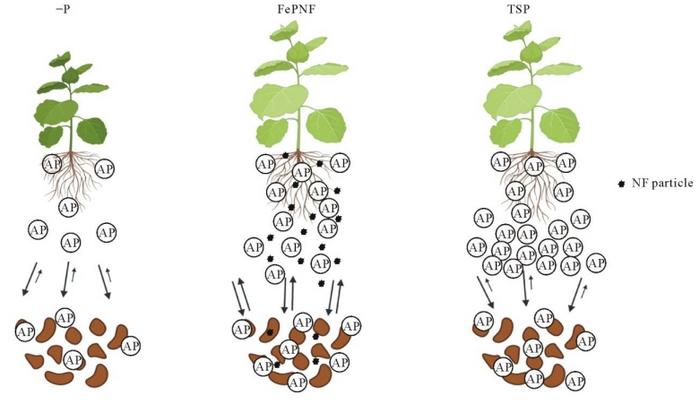
One of the most striking findings of this work is that although soils amended with FePNF exhibited lower immediately available phosphorus as measured by the Olsen-P test, cucumber plants fertilized with FePNF achieved growth and chlorophyll content statistically indistinguishable from those receiving TSP. This suggests that FePNF provides phosphorus in forms that elude conventional chemical extraction methods but remain bioavailable to plants. Such release kinetics intimate a slower but sustained nutrient delivery that aligns more closely with plant uptake demands, potentially minimizing phosphorus losses via leaching or fixation.
The experimental design involved pot trials where cucumber seedlings were grown in phosphorus-deficient substrates over 28 days. The assessment covered a range of growth indicators including shoot and root biomass, leaf surface area, and SPAD chlorophyll index, a proxy for photosynthetic capacity and nitrogen status. Remarkably, no significant disparities emerged between FePNF and TSP treatments across these metrics, underscoring the ability of nanosized FePO₄ particles to meet the crop’s phosphorus requirements effectively albeit at lower soil-extractable nutrient levels.
Beyond plant growth parameters, the study delved into soil biochemical responses, unveiling differential enzyme activity patterns between the fertilizer treatments. Soils treated with FePNF showed augmented protease activity, an enzyme integral to organic nitrogen cycling, while TSP-amended soils exhibited increased alkaline phosphatase activity, which is key in organic phosphorus mineralization. These shifts hint at unique rhizosphere interactions triggered by FePNF application, possibly arising from altered root exudation profiles or nanoparticle-root surface interplay that modulates nutrient mobilization pathways.
Moreover, microbial community profiling through DNA fingerprinting techniques revealed distinctive assemblages of bacteria, archaea, and fungi tied to each fertilizer regime. FePNF fostered microbial consortia that resembled but were not identical to those encouraged by TSP, suggesting that nanofertilizer presence subtly reshapes the soil microbiome environment. These microbial shifts could have downstream effects on nutrient cycling efficiency and plant health, opening a promising avenue for future research into nanomaterial-driven rhizosphere engineering.
The mechanistic underpinnings of FePNF’s efficacy appear rooted in intricate interactions at the root-soil interface. Conceptual models presented in the study propose that unlike TSP, which rapidly dissolves to release phosphorus into soil solution, FePNF particles may adhere or interact directly with root apoplasts or exudates, facilitating a gradual and potentially more controlled phosphorus liberation process. This mode of action may reduce phosphorus immobilization and enhance root uptake efficiency, representing a fundamental shift from conventional fertilization paradigms.
From an environmental perspective, the advent of FePNF as a viable phosphorus source offers significant implications. Traditional fertilizers contribute substantially to eutrophication and groundwater contamination through runoff, a problem exacerbated by the oversupply and poor synchrony between nutrient application and plant demand. The controlled-release profile of FePNF documented here portends reduced losses and a lower ecological footprint, aligning with sustainability goals in modern agriculture.
Professor Zeno Varanini, senior author of the study, emphasizes that “FePO₄ nanofertilizer can provide sufficient phosphorus to plants even when traditional tests suggest limited availability. The nutrient release appears to be mediated by root activity, which may help reduce leaching losses and improve sustainability.” This insight foregrounds the potential of nanotechnology to refine fertilizer efficiency through biologically attuned delivery mechanisms, a breakthrough that could revolutionize nutrient management practices.
Looking ahead, while these pot-scale results are compelling, the authors acknowledge the necessity for extensive field trials to validate nanofertilizer performance across diverse soil types, climates, and cropping systems. The interaction of FePNF with complex soil matrices and its long-term fate remain crucial topics for investigation to ensure agronomic reliability and environmental safety.
Additionally, the study underscores a burgeoning frontier in plant-soil-microbe interactions mediated by nanoparticles. Understanding how nanomaterials influence microbial recruitment, community structure, and function will be vital in harnessing their full potential and mitigating unforeseen ecological risks. This integrative perspective situates nanofertilizers at the nexus of agronomy, soil science, and microbiology.
In conclusion, this pioneering research heralds an era in which nanotechnology-enabled fertilizers can substitute or supplement traditional phosphorus inputs with enhanced efficiency and reduced environmental impact. As global demands on food production intensify, innovations like FePNF exemplify the strides toward sustainable intensification—delivering critical nutrients precisely when and where plants need them most, while safeguarding soil and water resources for future generations.
News Publication Date: 26-Mar-2025
References:
DOI: 10.1016/j.pedsph.2023.12.005
Cite Scienmag News
Alan Morgan. (June 24, 2025). Nanoparticles Revolutionize Plant Growth: Small-Scale Fertilizers Match Traditional Phosphates’ Performance. Scienmag. https://scienmag.com/nanoparticles-revolutionize-plant-growth-small-scale-fertilizers-match-traditional-phosphates-performance/
Alan Morgan. "Nanoparticles Revolutionize Plant Growth: Small-Scale Fertilizers Match Traditional Phosphates’ Performance." Scienmag, 24 June 2025, https://scienmag.com/nanoparticles-revolutionize-plant-growth-small-scale-fertilizers-match-traditional-phosphates-performance/. Accessed 6 September 2026.
Alan Morgan. "Nanoparticles Revolutionize Plant Growth: Small-Scale Fertilizers Match Traditional Phosphates’ Performance." Scienmag. June 24, 2025. https://scienmag.com/nanoparticles-revolutionize-plant-growth-small-scale-fertilizers-match-traditional-phosphates-performance/


