

Thursday, September 3, 2026
Science
No Result
View All Result
  • Login
  • HOME
  • SCIENCE NEWS
  • CONTACT US
  • HOME
  • SCIENCE NEWS
  • CONTACT US
No Result
View All Result
Scienmag
No Result
View All Result
Home Science News Technology and Engineering

Researchers discover the mechanism that links a diet rich in fats with Alzheimer’s disease

April 29, 2024
in Technology and Engineering
Daisy Hatcher
By Daisy Hatcher Scienmag Editorial Profile - Food Safety and Toxicology
Reading Time: 3 mins read
0
Researchers discover the mechanism that links a diet rich in
66
SHARES
600
VIEWS
Share on FacebookShare on Twitter
ADVERTISEMENT

A study led by the URV has revealed the mechanism behind the link between a diet high in saturated fats and Alzheimer’s disease. The research focused on how this kind of diet affects certain molecules found in the blood and in other tissues such as the brain that act as markers and regulators of the disease. The study was headed by Mònica Bulló, professor at the Department of Biochemistry and Biotechnology and member of the Metabolic Health and Nutrition unit and the Environmental, Food and Toxicological Technology Centre (TecnATox) of the URV, in collaboration with the Pere Virgili Health Research Institute (IISPV), CIBERobn and the University of Barcelona. The results have been published in the journal Nutrients.

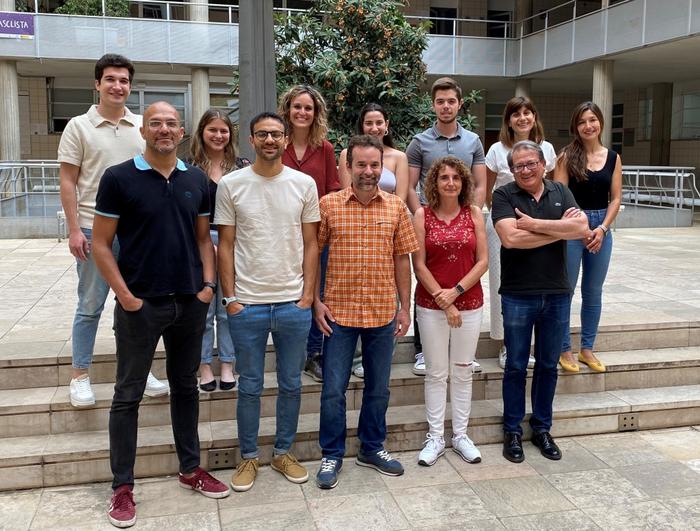
Researcher Team

Credit: Researchers’ Team

A study led by the URV has revealed the mechanism behind the link between a diet high in saturated fats and Alzheimer’s disease. The research focused on how this kind of diet affects certain molecules found in the blood and in other tissues such as the brain that act as markers and regulators of the disease. The study was headed by Mònica Bulló, professor at the Department of Biochemistry and Biotechnology and member of the Metabolic Health and Nutrition unit and the Environmental, Food and Toxicological Technology Centre (TecnATox) of the URV, in collaboration with the Pere Virgili Health Research Institute (IISPV), CIBERobn and the University of Barcelona. The results have been published in the journal Nutrients.

The research was conducted on mice models who developed Alzheimer’s disease in adulthood. Previous studies in these animals had already shown that after a diet high in saturated fats the mice developed Alzheimer’s much earlier than mice on a conventional diet. However, the mechanisms that led to the onset of Alzheimer’s remained unknown. That is, until now.

The researchers analysed the expression of 15 miRNAs, small molecules of RNA that play a crucial role in genetic regulation in both plasma and brain tissues. The team examined changes in insulin-related miRNAs in mouse models predisposed to Alzheimer’s not on a diet low in saturated fats.

The results demonstrated that their metabolism worsened after being on this diet for six months: their body weight increased significantly and their response to glucose and insulin decreased. These same characteristics can also be found in people with obesity or type 2 diabetes. Furthermore, researchers found changes to various miRNAs in both the blood and the brain. These changes were related to processes that can cause brain damage, such as the accumulation of β-amyloid plaques (protein deposits that form in the brain and which are markers of Alzheimer’s), excessive production of the tau protein (which can damage brain cells when it gets out of control) and inflammation in the brain.

“The results of this study are a step forward in our understanding of this disease and may explain the relationship between obesity, type 2 diabetes and the onset of Alzheimer’s. The findings also offer new targets for the possible prevention and treatment of the disease”, said researcher Mònica Bulló

The study not only provides new data on how a high-fat diet can affect the health of the brain, but also opens the door to future research into dietary strategies as a means of treating Alzheimer’s. The results underline the importance of a balanced diet in preventing neurodegenerative diseases and highlight miRNAs as targets for therapeutic interventions.


Journal

Nutrients

DOI

10.3390/nu16070955

Subject of Research

Animals

Subject of Research: Technology and Engineering

Article Title: Researchers discover the mechanism that links a diet rich in fats with Alzheimer’s disease

Article References: Original research article

Image Credits: AI Generated

DOI: Not provided

Keywords: Not provided

Cite Scienmag News

Daisy Hatcher. (April 29, 2024). Researchers discover the mechanism that links a diet rich in fats with Alzheimer’s disease. Scienmag. https://scienmag.com/researchers-discover-the-mechanism-that-links-a-diet-rich-in-fats-with-alzheimers-disease/

Daisy Hatcher. "Researchers discover the mechanism that links a diet rich in fats with Alzheimer’s disease." Scienmag, 29 April 2024, https://scienmag.com/researchers-discover-the-mechanism-that-links-a-diet-rich-in-fats-with-alzheimers-disease/. Accessed 3 September 2026.

Daisy Hatcher. "Researchers discover the mechanism that links a diet rich in fats with Alzheimer’s disease." Scienmag. April 29, 2024. https://scienmag.com/researchers-discover-the-mechanism-that-links-a-diet-rich-in-fats-with-alzheimers-disease/

Share26Tweet17
Previous Post

Mazin to study electronic, transport & topological properties of frustrated magnets

Next Post

It’s all in the smile: Aston University-led research finds politicians can influence voters with facial expressions

Related Posts

Molecular dynamics reveals fusion behavior of Ni–Pd core–shell nanoparticles
Technology and Engineering

Molecular dynamics reveals fusion behavior of Ni–Pd core–shell nanoparticles

September 3, 2026
Spin-coated surface-eroding implants enable automated multi-pulse drug delivery
Technology and Engineering

Spin-coated surface-eroding implants enable automated multi-pulse drug delivery

September 3, 2026
Machine Learning Predicts Microplastic Aging and Environmental Risks
Technology and Engineering

Machine Learning Predicts Microplastic Aging and Environmental Risks

September 3, 2026
Perfusion platform screens self-assembling peptide drugs in 3D breast tumor models
Technology and Engineering

Perfusion platform screens self-assembling peptide drugs in 3D breast tumor models

September 3, 2026
IRX1 blocks cervical cancer growth by curbing lipid synthesis enzyme ACLY
Technology and Engineering

IRX1 blocks cervical cancer growth by curbing lipid synthesis enzyme ACLY

September 3, 2026
Hybrid nanofluid blood flow modeled in ciliated porous concentric tubes
Technology and Engineering

Hybrid nanofluid blood flow modeled in ciliated porous concentric tubes

September 3, 2026
Next Post
It’s all in the smile: Aston University-led research finds politicians

It’s all in the smile: Aston University-led research finds politicians can influence voters with facial expressions

  • Mothers who receive childcare support from maternal grandparents show more optimized

    Mothers who receive childcare support from maternal grandparents show more parental warmth, finds NTU Singapore study

    27656 shares
    Share 11059 Tweet 6912
  • University of Seville Breaks 120-Year-Old Mystery, Revises a Key Einstein Concept

    1061 shares
    Share 424 Tweet 265
  • Bee body mass, pathogens and local climate influence heat tolerance

    682 shares
    Share 273 Tweet 171
  • Researchers record first-ever images and data of a shark experiencing a boat strike

    546 shares
    Share 218 Tweet 137
  • Groundbreaking Clinical Trial Reveals Lubiprostone Enhances Kidney Function

    531 shares
    Share 212 Tweet 133
Science

Embark on a thrilling journey of discovery with Scienmag.com—your ultimate source for cutting-edge breakthroughs. Immerse yourself in a world where curiosity knows no limits and tomorrow’s possibilities become today’s reality!

RECENT NEWS

  • Illegal mining spreads rare earths, uranium, and thorium in Amazon soils
  • Life cycle assessment reveals energy and environmental impacts of waste hydraulic oil recovery
  • Decadal predictions show skill for Indian summer monsoon rainfall forecasting
  • Browser-based studio simplifies WRF modeling and data assimilation setup

Categories

  • Agriculture
  • Anthropology
  • Archaeology
  • Athmospheric
  • Biology
  • Biotechnology
  • Blog
  • Bussines
  • Cancer
  • Chemistry
  • Climate
  • Earth Science
  • Editorial Policy
  • Marine
  • Mathematics
  • Medicine
  • Pediatry
  • Policy
  • Psychology & Psychiatry
  • Science Education
  • Social Science
  • Space
  • Technology and Engineering

Subscribe to Blog via Email

Enter your email address to subscribe to this blog and receive notifications of new posts by email.

Join 5,151 other subscribers

© 2025 Scienmag - Science Magazine

Welcome Back!

Login to your account below

Forgotten Password?

Retrieve your password

Please enter your username or email address to reset your password.

Log In
No Result
View All Result
  • HOME
  • SCIENCE NEWS
  • CONTACT US

© 2025 Scienmag - Science Magazine

Discover more from Science

Subscribe now to keep reading and get access to the full archive.

Continue reading