


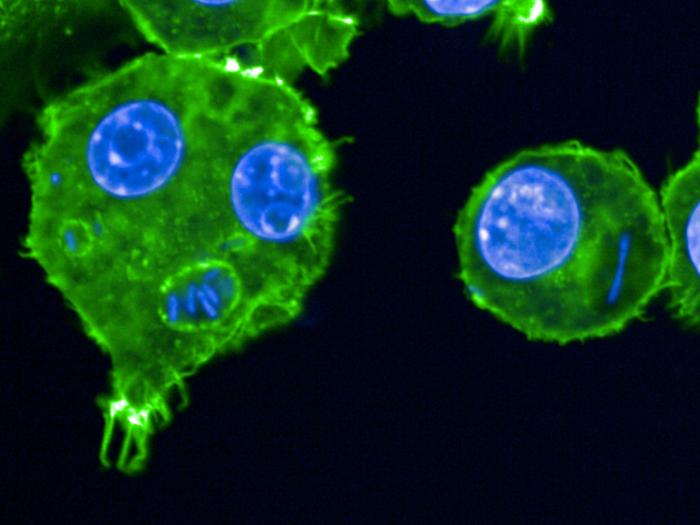
Recent groundbreaking research conducted by experts at the Institut Pasteur and McMaster University unveils a genetic mechanism that may have significantly extended the duration of two of history’s most devastating plague pandemics. Focusing on the notorious bacterium Yersinia pestis, the culprit behind bubonic plague, the scientists discovered that variations in a particular virulence gene played a crucial role in prolonging infection and transmission periods, especially in environments where population densities were low and human-to-human contact was infrequent.
The study centers on the pla gene, a known virulence factor that significantly enhances the ability of Y. pestis to colonize lymphatic tissues and disseminate rapidly within infected hosts. Historically, three major plague pandemics have marked human history: the first emerging in the Mediterranean during the 6th century; the second—the infamous Black Death—which ravaged Europe between 1347 and 1352; and the third pandemic beginning in Asia around the mid-19th century, spreading globally and persisting even today in endemic pockets across continents. Understanding the genetic changes in Y. pestis throughout these outbreaks illuminates not only the pathogen’s lethality but also its remarkable adaptability.
The pla gene exists in multiple copies within the bacterial genome, and its copy number dynamics appear to influence both the virulence and contagious period of the bacterium. By employing cutting-edge paleogenomic analysis, researchers at McMaster University meticulously studied ancient DNA extracted from human victims of the earlier pandemics. Their analysis revealed a marked decline in the copy number of the pla gene during the waning phases of both the first and second historic pandemics, suggesting a trend toward attenuated virulence over time.
To corroborate these findings, scientists at the Institut Pasteur turned to contemporary strains collected during the third plague pandemic, preserved within one of the world’s richest repositories of Y. pestis isolates. Remarkably, they identified several Asian strains from the 1990s exhibiting a similar reduction in pla gene copies. This parallel between ancient and modern bacterial populations offered an unprecedented opportunity to investigate the biological consequences of these genetic deletions experimentally.
Functional studies utilizing murine models provided compelling evidence that a decrease in pla gene copy number correlates with a notable reduction in mortality rates—approximately 20% less lethal infections—while simultaneously extending the duration of symptomatic infection in hosts. This finding implies that less virulent strains might allow the host to survive longer, thereby breathing new life into Y. pestis’ ability to remain contagious across extended timescales, particularly where host populations are sparse.
Ecologically, this adaptation holds immense significance. Rodents, being the primary reservoirs and vectors for bubonic plague, experience population declines during pandemic peaks due to high bacterial lethality. A diminished pla gene dosage that tempers virulence could thus offer a selective advantage, enabling infected rodents to survive longer and sustain bacterial transmission within shrinking host populations. This intricate balance between virulence and transmission efficiency provides a compelling evolutionary explanation for how plague pandemics endured across extended periods before ultimately declining.
Interestingly, the genetic attenuation in Y. pestis appears to have emerged independently in each of these historic pandemics, signifying a recurring evolutionary motif rather than a single mutational event. This stochastic but convergent genetic shift underscores the intricate selective pressures shaping pathogen-host interactions over centuries, a dynamic continually unfolding within Y. pestis lineages.
Despite this evolutionary trend, researchers caution that highly virulent strains still dominate modern outbreaks. Many contemporary Y. pestis populations circulating globally retain their lethal potential, responsible for sporadic, yet often deadly, outbreaks primarily in parts of Africa, Asia, and the Americas. The availability of effective antibiotics and advances in diagnostic technologies have substantially mitigated the public health impact of plague infections, altering the evolutionary landscape faced by the bacterium by reducing its transmission opportunities.
The implications of this research extend beyond historical curiosity. Understanding the genomic determinants underlying virulence modulation offers vital insights into the emergence, persistence, and eventual extinction of pandemics—not just those caused by Y. pestis but potentially other pathogens as well. This intragenomic plasticity of virulence genes exemplifies how pathogens negotiate the trade-off between killing hosts rapidly and maintaining their transmission capabilities over time.
Furthermore, the work sheds light on the complex interplay between pathogen genetics, host ecology, and epidemiological outcomes. It highlights the notion that a pathogen’s evolutionary success depends not solely on maximal lethality, but rather on a finely tuned balance enabling sustained spread. Such findings contribute to a growing appreciation for the evolutionary biology of infectious diseases, informing strategies aimed at anticipating and controlling future pandemic threats.
As the scientific community continues to unravel the molecular and ecological mechanisms governing pathogen evolution, studies like this emphasize the importance of integrating ancient DNA analysis with modern microbiology and evolutionary genetics. This multidisciplinary synergy holds promise for unveiling the hidden narratives encoded in the genomes of historic and contemporary pathogens alike.
In conclusion, the attenuation of Yersinia pestis virulence via changes in the pla gene copy number represents a pivotal evolutionary adaptation that influenced the course and longevity of major plague pandemics. By extending infection durations while decreasing lethality, these genetic modifications allowed bubonic plague to endure in fluctuating population densities before ultimately subsiding. This discovery not only enriches our understanding of one of humanity’s deadliest scourges but also provides a template for examining virulence evolution in other infectious agents shaping global health.
News Publication Date: 29-May-2025
Cite Scienmag News
Juliet Wilcox. (May 29, 2025). Plague Bacillus Reduced Virulence Extended Two Major Pandemics. Scienmag. https://scienmag.com/plague-bacillus-reduced-virulence-extended-two-major-pandemics/
Juliet Wilcox. "Plague Bacillus Reduced Virulence Extended Two Major Pandemics." Scienmag, 29 May 2025, https://scienmag.com/plague-bacillus-reduced-virulence-extended-two-major-pandemics/. Accessed 4 September 2026.
Juliet Wilcox. "Plague Bacillus Reduced Virulence Extended Two Major Pandemics." Scienmag. May 29, 2025. https://scienmag.com/plague-bacillus-reduced-virulence-extended-two-major-pandemics/


