


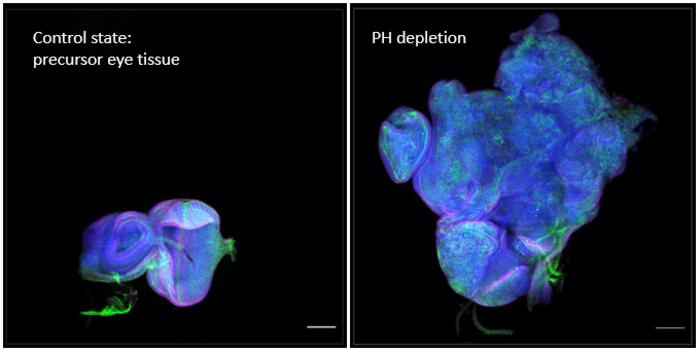
A research team including scientists from the CNRS1 has discovered that cancer, one of the leading causes of death worldwide, can be caused entirely by epigenetic changes2, in other words, changes that contribute to how gene expression is regulated, and partly explain why, despite an identical genome, an individual develops very different cells (neurons, skin cells, etc.). While studies have already described the influence of these processes in the development of cancer, this is the first time that scientists have demonstrated that genetic mutations are not essential for the onset of the disease. This discovery forces us to reconsider the theory that, for more than 30 years, has assumed that cancers are predominantly genetic diseases caused necessarily by DNA mutations that accumulate at the genome level3.

Credit: © Giacomo Cavalli
A research team including scientists from the CNRS1 has discovered that cancer, one of the leading causes of death worldwide, can be caused entirely by epigenetic changes2, in other words, changes that contribute to how gene expression is regulated, and partly explain why, despite an identical genome, an individual develops very different cells (neurons, skin cells, etc.). While studies have already described the influence of these processes in the development of cancer, this is the first time that scientists have demonstrated that genetic mutations are not essential for the onset of the disease. This discovery forces us to reconsider the theory that, for more than 30 years, has assumed that cancers are predominantly genetic diseases caused necessarily by DNA mutations that accumulate at the genome level3.
To show this, the research team focused on epigenetic factors that can alter gene activity. By causing epigenetic dysregulation4 in Drosophila, and then restoring the cells to their normal state, scientists have found that part of the genome remains dysfunctional. This phenomenon induces a tumour state that is maintained autonomously and continues to progress, keeping in memory the cancerous status of these cells even though the signal that caused it has been restored.
These conclusions, to be published on April 24, 2024, in the journal Nature, open up new therapeutic avenues in oncology.
Notes
1 – Working at the Institut de Génétique Humaine (CNRS/Université de Montpellier).
2 – Epigenetics is the study of the mechanisms that allow the inheritance of different gene expression profiles in the presence of the same DNA sequence.
3 – The genome is defined as the set of genetic material – and therefore the entire DNA sequence – contained in a cell or organism.
4 – Scientists focused on epigenetic factors called Polycomb proteins, which regulate the expression of key genes, and are dysregulated in many human cancers. When these proteins are experimentally removed, the activity of the targeted genes is disrupted: some can activate their own transcription and self-maintain. When Polycomb proteins are integrated back into the cell, a subset of the genes are resistant to the proteins and remain dysregulated through cell division, allowing the cancer to continue its progression.
Journal
Nature
Article Title
Transient loss of Polycomb components induces an epigenetic cancer fate
Article Publication Date
24-Apr-2024
Cite Scienmag News
Juliet Wilcox. (April 24, 2024). Discovering cancers of epigenetic origin without DNA mutation. Scienmag. https://scienmag.com/discovering-cancers-of-epigenetic-origin-without-dna-mutation/
Juliet Wilcox. "Discovering cancers of epigenetic origin without DNA mutation." Scienmag, 24 April 2024, https://scienmag.com/discovering-cancers-of-epigenetic-origin-without-dna-mutation/. Accessed 4 September 2026.
Juliet Wilcox. "Discovering cancers of epigenetic origin without DNA mutation." Scienmag. April 24, 2024. https://scienmag.com/discovering-cancers-of-epigenetic-origin-without-dna-mutation/

