


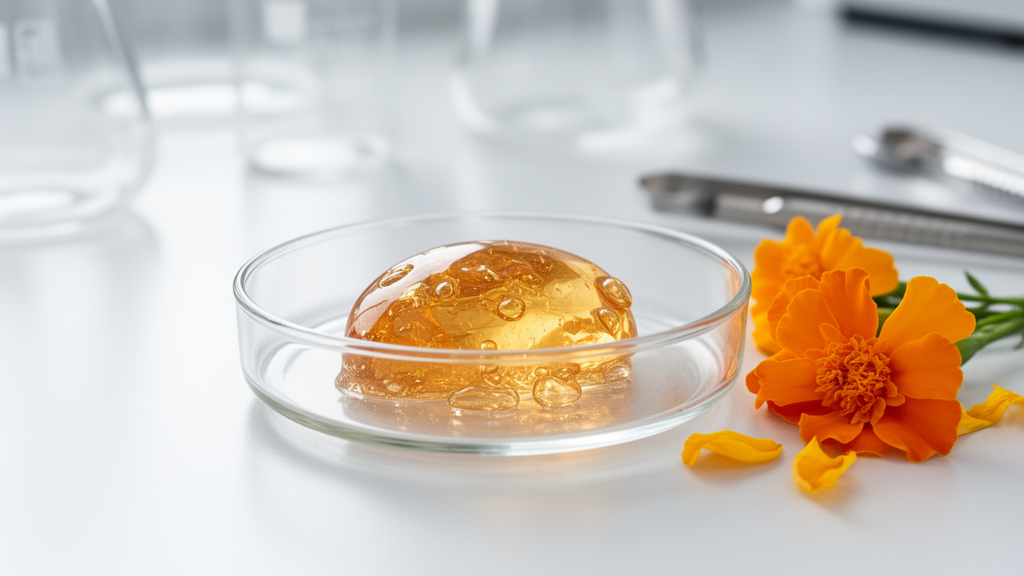
Published in the Beni-Suef University Journal of Basic and Applied Sciences in July 2026, the study details the in vitro anticancer activity of this formulation, designated as Gel-Alg-Ag-CO, against HepG2 liver cancer cells. The team aimed to create a biocompatible and efficient anticancer agent that addresses the limitations of conventional therapies, such as toxicity and poor selectivity, by leveraging the principles of green nanotechnology.
The synthesis process involved creating an aqueous extract from Calendula officinalis flower powder, which was then used to synthesize silver nanoparticles. These nanoparticles were encapsulated within a hydrogel formed by gelatin and alginate. The researchers utilized ultraviolet light to stimulate the reduction of silver nitrate to silver nanoparticles within the polymer matrix. To ensure stability and prevent aggregation, calcium chloride was added to form calcium alginate, and glutaraldehyde was used as a crosslinking agent. This method differs from previous studies that typically mixed precursor solutions with plant extracts in amber bottles and incubated them in the dark, highlighting a distinct approach to green synthesis.
Characterization of the Gel-Alg-Ag-CO nanohydrogel revealed an average hydrodynamic size of 97.68 nm, as determined by dynamic light scattering. The formulation exhibited a negative zeta potential of -31.03 mV, indicating good colloidal stability in an aqueous medium. X-ray diffraction analysis confirmed that the silver nanoparticles possessed a crystalline face-centered cubic structure, with peaks indexed to the (111), (200), (220), and (311) planes. Scanning electron microscopy showed that the particles were predominantly spherical, with sizes ranging from 73.01 nm to 131.5 nm. Energy-dispersive X-ray spectroscopy verified the presence of silver, calcium, and oxygen in the formulation, with calcium and oxygen likely originating from the crosslinker and alginate components.
Phytochemical and gas chromatography-mass spectrometry analyses of the Calendula officinalis extract identified various bioactive compounds, including flavonoids, terpenoids, glycosides, and fumaric acid derivatives. The most prevalent compound detected was fumaric acid, 2,2,3,3,4,4,5,5-octafluoropentyl tridecyl ester, which accounted for 25.79% of the total composition. These phytochemicals are known for their antioxidant and therapeutic potential, potentially contributing to the overall anticancer effect of the nanocomposite. The presence of these compounds suggests that the extract serves not only as a reducing agent but also as a source of bioactive molecules that may enhance the therapeutic profile of the silver nanoparticles.
Biocompatibility assessments were conducted to ensure the safety of the formulation. In vitro tests using 3T3L1 fibroblast cells demonstrated minimal cytotoxicity, with cell viability remaining at 93 ± 3.3% at the highest tested concentration of 80 µg/mL. A hemolysis assay indicated that the formulation caused minimal hemolysis, with rates ranging from 0.4% to 1.06% at concentrations up to 10 µg/mL, suggesting good blood compatibility. In vivo biocompatibility was evaluated using zebrafish embryos, a common model for developmental toxicity studies. The nanocomposite showed no significant developmental toxicity at concentrations up to 5 µg/mL, although hatchability declined to 75 ± 4.8% at 10 µg/mL, indicating a dose-dependent effect on embryo development.
The primary anticancer activity was evaluated against HepG2 liver cancer cells using morphological assessment and the MTT assay. The Gel-Alg-Ag-CO formulation exhibited dose-dependent cytotoxicity, with the highest inhibition rate of 63 ± 3.5% observed at a concentration of 80 µg/mL. The half-maximal inhibitory concentration (IC50) was determined to be 18.2 µg/mL. Microscopic observations revealed a clear reduction in cell proliferation and morphological changes in the treated HepG2 cells compared to the untreated control group. These findings suggest that the nanocomposite has a suppressive effect on cancer cell growth, likely due to the combined action of silver ions and the phytochemicals from the marigold extract.
The study highlights the potential of green nanotechnology in developing multifunctional anticancer platforms. By integrating natural plant extracts, biodegradable polymers, and metal nanoparticles, the researchers created a system that bridges the gap between efficacy and safety in cancer cell killing. The synergistic effects of silver nanoparticles, biopolymer encapsulation, and phytochemicals from Calendula officinalis position this nanocomposite as a promising candidate for targeted cancer nanotherapy. The controlled release of silver nanoparticles from the hydrogel matrix, as evidenced by release kinetics studies, further supports its potential for sustained therapeutic action.
Despite the promising in vitro results, the authors emphasize the need for further investigation. The study was limited to in vitro assays and zebrafish embryo models, and future research is warranted to validate the therapeutic potential in in vivo tumor models. Mechanistic studies are also necessary to fully elucidate the pathways involved in the anticancer activity of the Gel-Alg-Ag-CO nanocomposite. The authors suggest that interdisciplinary collaborations and the integration of computational methodologies could accelerate the translational outcomes of this research, enabling a deeper understanding of the complex biological interactions involved.
The development of this nanocomposite represents a significant step forward in the field of green nanotechnology for cancer therapy. The use of Calendula officinalis extract not only provides an eco-friendly method for synthesizing silver nanoparticles but also introduces bioactive compounds that may enhance the therapeutic effect. The biocompatibility of the formulation, as demonstrated by the low cytotoxicity to normal cells and minimal hemolysis, addresses a major limitation of conventional cancer treatments. The ability to encapsulate nanoparticles in a hydrogel matrix offers the advantage of controlled release and improved bioavailability, which are crucial for effective drug delivery.
In conclusion, the study demonstrates that the Gel-Alg-Ag-CO nanocomposite is a safe, biocompatible, and potent anticancer agent in vitro. Its unique combination of green synthesis, biopolymer encapsulation, and phytochemical enrichment makes it a viable candidate for further preclinical development. As the search for alternative therapeutic strategies in oncology continues, such innovative approaches hold promise for developing treatments that are both effective and less harmful to patients. The findings of this study contribute to the growing body of evidence supporting the use of plant-mediated nanomaterials in biomedical applications, particularly in the field of cancer nanotherapy.
The research was published as Volume 15, article number 78, in 2026. The team utilized specific cell lines for their assays: HepG2 cells for the liver cancer model and 3T3L1 fibroblast cells for the normal tissue biocompatibility assessment. These cell lines were sourced from the National Centre for Cell Science in Pune, India. The use of distinct cell lines allowed the researchers to compare the differential effects of the nanocomposite on malignant versus healthy cellular structures, providing a baseline for evaluating selectivity in the in vitro environment.
Methodological details reveal that the Calendula officinalis flower powder was obtained from a commercial supplier in Bangalore, India. The extraction process involved sonicating the powder in distilled water at 50 kHz for four 15-minute intervals, followed by agitation at 70–75 °C for one hour. This procedure yielded a filtered extract with a recovery rate of 30% to 35%. The synthesis of the nanocomposite involved a specific sequence of chemical additions. Gelatin was first dissolved in the plant extract, followed by the addition of acetone for desolvation. Sodium alginate was then incorporated, and silver nitrate was added to the mixture. The reduction of silver ions to nanoparticles was stimulated by ultraviolet exposure for 1.5 hours. Glutaraldehyde was subsequently added to crosslink the formulation, and calcium chloride was used to form calcium alginate, which helped stabilize the structure and reduce aggregation. This stepwise approach distinguishes the synthesis from methods that rely solely on dark incubation of precursor and extract mixtures.
The release kinetics of the silver nanoparticles from the hydrogel matrix were evaluated using an in vitro dialysis method with a 10 kDa cutoff. The hydrogel was immersed in phosphate-buffered saline at 37 °C, and the concentration of released silver was monitored over time using UV-visible spectroscopy. The results indicated an expedited release phase at the beginning, followed by a slower, steady increase in release. This sustained release profile suggests that the hydrogel matrix can maintain the presence of silver nanoparticles in the environment for an extended period, which is a critical factor for potential therapeutic applications requiring prolonged exposure. The stability of the formulation was further supported by the polydispersity index (PDI) value of 0.411, which indicates minimal aggregation of the nanoparticles within the hydrogel structure.
Statistical analysis of the experimental data was performed using Student’s t-test to determine the significance of differences between treated and untreated groups. A p-value of less than 0.05 was considered statistically significant. In the morphological assessment of HepG2 cells, the reduction in cell proliferation was found to be statistically significant (*p < 0.01) compared to the untreated control. The zebrafish embryo study, which served as an in vivo biocompatibility model, was conducted under ethical clearance from the Institute Animal Ethics Committee of Chettinad Academy of Research and Education. The embryos were observed at 8, 30, and 54 hours post-fertilization to monitor developmental milestones and potential toxicological effects. The study’s scope is limited to in vitro cell assays and zebrafish embryo models, and the authors explicitly state that in vivo tumor studies are necessary to validate the therapeutic potential of the Gel-Alg-Ag-CO nanocomposite in a living organism.
Subject of Research: In vitro anticancer activity of silver nanoparticles entrapped in gelatin-alginate synthesized using Calendula officinalis extract
Article Title: In vitro anticancer activity of silver nanoparticles entrapped in gelatin-alginate, synthesized using Calendula officinalis flower extract
Article References: Chandrasekaran, N. S., Deepika, B., Sundarraj, S., Sridhanya, M. S., Mercy, D. J., Gopalarethinam, J., Udayakumar, S., Girigoswami, A., Metkar, S. K., Hansda, S., & Girigoswami, K. (2026). In vitro anticancer activity of silver nanoparticles entrapped in gelatin-alginate, synthesized using Calendula officinalis flower extract. Beni-Suef University Journal of Basic and Applied Sciences, 15(1), Article 78. https://doi.org/10.1186/s43088-026-00804-4
Image Credits: AI Generated
DOI: 10.1186/s43088-026-00804-4
Keywords: silver nanoparticles, green nanotechnology, Calendula officinalis, anticancer activity, HepG2 cells, gelatin-alginate hydrogel, biocompatibility, zebrafish embryos, MTT assay, phytochemicals, vitro, anticancer
Cite Scienmag News
Nathaniel Bowman. (November 11, 2026). Marigold-Based Silver Nanoparticle Gel Shows Anticancer Potential. Scienmag. https://scienmag.com/marigold-based-silver-nanoparticle-gel-shows-anticancer-potential/
Nathaniel Bowman. "Marigold-Based Silver Nanoparticle Gel Shows Anticancer Potential." Scienmag, 11 November 2026, https://scienmag.com/marigold-based-silver-nanoparticle-gel-shows-anticancer-potential/. Accessed 11 November 2026.
Nathaniel Bowman. "Marigold-Based Silver Nanoparticle Gel Shows Anticancer Potential." Scienmag. November 11, 2026. https://scienmag.com/marigold-based-silver-nanoparticle-gel-shows-anticancer-potential/




