


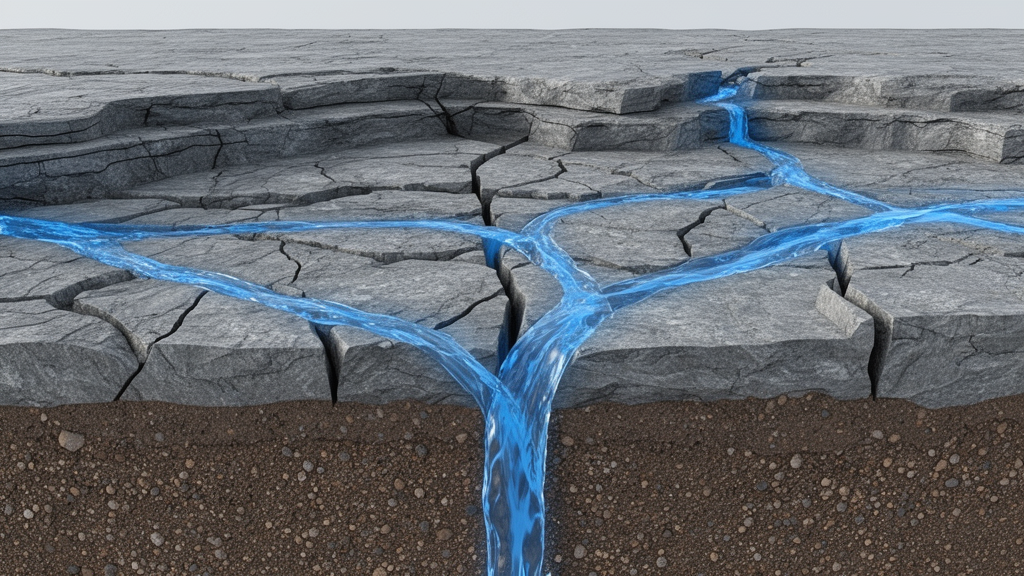
The study argues that the inherent stability of a hydrogeological system, rather than the complexity of the forecasting model, is the primary control on groundwater level forecast accuracy. Published in Applied Water Science, the study challenges the conventional approach of relying on increasingly complex model architectures to improve forecasts. Instead, the authors argue that anthropogenic pressures, such as intensive pumping, create hydrogeological instability that acts as a fundamental barrier to accurate prediction. This shift in perspective moves the focus from optimizing algorithms to diagnosing the physical state of the aquifer system.
The study utilized fixed-structure Long Short Term Memory (LSTM) and Support Vector Regression (SVR) models to analyze groundwater level data from five observation wells in the Dez Plain, Iran. These wells were selected to represent a spectrum of conditions, ranging from hydrologically stable to highly unstable environments. The analysis included 100 bootstrap iterations.
To quantify the stability of each observation well, the researchers developed three complementary indices: Maximum Annual Fluctuation (MaxAF), Average Annual Fluctuation (AvgAF), and the Average September–October Difference (ASODA). These metrics were designed to capture both the magnitude and the persistence of groundwater level variability over time.
The results revealed a distinct pattern in model performance depending on the stability of the system. In stabilized conditions, the LSTM model achieved low absolute error, with a Root Mean Square Error (RMSE) of approximately 0.25 meters. In contrast, the static SVR model failed to reproduce the observed dynamics in these same conditions, resulting in a Nash-Sutcliffe Efficiency (NSE) score of less than zero.
However, under pumping-dominated and highly unstable conditions, the performance metrics presented a more complex picture. While the LSTM model produced a high NSE score greater than 0.90, it also exhibited large absolute errors, with an RMSE of approximately 0.60 meters. This discrepancy reveals what the authors term the “Variance Paradox,” where strong normalized performance metrics can mask limited practical accuracy in high-variance systems.
The study identifies a physical “Predictability Barrier,” characterized by a monotonic increase in forecast error as hydrogeological instability increases. The findings support a shift in management strategy from purely technical model refinement toward a broader system diagnosis.
Based on these findings, the researchers propose a tiered management framework guided by the qualitative interpretation of forecast uncertainty. In this framework, narrow Confidence Intervals (CIs) indicate stable, predictable systems, which are classified as Tier 1. Conversely, broad CIs signal unstable conditions that require physical restoration of the aquifer, classified as Tier 2. This approach integrates statistical uncertainty with physical interpretation to guide management actions.
Subject of Research: Impact of hydrogeological stability on LSTM groundwater forecasting accuracy
Article Title: Enhancing groundwater level forecasting using LSTM: integrating hydrogeological variability for improved accuracy (case study: Dez Plain, Iran)
Article References: Sadeghi, M., Zarei, H., Ahmadi, F., & Rashno, A. (2026). Enhancing groundwater level forecasting using LSTM: integrating hydrogeological variability for improved accuracy (case study: Dez Plain, Iran). Applied Water Science, 16(11), Article 310. https://doi.org/10.1007/s13201-026-03007-5
Image Credits: AI Generated
DOI: 10.1007/s13201-026-03007-5
Keywords: groundwater forecasting, LSTM, hydrogeology, Dez Plain, water resources, machine learning, aquifer management, forecast uncertainty, Enhancing, groundwater, level, forecasting
Cite Scienmag News
Violet Maxwell. (November 7, 2026). Groundwater Forecast Accuracy Limited by System Instability. Scienmag. https://scienmag.com/groundwater-forecast-accuracy-limited-by-system-instability/
Violet Maxwell. "Groundwater Forecast Accuracy Limited by System Instability." Scienmag, 7 November 2026, https://scienmag.com/groundwater-forecast-accuracy-limited-by-system-instability/. Accessed 11 November 2026.
Violet Maxwell. "Groundwater Forecast Accuracy Limited by System Instability." Scienmag. November 7, 2026. https://scienmag.com/groundwater-forecast-accuracy-limited-by-system-instability/




