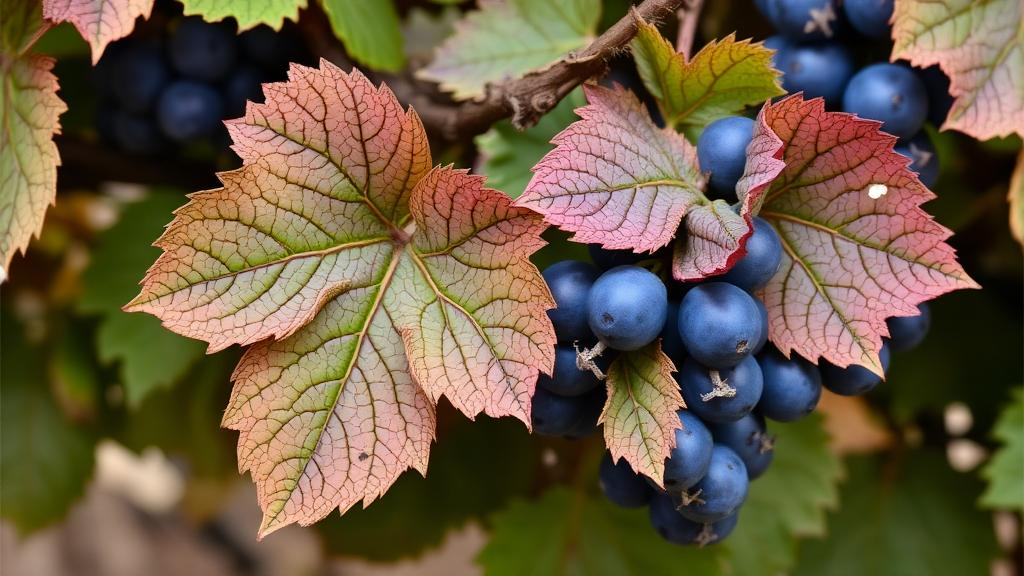
Environmental stresses rarely arrive one at a time. Drought, salinity, heat and nutrient deficiency can strike a crop together, and on a single leaf their symptoms often look maddeningly alike: chlorosis, necrotic margins, wilting, distorted edges. A new open-access study published in Discover Plants on 28 October 2026 proposes a computational answer, describing an Entropy-Driven Adaptive Spatial Modeling framework, or ASM, that analyzes ordinary RGB photographs of grapevine leaves and classifies four stress conditions plus healthy controls while also quantifying how uncertain each prediction is.
The framework, developed by Daniel Raj K., Geetha Palani, Mariappan E., Ponseka G., Japhynth J. and Jasperline T., chains together several machine-learning components rather than relying on a single classifier. Adaptive Gabor Filtering first enhances orientation-sensitive structural features such as veins and lesion boundaries while suppressing background noise and illumination variation. Histogram of Oriented Gradients and multi-scale feature extraction then encode edge, texture and morphological information, establishing what the authors call a robust geometric prior before deep modeling begins.
At the heart of the system sits a Swin Transformer-assisted Capsule Network. The Swin encoder uses shifted-window multi-head self-attention to capture long-range spatial dependencies across the leaf image, and its multi-scale patch embeddings are projected into primary capsules. Instead of standard pooling, which can discard spatial hierarchies, the capsule decoder applies dynamic routing by agreement to preserve part-whole relationships, orientation awareness and the hierarchical posture of stress symptoms. The authors argue this combination addresses a known weakness of conventional convolutional networks, which struggle to retain long-range spatial relationships between stress-responsive regions.
A Graph Attention Network then treats localized image patches as interconnected nodes, with attention weights learned between adjacent patches. The researchers are careful to note that this graph structure models relationships among image-derived regions, not cellular interactions or inter-tissue signaling. Even so, the representation is motivated by the observation that stress propagation such as necrosis or chlorosis spreading along veins behaves as an interconnected topological pattern rather than a grid of independent pixels.
The dataset behind the experiments was collected by the authors’ own team over eight months, from March to October, using grapevine leaves grown under controlled greenhouse conditions and in situ settings. Drought was imposed through controlled irrigation gradients, salinity through sodium chloride concentrations of 50 to 200 millimolar, heat through thermal chambers held between 35 and 42 degrees Celsius, and nutrient deficiency by omitting selected essential nutrients from the growth medium, with treatments lasting 3 to 21 days. Images captured at 4000 by 3000 pixels were resized to 224 by 224, and environmental clutter including soil background, overlapping foliage and shadow artifacts was simulated during collection.
The final annotated dataset contained 5,850 images, split by stratified random sampling into 4,095 training, 585 validation and 1,170 testing images. Particle Swarm Optimization tuned key hyperparameters across the pipeline, including Gabor filter scales and orientations, Swin Transformer depth and attention heads, capsule dimensions, graph attention hidden units and the initial learning rate, using a fitness function that combined validation accuracy with normalized prediction entropy.
Entropy analysis is the framework’s distinctive interpretive layer. Rather than reporting only a final stress label, the model computes the entropy of its predicted probability distribution across the five output categories. A low entropy value means probability is concentrated on one category, indicating a stable and confident prediction; a high value means probability is spread across several categories, which the authors interpret as overlapping or ambiguous stress patterns, for instance when heat-plus-drought damage resembles drought alone. An entropy value above 0.6 is treated within their evaluation framework as a severely perturbed or highly uncertain response condition. The authors emphasize that entropy serves as an image-based prediction-uncertainty indicator, not a physiological measurement of plant stress tolerance.
According to the reported results, the ASM framework achieved higher classification performance than selected baseline models including CNN, ResNet50, EfficientNet and Vision Transformer architectures, evaluated on accuracy, precision, recall, F1-score and AUC. Confusion matrix analysis showed only limited misassignment between stress classes, and ROC analysis reported high AUC values across all stress categories on the evaluated test set. SHAP-based explainability analysis identified spatial gradient structures, morphological deformation patterns and edge-oriented adaptive features as the most influential factors in stress prediction, while attention maps highlighted lesion boundaries, structural deformation regions and morphological irregularities. An ablation study indicated that each integrated module contributed noticeably to environmental robustness, and statistical significance analysis supported the framework’s advantage over the conventional architectures tested.
The authors also acknowledge clear limitations. The system is image-based and does not incorporate temporal physiological measurements, hyperspectral sensing or multimodal biological signals. Large-scale real-field datasets featuring heterogeneous perturbation regimes remain limited, which can affect generalization in complex agricultural settings, and transformer-based components demand substantial training data and computational resources. Future work, they write, will explore temporal environmental monitoring, hyperspectral imaging, IoT-enabled sensing, bioelectrical signaling analysis and dynamic graph learning.
For precision agriculture, the study’s significance lies less in raw classification scores than in its attempt to make stress analysis spatially explicit and uncertainty-aware. By preserving where on the leaf stress-associated visual patterns appear and how confident the model is in each prediction, the framework offers a template for interpretable plant phenotyping, one that its authors hope will eventually extend to real-time field monitoring and climate-resilient crop management systems.
Subject of Research: An adaptive spatial deep-learning framework for analyzing drought, salinity, heat and nutrient-deficiency stress in grapevine leaf images.
Article Title: Entropy-driven adaptive spatial modeling of multi-stress responses in plant systems under environmental variability
Article References: K, D., Palani, G., E, M., G, P., J, J., & T, J. (2026). Entropy-driven adaptive spatial modeling of multi-stress responses in plant systems under environmental variability. Discover Plants, 3(1), Article 501. https://doi.org/10.1007/s44372-026-00963-9
Image Credits: AI Generated
DOI: 10.1007/s44372-026-00963-9
Keywords: grapevine, plant stress, machine learning, Swin Transformer, capsule network, graph attention network, entropy, precision agriculture, image classification, Particle Swarm Optimization, explainable AI, Entropy-driven
Cite Scienmag News
Alan Morgan. (October 29, 2026). Entropy-Based AI Model Reads Grapevine Leaf Images to Track Multi-Stress Responses. Scienmag. https://scienmag.com/entropy-based-ai-model-reads-grapevine-leaf-images-to-track-multi-stress-responses/
Alan Morgan. "Entropy-Based AI Model Reads Grapevine Leaf Images to Track Multi-Stress Responses." Scienmag, 29 October 2026, https://scienmag.com/entropy-based-ai-model-reads-grapevine-leaf-images-to-track-multi-stress-responses/. Accessed 30 October 2026.
Alan Morgan. "Entropy-Based AI Model Reads Grapevine Leaf Images to Track Multi-Stress Responses." Scienmag. October 29, 2026. https://scienmag.com/entropy-based-ai-model-reads-grapevine-leaf-images-to-track-multi-stress-responses/