Thursday, October 29, 2026
Science
No Result
View All Result
  • Login
  • HOME
  • SCIENCE NEWS
  • CONTACT US
  • HOME
  • SCIENCE NEWS
  • CONTACT US
No Result
View All Result
Scienmag
No Result
View All Result
Home Science News Earth Science

Machine Learning Model Predicts Bioavailable Lead in Farmland Soils

October 28, 2026
in Earth Science
Teresa Odom
By Teresa Odom Scienmag Editorial Profile - Machine Learning
Reading Time: 2 mins read
0
Machine Learning Model Predicts Bioavailable Lead in Farmland Soils

Machine Learning Model Predicts Bioavailable Lead in Farmland Soils

65
SHARES
587
VIEWS
Share on FacebookShare on Twitter
ADVERTISEMENT

Lead contamination of farmland has long been treated as a numbers game: measure the total concentration of lead in the soil, compare it with a threshold, and declare the land safe or hazardous. A new study argues that this approach misses the point, because what actually matters is not how much lead is present but how much of it crops can take up. An international research team led by Yohannes Kebede Gebreyes and Zhaojun Li, publishing in Environmental Science and Pollution Research, has built a machine learning framework that predicts bioavailable lead in soil from lead speciation and soil properties, offering a more nuanced picture of risk to food safety and ecosystem health.

The researchers compiled a global dataset of paired soil and crop lead measurements drawn from the Web of Science database. From this they developed and validated ten machine learning models on a dataset linking soil available lead to crop lead. Hyperparameters were tuned using grid search with fivefold cross-validation to select the best-performing configuration. The optimized XGBoost model came out on top, achieving a coefficient of determination of 0.9, a result the authors say reflects the genuinely non-linear character of the soil-crop system that simpler models fail to capture.

What sets the study apart is its emphasis on interpretability. Using SHAP analysis, the team determined which features most strongly influenced the model’s predictions and quantified each factor’s individual effect. Organic matter and pH emerged as the most dominant controllers of lead bioavailability. More strikingly, the analysis identified the acid-soluble fraction of lead as the primary predictor of risk, even though the reducible fraction occurs at higher concentrations in soil.

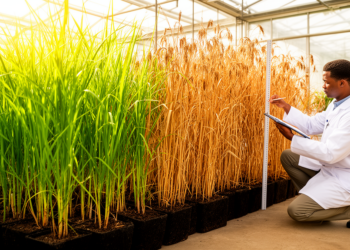
The model also revealed that different crops behave very differently. Lead accumulation in rice grains followed a linear relationship with soil available lead, with a coefficient of determination of 0.419, while wheat showed a more complex, cubic uptake pattern with a coefficient of 0.37. This crop-specific divergence suggests that a single soil threshold cannot adequately protect all agricultural systems, and that risk assessment may need to be tailored to what is actually being grown.

The authors position their work as a robust, interpretable tool that goes beyond total lead concentration to predict bioavailable lead in soil. They conclude that risk assessment measures should prioritize not only soil properties but also lead fractions and crop-specific models to ensure the sustainable use of agricultural systems. As farmland contamination continues to threaten food safety worldwide, the study offers a data-driven path toward more accurate and actionable soil risk assessment.

Subject of Research: Machine learning prediction of bioavailable lead in agricultural soils using lead speciation and soil properties.

Article Title: Evaluation of machine learning models incorporating soil properties and speciation to determine soil bioavailable lead

Article References: Gebreyes, Y. K., Maneh, K. J., Kukpieun Zackariah, G. S., Andom, O., Gebeyehu, Y., Liu, Y., Mi, H., Guo, X., Tremblay, L. A., & Li, Z. (2026). Evaluation of machine learning models incorporating soil properties and speciation to determine soil bioavailable lead. Environmental Science and Pollution Research. https://doi.org/10.1007/s11356-026-38321-7

Image Credits: AI Generated

DOI: 10.1007/s11356-026-38321-7

Keywords: lead contamination, soil bioavailability, machine learning, XGBoost, SHAP analysis, lead speciation, soil pH, organic matter, rice, wheat, food safety, risk assessment

Cite Scienmag News

Teresa Odom. (October 28, 2026). Machine Learning Model Predicts Bioavailable Lead in Farmland Soils. Scienmag. https://scienmag.com/machine-learning-model-predicts-bioavailable-lead-in-farmland-soils/

Teresa Odom. "Machine Learning Model Predicts Bioavailable Lead in Farmland Soils." Scienmag, 28 October 2026, https://scienmag.com/machine-learning-model-predicts-bioavailable-lead-in-farmland-soils/. Accessed 29 October 2026.

Teresa Odom. "Machine Learning Model Predicts Bioavailable Lead in Farmland Soils." Scienmag. October 28, 2026. https://scienmag.com/machine-learning-model-predicts-bioavailable-lead-in-farmland-soils/


Tags: advanced predictive models for soil heavy metal bioavailabilityenvironmental health implications of lead in agricultural soilsfood safetyglobal soil and crop lead measurement datasetshyperparameter tuning in environmental machine learning modelsimpact of soil properties on lead uptake by cropslead contaminationlead speciationlead speciation and soil properties in soil contamination assessmentMachine learningmachine learning framework for soil pollutant bioavailabilityMachine learning models for predicting bioavailable lead in farmland soilsoptimizing machine learning models inorganic matterricerisk assessmentSHAP analysissoil bioavailabilitysoil contamination risk assessment for food safetysoil pHwheatXGBoostXGBoost soil lead prediction accuracy
Share26Tweet16
Previous Post

Infiltrating Macrophages Help Repair the Retina After Ischemic Injury, Mouse Study Finds

Next Post

Drug-loaded hydrogel triggers immune cells to rebuild bone in defects

Related Posts

COVID-19 Lockdown Slashed Air Pollution Across Indian Cities but Ozone Rose
Athmospheric

COVID-19 Lockdown Slashed Air Pollution Across Indian Cities but Ozone Rose

October 29, 2026
AI, IoT and data analytics show promise for greener operations, review finds
Earth Science

AI, IoT and data analytics show promise for greener operations, review finds

October 29, 2026
Research report: Growth performance and biomass production of Andropogon gayanus, Brachiaria falcifera, and Hyparrhenia smithiana under water deficit conditions
Earth Science

Research report: Growth performance and biomass production of Andropogon gayanus, Brachiaria falcifera, and Hyparrhenia smithiana under water deficit conditions

October 29, 2026
Africa’s Apparel Circularity Runs on Necessity, Not Industry, Review Finds
Earth Science

Africa’s Apparel Circularity Runs on Necessity, Not Industry, Review Finds

October 29, 2026
National governance shapes corporate social responsibility spending in Palestine
Earth Science

National governance shapes corporate social responsibility spending in Palestine

October 29, 2026
Financial resources, feedstock and maintenance shape biogas sustainability in rural Ethiopia
Earth Science

Financial resources, feedstock and maintenance shape biogas sustainability in rural Ethiopia

October 29, 2026
Next Post
Drug-loaded hydrogel triggers immune cells to rebuild bone in defects

Drug-loaded hydrogel triggers immune cells to rebuild bone in defects

  • Mothers who receive childcare support from maternal grandparents show more optimized

    Mothers who receive childcare support from maternal grandparents show more parental warmth, finds NTU Singapore study

    27656 shares
    Share 11059 Tweet 6912
  • University of Seville Breaks 120-Year-Old Mystery, Revises a Key Einstein Concept

    1061 shares
    Share 424 Tweet 265
  • Bee body mass, pathogens and local climate influence heat tolerance

    682 shares
    Share 273 Tweet 171
  • Researchers record first-ever images and data of a shark experiencing a boat strike

    546 shares
    Share 218 Tweet 137
  • Groundbreaking Clinical Trial Reveals Lubiprostone Enhances Kidney Function

    531 shares
    Share 212 Tweet 133
Science

Embark on a thrilling journey of discovery with Scienmag.com—your ultimate source for cutting-edge breakthroughs. Immerse yourself in a world where curiosity knows no limits and tomorrow’s possibilities become today’s reality!

RECENT NEWS

  • Global Financing Facility falls short on adolescent health funding in three country case studies
  • Prostate Cancer Detection Rose After MRI Arrived, But a Single-Centre Study Says the Reason Stays Unclear
  • Midday Sunlight Yields Smaller Copper Nanoparticles With Stronger Antibacterial Activity
  • Never-Smoker COPD Shows Stronger Lung Function Gains from Salbutamol and Glycopyrronium

Categories

  • Agriculture
  • Anthropology
  • Archaeology
  • Athmospheric
  • Biology
  • Biotechnology
  • Blog
  • Bussines
  • Cancer
  • Chemistry
  • Climate
  • Earth Science
  • Editorial Policy
  • Marine
  • Mathematics
  • Medicine
  • Pediatry
  • Policy
  • Psychology & Psychiatry
  • Science Education
  • Science News
  • Social Science
  • Space
  • Technology and Engineering

Subscribe to Blog via Email

Enter your email address to subscribe to this blog and receive notifications of new posts by email.

Join 5,150 other subscribers

© 2025 Scienmag - Science Magazine

Welcome Back!

Login to your account below

Forgotten Password?

Retrieve your password

Please enter your username or email address to reset your password.

Log In
No Result
View All Result
  • HOME
  • SCIENCE NEWS
  • CONTACT US

© 2025 Scienmag - Science Magazine

Discover more from Science

Subscribe now to keep reading and get access to the full archive.

Continue reading