


In a groundbreaking development in the realm of biomedical research, scientists at the Graz University of Technology (TU Graz) have unveiled a revolutionary method for detecting and analyzing nanoplastics in human bodily fluids. This discovery has significant implications for our understanding of how microplastics and their even smaller counterparts—nanoplastics—interact with the human body and, particularly, their potential effects on ophthalmic health.
Nanoplastics are extremely tiny plastic particles, measuring less than 1 micron in size, which can enter the human body through ingestion or inhalation. Once inside, while a portion of these particles are expelled from the body, some manage to infiltrate organs, blood, and other critical body fluids, raising concerns about their health impacts. The Nano-VISION project, initiated two years ago in collaboration with the start-up BRAVE Analytics, has endeavored to investigate these ramifications. A key component of this initiative was led by Harald Fitzek, an expert at the Institute of Electron Microscopy and Nanoanalysis at TU Graz. Alongside an ophthalmologist from Graz, the team explored the pressing question of whether nanoplastics pose a risk to ocular health.
In this innovative project, researchers have developed a sophisticated methodology for detecting and quantifying these minuscule plastics within transparent body fluids. Initial applications of this technology focus on examining whether intraocular lenses—the lenses oftentimes implanted in cataract surgery—might inadvertently release nanoplastics over time. Given that no prior studies have delved into this crucial aspect, the preliminary results have ignited considerable interest within the scientific community and have been submitted for publication in a reputable journal.
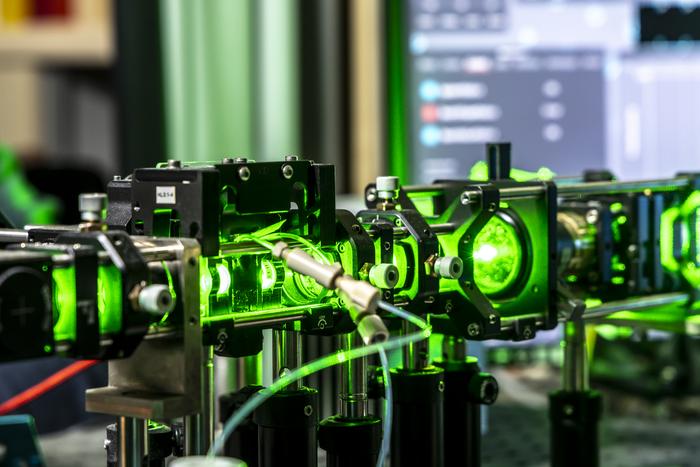
Detection of microplastics and nanoplastics is achieved through a two-step process that employs an advanced sensor platform designed by BRAVE Analytics. The mechanism starts by extracting a liquid sample, which is then directed through a specialized glass tube for analysis. Within this tube, a weakly focused laser beam is projected through the liquid, facilitating an interaction between the light and any present particles. When the laser encounters these particles, it either accelerates or decelerates them depending on their sizes—larger particles are impacted more significantly than smaller ones. By measuring these variations in velocity, researchers can glean valuable insights regarding the particles’ sizes and concentrations in the analyzed liquid.
What sets this approach apart is its incorporation of optofluidic force induction, a technique primarily developed by Christian Hill at the Medical University of Graz. This innovative strategy is complemented by a method known as Raman spectroscopy, which provides an additional layer of information about the particles. In this context, the spectrum of the laser light that is scattered by individual particles in the liquid is meticulously analyzed. The phenomenon known as Raman scattering occurs when a small fraction of the laser light alters its frequency upon interacting with the particles. This alteration allows researchers to deduce the chemical compositions of the particles present.
The ability to ascertain the chemical makeup of these microparticles is particularly pertinent when considering the materials involved, with organic materials and plastics revealing unique frequency signatures. Fitzek emphasizes the utility of this technology in identifying different types of plastics, and how it may pave the way for understanding their implications in a biomedical context, especially when linked to ocular applications.
Currently, the researchers are directing their investigations toward understanding the potential release of nanoplastics from intraocular lenses. They are assessing whether such lenses may shed these particles under mechanical stress or laser exposure, insights that could alter current clinical practices in ophthalmic surgery. The crucial findings from these studies not only carry weight for lens manufacturers but also for eye care professionals who rely on the safety and efficacy of these implants for their patients.
Further extending the technology’s applicability, Fitzek highlights the versatility of their detection method, noting its effectiveness in other bodily fluids such as blood plasma, tear fluid, and even urine. Beyond clinical applications, this sensing technology holds promise for continuous monitoring in industrial liquid flows, alongside drinking and wastewater monitoring, amplifying its relevance to both health and environmental sectors.
The implications of this research are poised to resonate throughout the scientific community, potentially reshaping how we perceive the dangers of nanoplastics. As awareness surrounding plastic pollution escalates, studies such as the one conducted by the Nano-VISION project are increasingly vital in delineating the intricacies of how these minute particles behave once within biological systems.
This research not only enhances our understanding of nanoplastics but also serves as a call to action for further investigation into their health implications. With ongoing studies and the forthcoming publication of their initial findings, the team at Graz University of Technology underlines the importance of interdisciplinary collaboration in addressing complex challenges that straddle the realms of environmental science and human health.
The crucial research findings from the Nano-VISION project promise to usher in a new era of awareness and knowledge, equipping both medical professionals and researchers alike with valuable insights into the impact of nanoplastics within the human body. As more inquiries are conducted, a clearer picture will hopefully emerge, informing both policy and practice in ways that safeguard public health.
With anticipation surrounding their forthcoming publication, the scientific community eagerly awaits further revelations from the team at Graz, whose innovative strides in nanoplastic research are setting the stage for a deeper understanding of these pressing environmental and health issues.
Keywords
Nanoplastics, Microplastics, Biomedical Research, Raman Spectroscopy, Intraocular Lenses, Optofluidic Force Induction, Graz University of Technology, Environmental Science, Public Health.
Cite Scienmag News
Florence R. (April 14, 2025). Breakthrough Technique Enhances Detection of Nanoplastics in Biological Fluids. Scienmag. https://scienmag.com/breakthrough-technique-enhances-detection-of-nanoplastics-in-biological-fluids/
Florence R. "Breakthrough Technique Enhances Detection of Nanoplastics in Biological Fluids." Scienmag, 14 April 2025, https://scienmag.com/breakthrough-technique-enhances-detection-of-nanoplastics-in-biological-fluids/. Accessed 28 August 2026.
Florence R. "Breakthrough Technique Enhances Detection of Nanoplastics in Biological Fluids." Scienmag. April 14, 2025. https://scienmag.com/breakthrough-technique-enhances-detection-of-nanoplastics-in-biological-fluids/


