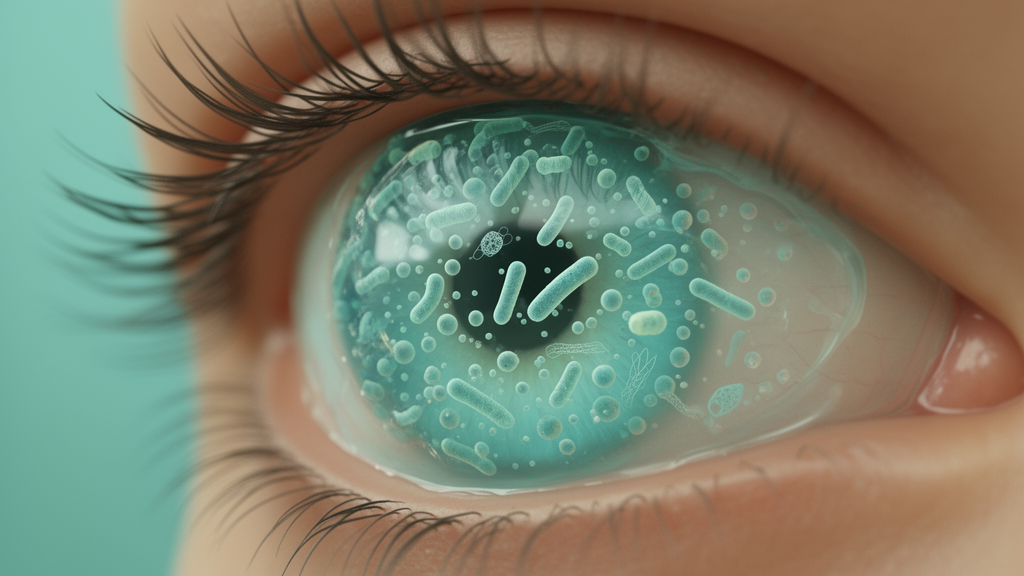
The human eye is not sterile. A thin, remarkably sparse community of microbes lives on the conjunctiva and corneal surface, and a new review published in Frontiers in Cellular and Infection Microbiology argues that this ocular surface microbiota, or OSM, deserves far more attention than it has traditionally received. The review, led by researchers at Peking University Third Hospital and collaborators in Beijing, synthesizes what is currently known about the composition, stability and immune interactions of this microbial ecosystem, and it is candid about how much of the evidence remains associative rather than causal.
Compared with the dense microbial worlds of the gut, mouth or skin, the ocular surface is an ultra-low-biomass niche. Culture-independent surveys using 16S rRNA gene sequencing and shotgun metagenomics consistently show restricted alpha diversity, meaning that relatively few microbial taxa are present. Bacteria dominate the community, with Firmicutes, Actinobacteria and Proteobacteria emerging as the dominant phyla. Fungi and viruses are recovered far less frequently and in lower taxonomic variety, but the review notes they are increasingly thought to contribute to the dynamic equilibrium of the microbiota.
Several studies converge on a conserved core of bacterial genera. Work by Doan and colleagues, combining 16S rDNA sequencing with quantitative PCR and metagenomics, identified Corynebacterium, Propionibacterium, coagulase-negative staphylococci and Streptococcus as the putative core taxa of the healthy conjunctival sac. These organisms show high prevalence and temporal stability across repeated sampling. A separate Chinese study of 31 conjunctival swab samples found Corynebacterium at 28.22 percent relative abundance, followed by Pseudomonas at 26.75 percent, Staphylococcus at 5.28 percent, Acinetobacter at 4.74 percent and Streptococcus at 2.85 percent, though relative abundances differed markedly between individuals.
Culture-based studies paint a partly overlapping picture. In a large survey of 8,224 conjunctival sac samples from central China, Staphylococcus epidermidis was recovered from 39.7 percent of specimens, followed by Streptococcus pneumoniae at 4.5 percent and Staphylococcus aureus at 2.7 percent. A longitudinal Australian study of healthy adults found that between 2 and 170 colony-forming units could be recovered per eye sample, and that certain species remained detectable at multiple time points, suggesting a subject-specific core microbiome. The review also highlights a fungal component: in 45 healthy volunteers, Basidiomycota and Ascomycota, including the genera Malassezia, Rhodotorula, Davidiella, Aspergillus and Alternaria, made up more than 80 percent of fungal sequences and were present in over 80 percent of samples.
What shapes this community? The review identifies geography, lifestyle, age, sex, delivery mode, contact lens wear and systemic disease as recurring influences. In a metagenomic study of 172 healthy volunteers from Guangzhou, Wenzhou and Beijing, each city had a distinct microbial profile: Propionibacterium dominated in Guangzhou, Pseudomonas in Beijing, and predicted metabolic pathways differed by city. Short-term travel within the same province did not measurably alter the microbiota, whereas prolonged residence in a different province was associated with detectable shifts. Dietary pattern also emerged as a relevant variable, with markedly different eating habits corresponding to distinct OSM profiles.
Age and birth history leave their mark as well. Coagulase-negative staphylococci are the organisms most frequently recovered from neonatal conjunctival sacs, and culture-positive rates were significantly higher after vaginal delivery than after caesarean section. Among 6,440 Chinese children, the positive bacterial culture rate was 21.8 percent, with Staphylococcus at 37.4 percent, Corynebacterium at 30 percent and Streptococcus pneumoniae at 21.4 percent. A study of 1,258 adolescents found that Staphylococcus epidermidis detection rates correlated positively with age, and patients over 65 years have been reported to show higher alpha diversity than younger individuals. Sex-related differences have also been reported, though findings are inconsistent across studies: one metagenomic analysis found Propionibacterium acnes and Staphylococcus epidermidis more abundant in men, while Escherichia coli was more common in women.
Health conditions appear to reshape the microbiota too. In a study of 70 patients with meibomian gland dysfunction, Staphylococcus epidermidis was the most commonly isolated bacterium, and Corynebacterium macginleyi was prominently detected in severe cases, with an isolation rate of 26.3 percent. Conversely, a study of 199 dry eye patients aged 4 to 84 years found that as disease severity increased, OSM diversity decreased and species composition became more homogenized. Certain tear proteins with bactericidal activity, including lactoferrin, lysozyme, polymeric immunoglobulin receptor and lactoperoxidase, are selectively downregulated in dry eye disease, a finding the review says supports the plausibility of the association. Diabetes has been associated with increased OSM diversity, potentially because the hyperglycemic environment provides nutrients for ocular surface microorganisms.
The mechanistic heart of the review concerns immunity. Evidence from animal models suggests the OSM contributes to the maturation of ocular surface immune defenses. In germ-free mice, the ocular surface fails to mobilize LY6G-positive inflammatory cells and cannot mount an effective defense against Staphylococcus aureus challenge; after three weeks of co-housing with conventionally raised animals, the formerly germ-free mice acquired a microbiota and regained protective capacity. On the molecular level, microbial ligands engage Toll-like receptors on ocular surface cells, triggering signaling through MyD88, IRAK kinases and the NF-kappa-B and MAPK pathways, which drives production of cytokines such as TNF-alpha, IL-6 and IL-1beta. NOD-like receptors, including NOD2 and NLRP3, show markedly elevated mRNA levels in actively infected human corneas, and secretory IgA, the principal antibody at the ocular surface, neutralizes pathogens and blocks their adhesion to epithelial cells.
A putative gut-eye axis adds another layer. Antibiotic-driven depletion of gut commensals has been shown to lower tear secretory IgA protein and IgA transcript levels at the ocular surface, prompting the proposal of a gut-eye immune axis. Germ-free mice develop more severe Pseudomonas aeruginosa keratitis than conventionally housed controls, and colonizing the conjunctival sac of infected germ-free animals with a single coagulase-negative staphylococcal isolate recovered from human conjunctival swabs restored resistance to infection. The review stresses, however, that direct causal relationships between the OSM and ocular immune homeostasis remain to be established in humans, and that much of the available evidence derives from animal models, small cohorts or indirect systemic correlations.
The microbiota can also turn pathogenic. Under physiological conditions, competitive exclusion and negative feedback maintain microbial equilibrium, but surgical trauma, antibiotics or corticosteroids have been associated with destabilization of the niche, under which commensals may acquire virulence genes, form biofilms and transition into opportunistic pathogens. Following cataract surgery, the most frequently isolated causative agents of endophthalmitis are coagulase-negative staphylococci, Staphylococcus aureus and streptococci, and CNS infections can form biofilms that impair antibiotic penetration. In a cross-sectional survey of 347 patients with ocular surface infection, Gram-positive pathogens accounted for 34.3 percent of cases, most isolates were multidrug-resistant, and prophylactic or indiscriminate topical antibiotic use was identified as a significant risk factor. The review concludes that high-resolution profiling of OSM composition and function may help clarify disease mechanisms and could eventually furnish microbial biomarkers for precision diagnosis and personalized therapy, but it cautions that the field is constrained by ultra-low biomass, contamination risk, absent standardized protocols and a scarcity of longitudinal and interventional studies. Causality, the authors emphasize, awaits confirmation in standardized, longitudinal and interventional research.
Subject of Research: The composition, regulation and immune interactions of the ocular surface microbiota
Article Title: Structural characteristics and regulatory mechanisms of the ocular surface microbiota and their relationship with ocular surface health
Article References: Zhao, T., Sun, Y., Jiang, X., Feng, Y., Ding, J., Li, X., & Deng, A. (2026). Structural characteristics and regulatory mechanisms of the ocular surface microbiota and their relationship with ocular surface health. Frontiers in Cellular and Infection Microbiology, 16, Article 1938863. https://doi.org/10.3389/fcimb.2026.1938863
Image Credits: AI Generated
DOI: 10.3389/fcimb.2026.1938863
Keywords: ocular surface microbiota, conjunctival microbiome, dry eye disease, meibomian gland dysfunction, 16S rRNA sequencing, metagenomics, secretory IgA, Toll-like receptors, gut-eye axis, infectious keratitis, contact lens wear, immune homeostasis
Cite Scienmag News
Morgan Morrow. (October 28, 2026). The eye’s tiny microbial community may hold clues to ocular surface health. Scienmag. https://scienmag.com/the-eyes-tiny-microbial-community-may-hold-clues-to-ocular-surface-health/
Morgan Morrow. "The eye’s tiny microbial community may hold clues to ocular surface health." Scienmag, 28 October 2026, https://scienmag.com/the-eyes-tiny-microbial-community-may-hold-clues-to-ocular-surface-health/. Accessed 29 October 2026.
Morgan Morrow. "The eye’s tiny microbial community may hold clues to ocular surface health." Scienmag. October 28, 2026. https://scienmag.com/the-eyes-tiny-microbial-community-may-hold-clues-to-ocular-surface-health/