Thursday, November 5, 2026
Science
No Result
View All Result
  • Login
  • HOME
  • SCIENCE NEWS
  • CONTACT US
  • HOME
  • SCIENCE NEWS
  • CONTACT US
No Result
View All Result
Scienmag
No Result
View All Result
Home Science News Earth Science

Machine learning transfers heat risk screening to planned new towns

October 28, 2026
in Earth Science
Teresa Odom
By Teresa Odom Scienmag Editorial Profile - Machine Learning
Reading Time: 3 mins read
0
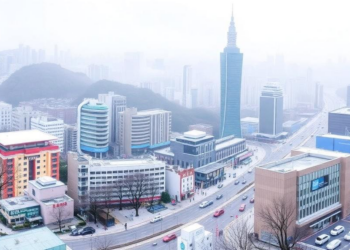
Machine learning transfers heat risk screening to planned new towns

Machine learning transfers heat risk screening to planned new towns

65
SHARES
587
VIEWS
Share on FacebookShare on Twitter
ADVERTISEMENT

Assessing heat risk in a city that has not yet been built is a stubborn problem for urban planners. Thermal environments, population activity patterns, and the detailed fabric of streets and buildings simply do not exist at the planning stage, so conventional heat risk assessments can only describe danger after development is complete. A new study from Hanyang University’s ERICA Campus in South Korea proposes a way around this: take the heat risk relationships measured in a mature new town and translate them into variables that planners can calculate before a single foundation is poured.

The researchers used Bundang-Pangyo, a developed new town in South Korea, as their reference area. There, they characterized composite heat risk through three components: heat hazard, exposure, and built environment vulnerability. Spatial analysis of this composite measure revealed substantial variation within the city itself, showing that the relationships between urban form and heat risk were not uniform across the reference area.

The core methodological move was to identify planning-stage variables that could serve as a common language between the mature city and unbuilt sites. Land use, road network, and building development characteristics available in planning documents were used as intermediary variables for cross-regional machine learning prediction. The models trained on Bundang-Pangyo’s observed heat risk relationships could then be applied to areas where only plans exist.

The results showed a clear hierarchy of predictive value. Conventional land use and road characteristics alone captured meaningful variation in heat risk, but the inclusion of additional building development and three-dimensional planning information substantially improved performance. In other words, knowing how tall and how densely a district will be built adds real predictive power beyond what flat land use maps can offer.

To test the framework, the team applied it to two planned new towns: Goyang Changneung and Namyangju Wangsuk. The transferred models produced clearly differentiated planning-stage risk profiles for the two sites, demonstrating that the approach can distinguish spatial variations associated with different planned urban configurations rather than flattening every new town into the same risk picture.

SHAP analysis, a technique that quantifies how much each input variable contributes to a model’s predictions, consistently highlighted three variables as most strongly associated with the transferred predictions: planned cooling balance, planned normalized building coverage ratio, and planned impervious surface ratio. Together, these point to a joint importance of ecological cooling capacity and development intensity in shaping planning-stage heat risk.

The study’s limitations follow from its design. The framework was validated against one mature reference area and two planned sites, all within South Korea, and the predictions concern comparative risk screening rather than measured future temperatures. The authors also note that the transferred outputs are associations with planned configurations, not forecasts of realized thermal conditions.

Even with those caveats, the methodological contribution is significant. The study extends urban heat risk assessment from post-development diagnosis toward planning-stage comparative screening, giving planners a quantitative tool to evaluate heat implications of alternative development configurations before construction.

Subject of Research: Transferring heat risk prediction from a mature new town to planned new towns using planning-stage environmental variables and machine learning

Article Title: A cross-regional machine learning transfer prediction framework for heat risk based on environmental characteristics of mature new towns

Article References: Lee, D., Zeng, J., & Kim, H. (2026). A Cross-Regional Machine Learning Transfer Prediction Framework for Heat Risk Based on Environmental Characteristics of Mature New Towns. Frontiers in Environmental Science, 14, 2012398. https://doi.org/10.3389/fenvs.2026.2012398

Image Credits: AI Generated

DOI: 10.3389/fenvs.2026.2012398

Keywords: heat risk, machine learning, new towns, urban planning, SHAP analysis, South Korea, built environment, land use, urban heat, planning-stage screening, cross-regional, machine

Cite Scienmag News

Teresa Odom. (October 28, 2026). Machine learning transfers heat risk screening to planned new towns. Scienmag. https://scienmag.com/machine-learning-transfers-heat-risk-screening-to-planned-new-towns/

Teresa Odom. "Machine learning transfers heat risk screening to planned new towns." Scienmag, 28 October 2026, https://scienmag.com/machine-learning-transfers-heat-risk-screening-to-planned-new-towns/. Accessed 5 November 2026.

Teresa Odom. "Machine learning transfers heat risk screening to planned new towns." Scienmag. October 28, 2026. https://scienmag.com/machine-learning-transfers-heat-risk-screening-to-planned-new-towns/

Tags: built environmentbuilt environment thermal vulnerabilitycross-regionaldevelopment of heat risk transfer methodologyheat hazard and exposure analysisheat riskheat risk screening in urban planningheat vulnerability in planned citiesland useland use and heat risk predictionmachineMachine learningmachine learning for urban planningnew townsplanning-stage screeningpre-construction heat risk evaluationpredictive modeling for new town developmentSHAP analysisSouth Koreaspatial analysis of heat riskurban form and climate resilienceurban heatUrban heat risk assessmenturban planning
Share26Tweet16
Previous Post

Bread sold in Ouagadougou shows widespread contamination from post-baking handling

Next Post

New Plasticity Method Captures Strength Differential and Friction in Metal Forming

Related Posts

Mining soils in North China show high stomach solubility of cadmium and lead
Earth Science

Mining soils in North China show high stomach solubility of cadmium and lead

November 4, 2026
Plants turn water into electricity as hydrovoltaic devices reach 1.2 volts
Chemistry

Plants turn water into electricity as hydrovoltaic devices reach 1.2 volts

November 4, 2026
Box–Behnken Design Speeds Probabilistic Slope Stability Analysis
Earth Science

Box–Behnken Design Speeds Probabilistic Slope Stability Analysis

November 4, 2026
Remote Sensing Reveals Truck and Bus Emissions Across Jakarta Roads
Athmospheric

Remote Sensing Reveals Truck and Bus Emissions Across Jakarta Roads

November 4, 2026
Winter PM2.5 Sources in Taipei Tracked with Receptor Modeling and Trajectory Analysis
Athmospheric

Winter PM2.5 Sources in Taipei Tracked with Receptor Modeling and Trajectory Analysis

November 4, 2026
Climate Change Reshapes Food Environments Far Beyond the Farm, Study Finds
Earth Science

Climate Change Reshapes Food Environments Far Beyond the Farm, Study Finds

November 4, 2026
Next Post
New Plasticity Method Captures Strength Differential and Friction in Metal Forming

New Plasticity Method Captures Strength Differential and Friction in Metal Forming

  • Mothers who receive childcare support from maternal grandparents show more optimized

    Mothers who receive childcare support from maternal grandparents show more parental warmth, finds NTU Singapore study

    27656 shares
    Share 11059 Tweet 6912
  • University of Seville Breaks 120-Year-Old Mystery, Revises a Key Einstein Concept

    1061 shares
    Share 424 Tweet 265
  • Bee body mass, pathogens and local climate influence heat tolerance

    682 shares
    Share 273 Tweet 171
  • Researchers record first-ever images and data of a shark experiencing a boat strike

    546 shares
    Share 218 Tweet 137
  • Groundbreaking Clinical Trial Reveals Lubiprostone Enhances Kidney Function

    531 shares
    Share 212 Tweet 133
Science

Embark on a thrilling journey of discovery with Scienmag.com—your ultimate source for cutting-edge breakthroughs. Immerse yourself in a world where curiosity knows no limits and tomorrow’s possibilities become today’s reality!

RECENT NEWS

  • How a handful of WallStreetBets traders ignited the GameStop squeeze
  • Climate-resilient livestock: welfare, technology and adaptation converge
  • D-Cysteine Keeps Fresh-Cut Button Mushrooms White and Fresh by Triggering Internal Hydrogen Sulfide
  • Mining soils in North China show high stomach solubility of cadmium and lead

Categories

  • Agriculture
  • Anthropology
  • Archaeology
  • Athmospheric
  • Biology
  • Biotechnology
  • Blog
  • Bussines
  • Cancer
  • Chemistry
  • Climate
  • Earth Science
  • Editorial Policy
  • Marine
  • Mathematics
  • Medicine
  • Pediatry
  • Policy
  • Psychology & Psychiatry
  • Science Education
  • Science News
  • Social Science
  • Space
  • Technology and Engineering

Subscribe to Blog via Email

Enter your email address to subscribe to this blog and receive notifications of new posts by email.

Join 5,149 other subscribers

© 2025 Scienmag - Science Magazine

Welcome Back!

Login to your account below

Forgotten Password?

Retrieve your password

Please enter your username or email address to reset your password.

Log In
No Result
View All Result
  • HOME
  • SCIENCE NEWS
  • CONTACT US

© 2025 Scienmag - Science Magazine

Discover more from Science

Subscribe now to keep reading and get access to the full archive.

Continue reading