Wednesday, October 28, 2026
Science
No Result
View All Result
  • Login
  • HOME
  • SCIENCE NEWS
  • CONTACT US
  • HOME
  • SCIENCE NEWS
  • CONTACT US
No Result
View All Result
Scienmag
No Result
View All Result
Home Science News Biotechnology

Injectable chitosan hydrogels loaded with plant-derived silver nanoparticles speed burn wound healing in mice

October 28, 2026
in Biology, Biotechnology
Gregory Coleman
By Gregory Coleman Scienmag Editorial Profile - Synthetic Biology
Reading Time: 2 mins read
0
Injectable chitosan hydrogels loaded with plant-derived silver nanoparticles speed burn wound healing in mice

Injectable chitosan hydrogels loaded with plant-derived silver nanoparticles speed burn wound healing in mice

65
SHARES
587
VIEWS
Share on FacebookShare on Twitter
ADVERTISEMENT

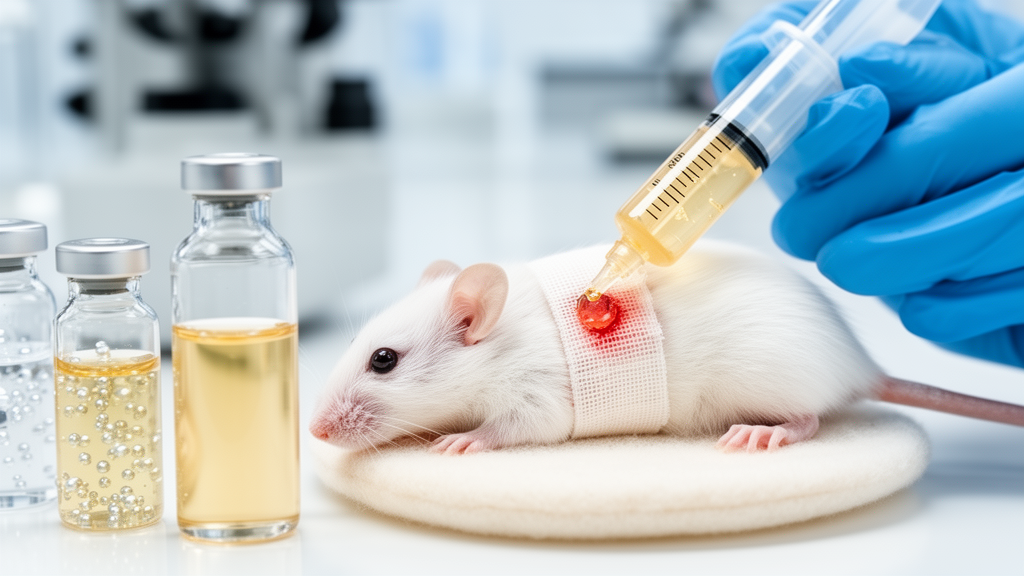
Researchers have combined silver nanoparticles made from plant extracts with an injectable, temperature-sensitive chitosan hydrogel and shown that the formulation speeds the repair of second-degree burn wounds in mice. The study, published in Frontiers in Bioengineering and Biotechnology, reports that hydrogels loaded with either castor bean (Ricinus communis) or aloe vera (Aloe barbadensis) leaf-derived nanoparticles achieved nearly complete wound contraction by day 14 and full closure by day 21 in a female BALB/c mouse model.

The hydrogels were built from chitosan mixed with glycerol-2-phosphate, a combination that remains liquid at room temperature but gels rapidly near body temperature, allowing the material to be injected and to conform to the shape of a wound bed. Three formulations were tested: a plain hydrogel (Ch-HI) and two versions carrying the biogenic silver nanoparticles, designated Ch/Rc-AgNP-HI and Ch/Ab-AgNP-HI. The nanoparticle-loaded gels showed near-physiological pH, porous morphology, gradual release of silver-containing species over 30 hours, and slow matrix erosion over 21 days.

In laboratory tests, the nanoparticle-loaded hydrogels showed antibacterial activity against Escherichia coli and Staphylococcus aureus, and they preserved the viability of HFF-1 fibroblast cells above the 70 percent cytotoxicity threshold across concentrations of 1 to 50 micrograms per milliliter. The authors note that embedding silver nanoparticles in a hydrogel addresses a known limitation of applying them directly to wounds, where they can aggregate, release their payload too quickly, and cause local toxicity.

In the mouse burn model, animals received 50 microliters of formulation daily for three consecutive days. The two nanoparticle-loaded hydrogels achieved wound contraction of 99.34 percent (plus or minus 0.4 percent) and 98.75 percent (plus or minus 0.6 percent) by day 14, with complete closure by day 21. Microbial surveillance found no detectable bacterial growth in any group, meaning the model tested repair of non-infected burns rather than treatment of established infection. Histological and biochemical analyses showed improved re-epithelialization, collagen organization, hydroxyproline deposition and dry matter recovery.

The authors present the phytogenic nanoparticle-loaded injectable hydrogels as promising platforms for non-infected burn wound repair, with antibacterial potential demonstrated so far only in vitro. Further work would be needed to establish safety and efficacy in infected wounds and in humans.

Subject of Research: Injectable chitosan hydrogels loaded with plant-derived silver nanoparticles for burn wound repair

Article Title: Biogenic silver nanoparticle-loaded injectable thermosensitive chitosan hydrogels accelerate repair of non-infected burn wounds

Article References: Ahsan, A., Aslam, Q.-U.-A., Gao, G. F., & Tian, W.-X. (2026). Biogenic silver nanoparticle-loaded injectable thermosensitive chitosan hydrogels accelerate repair of non-infected burn wounds. Frontiers in Bioengineering and Biotechnology, 14, Article 1990402. https://doi.org/10.3389/fbioe.2026.1990402

Image Credits: AI Generated

DOI: 10.3389/fbioe.2026.1990402

Keywords: silver nanoparticles, chitosan hydrogel, burn wounds, wound healing, Ricinus communis, Aloe barbadensis, drug delivery, antibacterial, tissue engineering, mouse model, Biogenic, silver

Cite Scienmag News

Gregory Coleman. (October 28, 2026). Injectable chitosan hydrogels loaded with plant-derived silver nanoparticles speed burn wound healing in mice. Scienmag. https://scienmag.com/injectable-chitosan-hydrogels-loaded-with-plant-derived-silver-nanoparticles-speed-burn-wound-healing-in-mice/

Gregory Coleman. "Injectable chitosan hydrogels loaded with plant-derived silver nanoparticles speed burn wound healing in mice." Scienmag, 28 October 2026, https://scienmag.com/injectable-chitosan-hydrogels-loaded-with-plant-derived-silver-nanoparticles-speed-burn-wound-healing-in-mice/. Accessed 28 October 2026.

Gregory Coleman. "Injectable chitosan hydrogels loaded with plant-derived silver nanoparticles speed burn wound healing in mice." Scienmag. October 28, 2026. https://scienmag.com/injectable-chitosan-hydrogels-loaded-with-plant-derived-silver-nanoparticles-speed-burn-wound-healing-in-mice/
Tags: Aloe barbadensisAloe vera and castor bean extractantibacterialantibacterial activity of silver nanoparticlesbiocompatibility with fibroblast cellsBiogenicbiogenic silver nanoparticlesburn wound healing in miceburn woundschitosan hydrogelcontrolled silver releaseDrug deliveryInjectable chitosan hydrogelsmouse modelplant-derived silver nanoparticlesporous hydrogel morphologyregenerative wound healing strategiesRicinus communissilversilver nanoparticlestemperature-sensitive hydrogelstissue engineeringwound contraction and closurewound healing
Share26Tweet16
Previous Post

Electroacupuncture Restores Memory Deficits in Rats With Chronic Nerve Pain

Next Post

Xpert leads molecular TB tests in smear-negative lavage fluid, retrospective study finds

Related Posts

FOXO1 Emerges as Candidate Regulator and Biomarker in Hip Dysplasia
Medicine

FOXO1 Emerges as Candidate Regulator and Biomarker in Hip Dysplasia

October 28, 2026
Laboratory Generations of Sugarcane Parasitoid Wasp Lose Fitness Within Ten Generations
Agriculture

Laboratory Generations of Sugarcane Parasitoid Wasp Lose Fitness Within Ten Generations

October 28, 2026
Prophages Shape Virulence, Not Resistance, in Staphylococcus aureus Genomes
Biology

Prophages Shape Virulence, Not Resistance, in Staphylococcus aureus Genomes

October 28, 2026
TREX1 enzyme shields tumors by destroying immune-activating DNA fragments
Biology

TREX1 enzyme shields tumors by destroying immune-activating DNA fragments

October 28, 2026
Evolutionary Feature Optimization Sharpens Latent Learning in Endoscopy Images
Biotechnology

Evolutionary Feature Optimization Sharpens Latent Learning in Endoscopy Images

October 28, 2026
Software-Only Method Syncs Heterogeneous Biomedical Sensors Within Milliseconds
Biotechnology

Software-Only Method Syncs Heterogeneous Biomedical Sensors Within Milliseconds

October 28, 2026
Next Post
Xpert leads molecular TB tests in smear-negative lavage fluid, retrospective study finds

Xpert leads molecular TB tests in smear-negative lavage fluid, retrospective study finds

  • Mothers who receive childcare support from maternal grandparents show more optimized

    Mothers who receive childcare support from maternal grandparents show more parental warmth, finds NTU Singapore study

    27656 shares
    Share 11059 Tweet 6912
  • University of Seville Breaks 120-Year-Old Mystery, Revises a Key Einstein Concept

    1061 shares
    Share 424 Tweet 265
  • Bee body mass, pathogens and local climate influence heat tolerance

    682 shares
    Share 273 Tweet 171
  • Researchers record first-ever images and data of a shark experiencing a boat strike

    546 shares
    Share 218 Tweet 137
  • Groundbreaking Clinical Trial Reveals Lubiprostone Enhances Kidney Function

    531 shares
    Share 212 Tweet 133
Science

Embark on a thrilling journey of discovery with Scienmag.com—your ultimate source for cutting-edge breakthroughs. Immerse yourself in a world where curiosity knows no limits and tomorrow’s possibilities become today’s reality!

RECENT NEWS

  • Systematic review maps end-of-life psychosocial and spiritual needs in physical disability
  • Text Message Campaign Reached Only a Third of Patients Overdue for Colorectal Cancer Screening
  • FOXO1 Emerges as Candidate Regulator and Biomarker in Hip Dysplasia
  • Regulators, developers and clinicians in Shenzhen voice concerns over medical AI governance

Categories

  • Agriculture
  • Anthropology
  • Archaeology
  • Athmospheric
  • Biology
  • Biotechnology
  • Blog
  • Bussines
  • Cancer
  • Chemistry
  • Climate
  • Earth Science
  • Editorial Policy
  • Marine
  • Mathematics
  • Medicine
  • Pediatry
  • Policy
  • Psychology & Psychiatry
  • Science Education
  • Science News
  • Social Science
  • Space
  • Technology and Engineering

Subscribe to Blog via Email

Enter your email address to subscribe to this blog and receive notifications of new posts by email.

Join 5,151 other subscribers

© 2025 Scienmag - Science Magazine

Welcome Back!

Login to your account below

Forgotten Password?

Retrieve your password

Please enter your username or email address to reset your password.

Log In
No Result
View All Result
  • HOME
  • SCIENCE NEWS
  • CONTACT US

© 2025 Scienmag - Science Magazine

Discover more from Science

Subscribe now to keep reading and get access to the full archive.

Continue reading