Sunday, November 1, 2026
Science
No Result
View All Result
  • Login
  • HOME
  • SCIENCE NEWS
  • CONTACT US
  • HOME
  • SCIENCE NEWS
  • CONTACT US
No Result
View All Result
Scienmag
No Result
View All Result
Home Science News Biology

Eye-tracking reveals where students look wrong when reading phylogenetic trees

October 28, 2026
in Biology
Drew Townsend
By Drew Townsend Scienmag Editorial Profile - Cell Biology
Reading Time: 2 mins read
0
Eye-tracking reveals where students look wrong when reading phylogenetic trees

Eye-tracking reveals where students look wrong when reading phylogenetic trees

65
SHARES
587
VIEWS
Share on FacebookShare on Twitter
ADVERTISEMENT

Students who struggle to interpret phylogenetic trees may be looking in the wrong places, according to a new eye-tracking study of introductory biology students. The research, published in Developmental Biology Advances, documented how learners visually process evolutionary trees, the branching diagrams scientists use to represent hypotheses about relationships among species.

The study team, led by Mallika Saha with Daniel Ferguson, Tina Marcroft and Kristy L. Daniel, asked introductory biology students to complete tree-reading tasks while an eye tracker recorded their gaze patterns. The researchers defined tree-reading as the ability to understand, use and accurately communicate the hypotheses represented within phylogenetic trees, a skill students are known to find difficult.

By analyzing where participants looked and for how long, the researchers identified specific areas of interest that students visually assess when solving tree-reading questions. They compared the eye movements of students who answered the tasks accurately with those who answered incorrectly.

The comparison revealed significant differences in both dwell time and fixation event counts between the two groups. Participants who gave incorrect responses spent longer dwell times on the task prompt itself and directed less visual attention to the phylogenetic tree than participants who answered correctly.

Inaccurate performers also spent more time visually processing less informative features of the trees than their more accurate peers on each task. In other words, struggling students were not simply looking away from the problem; they were allocating their attention to elements of the diagram that carried less information relevant to the question.

The authors argue that while tree-reading instruction has been expanded in introductory biology courses, more explicit tree-thinking instruction is needed to enhance students’ comprehension of phylogenetic trees. They suggest that identifying which visual elements of these models cause longer dwell times, or which are being ignored by learners, can help educators adapt instruction to emphasize the most informative areas of interest and promote more accurate tree-thinking.

Because the study examined introductory biology students during interpretation tasks using an eye-tracking approach, its findings describe visual processing patterns in that setting rather than establishing which teaching interventions would improve performance. The authors note the work is intended as a starting point for educators seeking to understand how students visually engage with evolutionary diagrams before designing better instruction.

Subject of Research: Eye-tracking study of how introductory biology students visually process phylogenetic trees during interpretation tasks

Article Title: Viewing trees: an investigation into how students visually interact with phylogenetic trees

Article References: Saha, M., Ferguson, D., Marcroft, T., & Daniel, K. L. (2026). Viewing trees: an investigation into how students visually interact with phylogenetic trees. Developmental Biology Advances. https://doi.org/10.1186/s13227-026-00276-8

Image Credits: AI Generated

DOI: 10.1186/s13227-026-00276-8

Keywords: phylogenetic trees, eye tracking, tree-reading, biology education, introductory biology, dwell time, fixations, tree-thinking, student misconceptions, visual attention, Viewing, trees

Cite Scienmag News

Drew Townsend. (October 28, 2026). Eye-tracking reveals where students look wrong when reading phylogenetic trees. Scienmag. https://scienmag.com/eye-tracking-reveals-where-students-look-wrong-when-reading-phylogenetic-trees/


Drew Townsend. "Eye-tracking reveals where students look wrong when reading phylogenetic trees." Scienmag, 28 October 2026, https://scienmag.com/eye-tracking-reveals-where-students-look-wrong-when-reading-phylogenetic-trees/. Accessed 1 November 2026.

Drew Townsend. "Eye-tracking reveals where students look wrong when reading phylogenetic trees." Scienmag. October 28, 2026. https://scienmag.com/eye-tracking-reveals-where-students-look-wrong-when-reading-phylogenetic-trees/

Tags: analyzing fixation points in evolutionary diagramsbiology educationchallenges in learning phylogenetic relationshipsdifferences in gaze between correct and incorrect responsesdifficulty reading phylogenetic treesdwell timeeye trackingeye-tracking in biology educationfixationsidentifying misconceptions in phylogenetic tree interpretationimproving biology teaching with eye-tracking dataintroductory biologyphylogenetic tree interpretationphylogenetic treesstudent gaze patterns on evolutionary treesstudent misconceptionsstudent visual processing of evolutionary hypothesestree-readingtree-thinkingtreesunderstanding tree-reading skillsViewingvisual attentionvisual attention in phylogenetic learning
Share26Tweet16
Previous Post

New fraud detection framework pairs machine predictions with machine-checked explanations

Next Post

New Standardised Tool Aims to Fix Risk-of-Bias Assessment in Environmental Evidence

Related Posts

Microbial Sources and Stress Shape the Hidden Endophytes of an Invasive Plant
Biology

Microbial Sources and Stress Shape the Hidden Endophytes of an Invasive Plant

October 30, 2026
Firebreaks Leave Lasting Scars in Grasslands While Wildfire Heals Fast
Biology

Firebreaks Leave Lasting Scars in Grasslands While Wildfire Heals Fast

October 30, 2026
Hidden Peptides in Non-Coding RNAs Reshape Cardiovascular Biology
Biology

Hidden Peptides in Non-Coding RNAs Reshape Cardiovascular Biology

October 30, 2026
Phage K Holin’s C-Terminal Region Shapes Antibacterial Activity, Study Finds
Biotechnology

Phage K Holin’s C-Terminal Region Shapes Antibacterial Activity, Study Finds

October 30, 2026
Computational screen flags five natural compounds that bind a tuberculosis virulence enzyme
Chemistry

Computational screen flags five natural compounds that bind a tuberculosis virulence enzyme

October 30, 2026
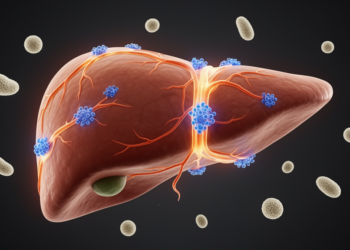
Antifungal liver injury study pinpoints KDR as shared hepatotoxicity target
Biology

Antifungal liver injury study pinpoints KDR as shared hepatotoxicity target

October 30, 2026
Next Post
New Standardised Tool Aims to Fix Risk-of-Bias Assessment in Environmental Evidence

New Standardised Tool Aims to Fix Risk-of-Bias Assessment in Environmental Evidence

  • Mothers who receive childcare support from maternal grandparents show more optimized

    Mothers who receive childcare support from maternal grandparents show more parental warmth, finds NTU Singapore study

    27656 shares
    Share 11059 Tweet 6912
  • University of Seville Breaks 120-Year-Old Mystery, Revises a Key Einstein Concept

    1061 shares
    Share 424 Tweet 265
  • Bee body mass, pathogens and local climate influence heat tolerance

    682 shares
    Share 273 Tweet 171
  • Researchers record first-ever images and data of a shark experiencing a boat strike

    546 shares
    Share 218 Tweet 137
  • Groundbreaking Clinical Trial Reveals Lubiprostone Enhances Kidney Function

    531 shares
    Share 212 Tweet 133
Science

Embark on a thrilling journey of discovery with Scienmag.com—your ultimate source for cutting-edge breakthroughs. Immerse yourself in a world where curiosity knows no limits and tomorrow’s possibilities become today’s reality!

RECENT NEWS

  • Trademarks Meet Patents in New Method to Spot Technology Opportunities
  • Reddit self-declarations offer auditable labels for demographic inference
  • Scots pine needles map trace element pollution in Polish industrial town
  • Dual-blockchain scheme secures vehicle handovers without pre-shared keys

Categories

  • Agriculture
  • Anthropology
  • Archaeology
  • Athmospheric
  • Biology
  • Biotechnology
  • Blog
  • Bussines
  • Cancer
  • Chemistry
  • Climate
  • Earth Science
  • Editorial Policy
  • Marine
  • Mathematics
  • Medicine
  • Pediatry
  • Policy
  • Psychology & Psychiatry
  • Science Education
  • Science News
  • Social Science
  • Space
  • Technology and Engineering

Subscribe to Blog via Email

Enter your email address to subscribe to this blog and receive notifications of new posts by email.

Join 5,150 other subscribers

© 2025 Scienmag - Science Magazine

Welcome Back!

Login to your account below

Forgotten Password?

Retrieve your password

Please enter your username or email address to reset your password.

Log In
No Result
View All Result
  • HOME
  • SCIENCE NEWS
  • CONTACT US

© 2025 Scienmag - Science Magazine

Discover more from Science

Subscribe now to keep reading and get access to the full archive.

Continue reading