Friday, October 30, 2026
Science
No Result
View All Result
  • Login
  • HOME
  • SCIENCE NEWS
  • CONTACT US
  • HOME
  • SCIENCE NEWS
  • CONTACT US
No Result
View All Result
Scienmag
No Result
View All Result
Home Science News Medicine

Diffusion-enhanced AI framework segments and classifies brain tumors with 98.1% accuracy

October 28, 2026
in Medicine, Technology and Engineering
Ophelia Keating
By Ophelia Keating Scienmag Editorial Profile - Health Services Research
Reading Time: 2 mins read
0
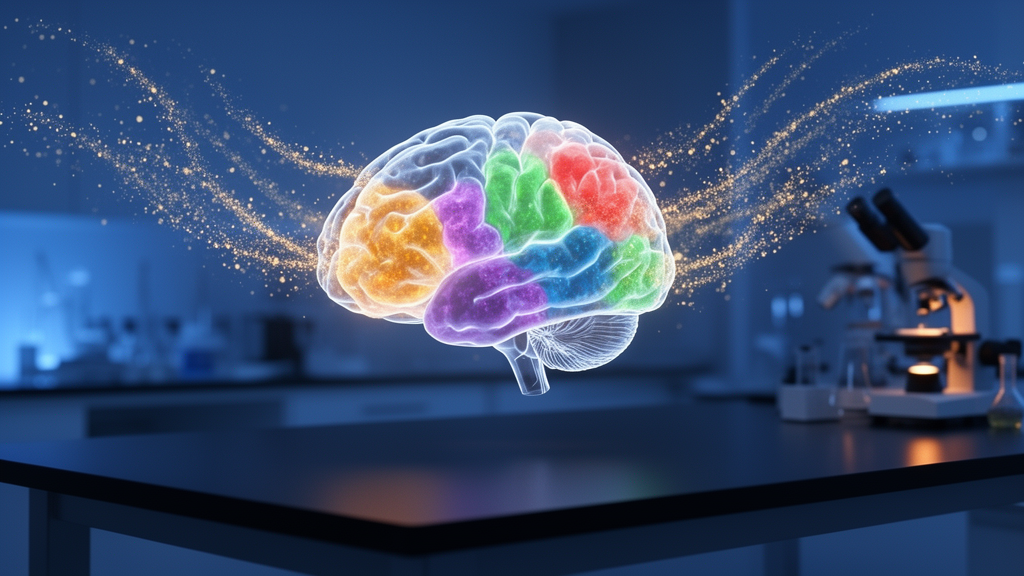
Diffusion-enhanced AI framework segments and classifies brain tumors with 98.1% accuracy

Diffusion-enhanced AI framework segments and classifies brain tumors with 98.1% accuracy

65
SHARES
587
VIEWS
Share on FacebookShare on Twitter
ADVERTISEMENT

Diagnosing brain tumors from magnetic resonance imaging (MRI) remains a difficult task, complicated by tumor heterogeneity, low contrast between tumor and healthy tissue, imaging artifacts and differences between tumor types. A new study published in Brain Informatics introduces a Promptable Diffusion-Enhanced Foundation Framework designed to perform both tumor segmentation and classification in a single, explainable pipeline, tested on the recent BRISC 2025 dataset.

The framework addresses a known weakness of today’s deep learning methods, which the authors note often lack explainability, tolerance to corrupted imaging conditions and the ability to interpret complex tumor structures. The system works in stages. First, a diffusion-based enhancement module improves the visibility of tumor boundaries and reduces imaging artifacts before any features are extracted. A pre-trained foundation encoder then extracts strong semantic representations from the enhanced images, and prompt-guided attention mechanisms adaptively localize tumor areas within the scans.

Unlike conventional pipelines that handle segmentation and classification separately, the framework performs both tasks jointly. Interpretation is supported by attention visualization and attention-based explanation maps, which are intended to make the model’s decisions more transparent to the user. According to the reported experimental results, the approach achieved a classification accuracy of 98.1%, a Dice score of 93.2% for segmentation, and an area under the curve (AUC) of 99.0%, which the authors describe as superior to conventional CNN and transformer-based comparison methods.

The study also reports that the framework demonstrated high robustness in the presence of imaging noise and low MRI contrast conditions. The authors argue that this robustness, combined with the built-in explainability features, would be important for clinically reliable and interpretable analysis of brain tumors. The article is published open access, with the version shared early as a peer-reviewed, accepted manuscript that is citable and carries a permanent DOI, subject to further edits before the final Version of Record.

Subject of Research: A deep learning framework combining diffusion-based MRI enhancement, foundation model features and prompt-guided attention for explainable brain tumor segmentation and classification.

Article Title: Promptable diffusion-enhanced foundation framework for explainable brain tumor segmentation and classification

Article References: Joseph, J. (2026). Promptable diffusion-enhanced foundation framework for explainable brain tumor segmentation and classification. Brain Informatics. https://doi.org/10.1186/s40708-026-00341-x

Image Credits: AI Generated

DOI: 10.1186/s40708-026-00341-x

Keywords: brain tumor, MRI, segmentation, classification, diffusion model, foundation model, explainable AI, attention mechanism, BRISC 2025, deep learning, medical imaging, Promptable

Cite Scienmag News

Ophelia Keating. (October 28, 2026). Diffusion-enhanced AI framework segments and classifies brain tumors with 98.1% accuracy. Scienmag. https://scienmag.com/diffusion-enhanced-ai-framework-segments-and-classifies-brain-tumors-with-98-1-accuracy/


Ophelia Keating. "Diffusion-enhanced AI framework segments and classifies brain tumors with 98.1% accuracy." Scienmag, 28 October 2026, https://scienmag.com/diffusion-enhanced-ai-framework-segments-and-classifies-brain-tumors-with-98-1-accuracy/. Accessed 30 October 2026.

Ophelia Keating. "Diffusion-enhanced AI framework segments and classifies brain tumors with 98.1% accuracy." Scienmag. October 28, 2026. https://scienmag.com/diffusion-enhanced-ai-framework-segments-and-classifies-brain-tumors-with-98-1-accuracy/

Tags: AI-based tumor classificationattention mechanismBrain Informatics tumor analysis methodsbrain tumorbrain tumor diagnosis using MRIBRISC 2025classificationdeep learningdiffusion modeldiffusion-enhanced image segmentationdiffusion-enhancement in brain tumor imagingexplainable AIexplainable deep learning in medical imagingfoundation modelhigh-accuracy brain tumor segmentationinterpretability of AI models for brain tumorsjoint tumor segmentation and classification frameworkMedical ImagingMRIMRI artifact reduction in tumor detectionprompt-guided attention in MRI analysisPromptablesegmentationtumor boundary enhancement techniques
Share26Tweet16
Previous Post

Feedback and lesson planning help novice science teachers tackle controversial issues

Next Post

Robotics-based embodied learning shows promise for management education in the Global South, survey finds

Related Posts

Scientists map plan to test Raman spectroscopy for real-time glioma diagnosis
Medicine

Scientists map plan to test Raman spectroscopy for real-time glioma diagnosis

October 30, 2026
Inflammatory stimulation reshapes microglial vesicle miRNA cargo and modestly alters recipient cells
Biology

Inflammatory stimulation reshapes microglial vesicle miRNA cargo and modestly alters recipient cells

October 30, 2026
Cascaded Flatness Control Steers Six-Degree Stratospheric Airships
Technology and Engineering

Cascaded Flatness Control Steers Six-Degree Stratospheric Airships

October 30, 2026
Computational Map Splits Atropine’s Myopia Targets From Dry Eye Pathways
Medicine

Computational Map Splits Atropine’s Myopia Targets From Dry Eye Pathways

October 30, 2026
Load variability, not storage tech, decides when hybrid energy storage pays off
Technology and Engineering

Load variability, not storage tech, decides when hybrid energy storage pays off

October 30, 2026
Gold nanoparticles show promise as dual cancer imaging and therapy tools
Technology and Engineering

Gold nanoparticles show promise as dual cancer imaging and therapy tools

October 30, 2026
Next Post
Robotics-based embodied learning shows promise for management education in the Global South, survey finds

Robotics-based embodied learning shows promise for management education in the Global South, survey finds

  • Mothers who receive childcare support from maternal grandparents show more optimized

    Mothers who receive childcare support from maternal grandparents show more parental warmth, finds NTU Singapore study

    27656 shares
    Share 11059 Tweet 6912
  • University of Seville Breaks 120-Year-Old Mystery, Revises a Key Einstein Concept

    1061 shares
    Share 424 Tweet 265
  • Bee body mass, pathogens and local climate influence heat tolerance

    682 shares
    Share 273 Tweet 171
  • Researchers record first-ever images and data of a shark experiencing a boat strike

    546 shares
    Share 218 Tweet 137
  • Groundbreaking Clinical Trial Reveals Lubiprostone Enhances Kidney Function

    531 shares
    Share 212 Tweet 133
Science

Embark on a thrilling journey of discovery with Scienmag.com—your ultimate source for cutting-edge breakthroughs. Immerse yourself in a world where curiosity knows no limits and tomorrow’s possibilities become today’s reality!

RECENT NEWS

  • Scientists map plan to test Raman spectroscopy for real-time glioma diagnosis
  • Inflammatory stimulation reshapes microglial vesicle miRNA cargo and modestly alters recipient cells
  • Cascaded Flatness Control Steers Six-Degree Stratospheric Airships
  • Slovenia Rewrites Its Curriculum to Teach Evolution Earlier and More Completely

Categories

  • Agriculture
  • Anthropology
  • Archaeology
  • Athmospheric
  • Biology
  • Biotechnology
  • Blog
  • Bussines
  • Cancer
  • Chemistry
  • Climate
  • Earth Science
  • Editorial Policy
  • Marine
  • Mathematics
  • Medicine
  • Pediatry
  • Policy
  • Psychology & Psychiatry
  • Science Education
  • Science News
  • Social Science
  • Space
  • Technology and Engineering

Subscribe to Blog via Email

Enter your email address to subscribe to this blog and receive notifications of new posts by email.

Join 5,151 other subscribers

© 2025 Scienmag - Science Magazine

Welcome Back!

Login to your account below

Forgotten Password?

Retrieve your password

Please enter your username or email address to reset your password.

Log In
No Result
View All Result
  • HOME
  • SCIENCE NEWS
  • CONTACT US

© 2025 Scienmag - Science Magazine

Discover more from Science

Subscribe now to keep reading and get access to the full archive.

Continue reading