
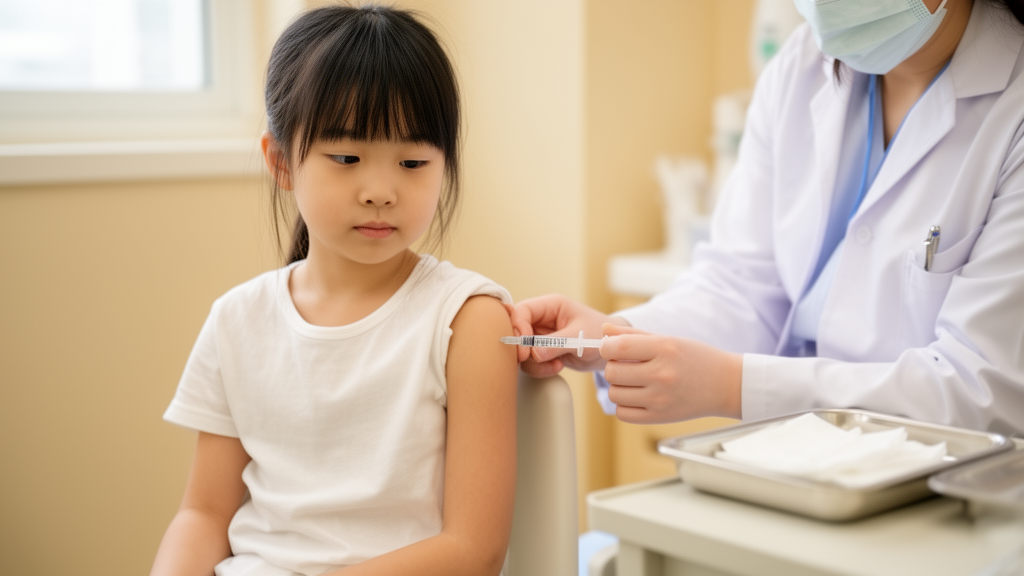
A combined pharmacokinetic analysis of belimumab in children with systemic lupus erythematosus has concluded that a simplified two-weight-band subcutaneous dosing regimen would deliver drug exposures comparable to the approved intravenous regimen in Chinese pediatric patients. The work, published in Drugs in R&D, updates a global pediatric population pharmacokinetic model by pooling data from Chinese and international pediatric studies, and then uses simulations and an established exposure-response model to predict clinical response. The authors report that a 200-mg subcutaneous regimen, given once weekly for children weighing 40 kg or more and once every two weeks for those between 15 and 40 kg, is expected to match the exposure achieved with intravenous belimumab at 10 mg/kg every four weeks.
Belimumab is a monoclonal antibody that inhibits B-lymphocyte stimulator, a protein central to the abnormal B-cell activity that drives systemic lupus erythematosus. The intravenous formulation, given at 10 mg/kg every two weeks for three doses and then every four weeks, is approved in the United States, Europe and Japan for patients aged five years and older with active autoantibody-positive disease. In China, the National Medical Products Administration approved intravenous belimumab for adults with high disease activity in 2019 and extended the indication to pediatric patients aged five years and older in 2020. The subcutaneous formulation is approved in the United States and Japan for patients aged five and above, at 200 mg weekly for those weighing at least 40 kg and 200 mg every two weeks for those between 15 and 40 kg, while the European Medicines Agency recently approved a three-weight-band regimen aligned with the schedules studied in trials. Only the intravenous form, however, is approved for pediatric use in China, which is why the subcutaneous route is being pursued there through an extrapolation strategy built on pharmacokinetic modeling rather than a large new efficacy trial.
The new analysis pooled data from four pediatric studies: the global PLUTO intravenous and PLUTO subcutaneous trials, and two Chinese pediatric studies. The Chinese intravenous study was a phase IV trial evaluating safety, efficacy and pharmacokinetics of intravenous belimumab in Chinese children aged 5 to 17 years. A follow-on study assessed the safety and pharmacokinetics of subcutaneous belimumab in participants from that trial who had completed 48 weeks of intravenous treatment and had pharmacokinetic samples collected. Because the same patients contributed both intravenous and subcutaneous data, the design allowed a within-subject comparison of the two formulations, which reduced between-subject variability and enabled precise estimation of subcutaneous bioavailability despite the limited sample size. In total, 1003 belimumab concentration measurements from 120 pediatric participants were included in the population pharmacokinetic analysis, distributed across the PLUTO intravenous study (53 patients), the PLUTO subcutaneous study (25), the Chinese pediatric intravenous study (26) and the Chinese pediatric subcutaneous study (16).
The participants had a median age of 14.0 years, ranging from 6.0 to 18.0 years, and a median body weight of 53.15 kg, ranging from 17.00 to 85.50 kg. Female participants made up 83.3 percent of the population, consistent with the female predominance of lupus. The modeling used a two-compartment framework with first-order absorption and elimination, incorporating allometric scaling by body weight to account for differences in body size. Candidate covariates, including age, immunoglobulin G, albumin, complement, anti-double-stranded DNA antibodies, disease activity scores and concomitant medications, were assessed through stepwise selection. Body weight emerged as a significant influence on both clearance and volume of distribution, while baseline immunoglobulin G and albumin levels significantly affected clearance. Immunoglobulin G is thought to reflect competitive binding with the neonatal Fc receptor, whereas albumin serves as a marker of neonatal Fc receptor expression and renal function. Including these covariates reduced the unexplained between-subject variability in clearance from 37.0 to 25.8 percent.
For a representative pediatric patient with median baseline values, the final model estimated a clearance of 158 mL/day, a steady-state volume of distribution of 3930 mL, and a subcutaneous bioavailability of 77.9 percent. The bioavailability estimate is slightly higher than previous estimates in global pediatric patients, at 70.3 percent, and in adults, at 74.2 percent. The authors attribute the precision of the new estimate to the joint study design, in which both intravenous and subcutaneous data came from the same participants, and suggest that the somewhat higher value relative to adults may be associated with a thinner layer of subcutaneous tissue, higher perfusion and increased lymphatic flow in children, as reported for other monoclonal antibodies. Model performance was supported by visual predictive checks, goodness-of-fit diagnostics and normalized prediction distribution errors, and a bootstrap analysis with a 99.9 percent success rate confirmed the robustness of the parameter estimates.
One of the most striking findings was a systematic bias of minus 34 percent in measured belimumab concentrations in the Chinese studies relative to the global data, observed consistently across both intravenous and subcutaneous administration. Because the model parameterized this as a uniform shift in all measured concentrations rather than a change in a specific disposition parameter, and because the distributions of key covariates such as body weight, immunoglobulin G and albumin were similar between Chinese and non-Chinese populations, the authors argue the discrepancy is unlikely to stem from racial or physiological differences. Notably, all pharmacokinetic samples from the Chinese pediatric studies were analyzed at the same laboratory used for the global samples, so bioanalytical variability between laboratories does not explain the difference either. The authors point instead to possible unmeasured operational factors, such as sample collection or handling or other aspects of study conduct, while acknowledging that a pooled analysis cannot definitively attribute between-study differences to a specific cause. Importantly, the established exposure-response relationship indicates that the lower measured exposures in Chinese patients still fall on the plateau of the curve, so the shift is not expected to affect efficacy.
To evaluate dosing regimens across a broad pediatric population, the team simulated a virtual Chinese pediatric population aged 5 to 17 years using body size data from the National Health and Nutrition Examination Survey, adjusted to reflect lupus-specific characteristics, with a female-to-male ratio of 9:1 based on prior recruitment and epidemiological data in the disease. Disease-related covariates were resampled from the PLUTO intravenous study dataset. The lower systemic exposure observed in the Chinese pediatric studies was deliberately incorporated into the simulations, so that predicted exposures were on average 34 percent lower but consistent with the concentrations actually measured in Chinese patients. The predefined exposure-matching criterion required the geometric mean ratio of steady-state average concentration between a proposed subcutaneous regimen and the approved intravenous regimen to fall within 0.5 to 2.0, a range considered pharmacologically non-distinct based on prior adult and pediatric data showing that two-fold variability in exposure does not affect efficacy or safety.
The simulation results showed that both the two-weight-band subcutaneous regimen and the three-weight-band regimen studied in the Chinese trial produced exposures comparable to the intravenous regimen. For the two-weight-band schedule, the geometric mean ratios of steady-state average concentration relative to intravenous dosing were 1.21 for the 15 to 40 kg group, 1.12 for the 40 kg and above group, and 1.17 for the overall population. For the three-weight-band regimen, the corresponding ratios were 1.41, 1.09, 0.97 and 1.16 for the 15 to 30 kg, 30 to 50 kg, 50 kg and above groups and the overall population, respectively. All values remained comfortably within the 0.5 to 2.0 range. The two-weight-band regimen produced a somewhat wider exposure distribution than the three-weight-band approach, particularly for patients near the 40 kg threshold, which is why the European Medicines Agency favored the tighter three-band schedule. Nevertheless, the entire exposure range of the two-weight-band regimen fell within the range covered by the approved intravenous regimen, and the authors note that it eliminates the operational complexity of the every-10-days dosing interval required by the three-band schedule.
Clinical response was predicted using a previously established exposure-response model developed from integrated adult and pediatric data, which had shown no significant differences in treatment outcomes between age groups. Based on simulated exposures, the median predicted SLE Response Index response rates were 53.99 percent for the three-weight-band subcutaneous regimen, 54.01 percent for the two-weight-band regimen, and 53.57 percent for the intravenous regimen, indicating essentially identical predicted efficacy across routes. These predicted rates are comparable to those observed in adults, at 52.6 to 53.1 percent. The exposure distributions for all three regimens reached the plateau phase of the exposure-response curve, meaning maximal efficacy is expected regardless of route, even though the intravenous regimen showed slightly lower exposure because weight-proportional dosing yields lower absolute doses in lighter children.
The authors conclude that the analysis supports a two-weight-band, dosing-interval-adjusted 200-mg subcutaneous regimen for Chinese pediatric patients with systemic lupus erythematosus, and that compared with the three-weight-band approach it simplifies administration and enhances feasibility for clinical implementation. They caution that the findings rest on modeling and simulation rather than a direct head-to-head efficacy trial of the subcutaneous regimen in Chinese children, and that the cause of the 34 percent concentration difference between Chinese and global studies remains unresolved, though the exposure-response framework suggests it is unlikely to be clinically meaningful. Within those limits, the work provides the quantitative rationale for extending subcutaneous belimumab dosing to Chinese children, offering a convenient injection-based alternative to repeated intravenous infusions.
Subject of Research: Population pharmacokinetics of intravenous and subcutaneous belimumab and predicted clinical response in Chinese pediatric patients with systemic lupus erythematosus
Article Title: Population Pharmacokinetics of Intravenous and Subcutaneous Belimumab, and Clinical Response Prediction in Chinese Pediatric Patients with Systemic Lupus Erythematosus
Article References: Wu, J., Dimelow, R., Marshall, S., & Zhou, X. (2026). Population Pharmacokinetics of Intravenous and Subcutaneous Belimumab, and Clinical Response Prediction in Chinese Pediatric Patients with Systemic Lupus Erythematosus. Drugs in R&D. https://doi.org/10.1007/s40268-026-00549-6
Image Credits: AI Generated
DOI: 10.1007/s40268-026-00549-6
Keywords: belimumab, systemic lupus erythematosus, pediatric pharmacokinetics, subcutaneous dosing, population pharmacokinetic modeling, exposure-response analysis, Chinese pediatric patients, bioavailability, dose regimen simulation, SLE Response Index, monoclonal antibody therapy, drug exposure matching
Cite Scienmag News
Louis Brooks. (October 28, 2026). Model Supports Simpler Subcutaneous Belimumab Dosing for Chinese Children with Lupus. Scienmag. https://scienmag.com/model-supports-simpler-subcutaneous-belimumab-dosing-for-chinese-children-with-lupus/
Louis Brooks. "Model Supports Simpler Subcutaneous Belimumab Dosing for Chinese Children with Lupus." Scienmag, 28 October 2026, https://scienmag.com/model-supports-simpler-subcutaneous-belimumab-dosing-for-chinese-children-with-lupus/. Accessed 28 October 2026.
Louis Brooks. "Model Supports Simpler Subcutaneous Belimumab Dosing for Chinese Children with Lupus." Scienmag. October 28, 2026. https://scienmag.com/model-supports-simpler-subcutaneous-belimumab-dosing-for-chinese-children-with-lupus/