Monday, November 2, 2026
Science
No Result
View All Result
  • Login
  • HOME
  • SCIENCE NEWS
  • CONTACT US
  • HOME
  • SCIENCE NEWS
  • CONTACT US
No Result
View All Result
Scienmag
No Result
View All Result
Home Science News Biology

Dog Doses of Fluralaner Cut Kissing Bug Infestations in Argentine Villages

October 27, 2026
in Biology
William Thompson
By William Thompson Scienmag Editorial Profile - Livestock Health and Welfare
Reading Time: 3 mins read
0
Dog Doses of Fluralaner Cut Kissing Bug Infestations in Argentine Villages

Dog Doses of Fluralaner Cut Kissing Bug Infestations in Argentine Villages

65
SHARES
587
VIEWS
Share on FacebookShare on Twitter
ADVERTISEMENT

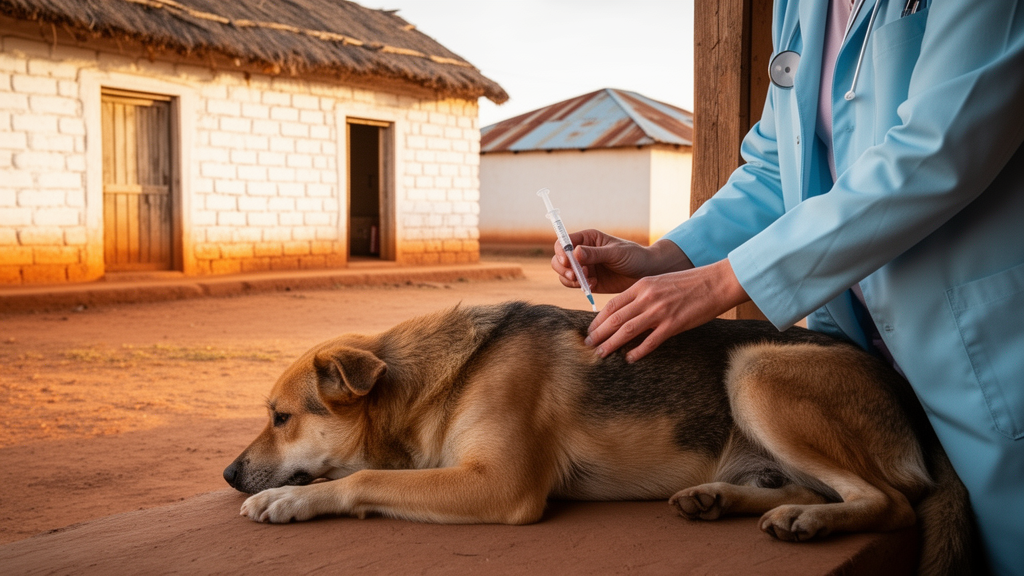
Treating dogs with a single oral dose of the acaricide fluralaner significantly reduced house infestation and the abundance of Triatoma infestans, the main vector of Chagas disease in the Gran Chaco, according to a cluster-randomized trial conducted in Juan Jose Castelli, Chaco, Argentina. The study, published open access in Parasites & Vectors, tested the concept of xenointoxication: killing blood-feeding insects through the drug they ingest when they feed on a treated host. The approach attracted wide interest because insecticide resistance challenges vector control efforts worldwide, and the trial region has predominantly high pyrethroid resistance.

The trial enrolled 10 treated and 10 control clusters, totaling 203 households. Dogs in the treated clusters received an oral dose of fluralaner, while no treatment was offered to dogs in control clusters. In all, 314 dogs were treated, corresponding to 72% treatment coverage of all dogs registered in the treated arm. House infestation and triatomine abundance were assessed at baseline and at 10 months post-treatment by timed-manual searches using a flushing-out aerosol. Because COVID-19-related lockdown restrictions in 2020 prevented field visits at intermediate time points, infestation at 2 and 8 months post-treatment was instead assessed through householder reports collected by telephone.

In a cluster-level analysis adjusted for baseline infestation, fluralaner treatment significantly reduced timed-manual-search-based estimates of house infestation by 47% at 10 months post-treatment relative to control clusters. Triatomine relative abundance fell significantly by 70%, as shown by a random-effects negative binomial model with cluster identity as the random factor. Householder-based surveillance likewise showed a negative trend in the odds of house infestation over the 0 to 8 month period in treated clusters. A striking secondary signal was that dead triatomines were reported tenfold more frequently in baseline-infested houses of treated clusters than in their control counterparts, consistent with insects dying after feeding on treated dogs. Dog owners reported no fluralaner-related adverse effects.

Because the moderate reduction achieved by dog treatment alone was not sufficient on its own, the researchers added an out-of-trial rescue treatment at 10 months post-treatment, targeting control clusters and infested houses. House infestation was then re-assessed through timed-manual searches at 14 and 22 months post-treatment. At houses receiving the rescue treatment, infestation and triatomine abundance plummeted over the 14 to 22 month window, while infestation strongly increased among untreated dwellings. The authors conclude that fluralaner administered to dogs significantly reduced house infestation and triatomine relative abundance by moderate amounts relative to control dwellings, and they recommend that future studies evaluate the cost-effectiveness of multi-host treatment with fluralaner within an integrated vector control strategy bolstered by community engagement. The article was shared early as a citable, peer-reviewed accepted version carrying a permanent DOI, subject to further edits before the final Version of Record.

Subject of Research: A cluster-randomized trial of fluralaner-treated dogs to reduce Triatoma infestans house infestation in the Argentine Chaco

Article Title: Fluralaner administered to dogs reduced house infestation and abundance of Triatoma infestans in the Argentine Chaco: a cluster-randomized trial

Article References: Gaspe, M. S., Cardinal, M. V., Enriquez, G. F., Macchiaverna, N. P., Alvedro, A., Laiño, M. A., Alvarado-Otegui, J. A., Cecere, M. C., Sánchez, D., & Gürtler, R. E. (2026). Fluralaner administered to dogs reduced house infestation and abundance of Triatoma infestans in the Argentine Chaco: a cluster-randomized trial. Parasites & Vectors. https://doi.org/10.1186/s13071-026-07762-x

Image Credits: AI Generated

DOI: 10.1186/s13071-026-07762-x

Keywords: fluralaner, Triatoma infestans, Chagas disease, xenointoxication, cluster-randomized trial, Argentina, vector control, pyrethroid resistance, dogs, Parasites & Vectors, administered, reduced

Cite Scienmag News

William Thompson. (October 27, 2026). Dog Doses of Fluralaner Cut Kissing Bug Infestations in Argentine Villages. Scienmag. https://scienmag.com/dog-doses-of-fluralaner-cut-kissing-bug-infestations-in-argentine-villages/

William Thompson. "Dog Doses of Fluralaner Cut Kissing Bug Infestations in Argentine Villages." Scienmag, 27 October 2026, https://scienmag.com/dog-doses-of-fluralaner-cut-kissing-bug-infestations-in-argentine-villages/. Accessed 2 November 2026.

William Thompson. "Dog Doses of Fluralaner Cut Kissing Bug Infestations in Argentine Villages." Scienmag. October 27, 2026. https://scienmag.com/dog-doses-of-fluralaner-cut-kissing-bug-infestations-in-argentine-villages/

Tags: administeredArgentinaChagas diseaseChagas disease prevention in Gran Chacocluster randomized trialcommunity-based parasite controlCOVID-19 impact on vector surveillanceDog fluralaner oral treatmentsdogsfluralanerhigh pyrethroid resistance challengesimpact of dog treatments on house infestationinsecticide resistance in vector controloral acaricide efficacy in Argentine villagesoral medication for vector suppressionParasites & Vectorspyrethroid resistancereducedTriatoma infestansTriatoma infestans reductionvector controlvector-borne disease control strategiesxenointoxicationxenointoxication for Chagas disease vector control
Share26Tweet16
Previous Post

Deleting TBK1 Entirely Slows Disease Progression in ALS Model Mice

Next Post

CSF APOE4 protein levels track tau pathology better than HDL measures in Alzheimer’s

Related Posts

Microbial Sources and Stress Shape the Hidden Endophytes of an Invasive Plant
Biology

Microbial Sources and Stress Shape the Hidden Endophytes of an Invasive Plant

October 30, 2026
Firebreaks Leave Lasting Scars in Grasslands While Wildfire Heals Fast
Biology

Firebreaks Leave Lasting Scars in Grasslands While Wildfire Heals Fast

October 30, 2026
Hidden Peptides in Non-Coding RNAs Reshape Cardiovascular Biology
Biology

Hidden Peptides in Non-Coding RNAs Reshape Cardiovascular Biology

October 30, 2026
Phage K Holin’s C-Terminal Region Shapes Antibacterial Activity, Study Finds
Biotechnology

Phage K Holin’s C-Terminal Region Shapes Antibacterial Activity, Study Finds

October 30, 2026
Computational screen flags five natural compounds that bind a tuberculosis virulence enzyme
Chemistry

Computational screen flags five natural compounds that bind a tuberculosis virulence enzyme

October 30, 2026
Antifungal liver injury study pinpoints KDR as shared hepatotoxicity target
Biology

Antifungal liver injury study pinpoints KDR as shared hepatotoxicity target

October 30, 2026
Next Post
CSF APOE4 protein levels track tau pathology better than HDL measures in Alzheimer’s

CSF APOE4 protein levels track tau pathology better than HDL measures in Alzheimer's

  • Mothers who receive childcare support from maternal grandparents show more optimized

    Mothers who receive childcare support from maternal grandparents show more parental warmth, finds NTU Singapore study

    27656 shares
    Share 11059 Tweet 6912
  • University of Seville Breaks 120-Year-Old Mystery, Revises a Key Einstein Concept

    1061 shares
    Share 424 Tweet 265
  • Bee body mass, pathogens and local climate influence heat tolerance

    682 shares
    Share 273 Tweet 171
  • Researchers record first-ever images and data of a shark experiencing a boat strike

    546 shares
    Share 218 Tweet 137
  • Groundbreaking Clinical Trial Reveals Lubiprostone Enhances Kidney Function

    531 shares
    Share 212 Tweet 133
Science

Embark on a thrilling journey of discovery with Scienmag.com—your ultimate source for cutting-edge breakthroughs. Immerse yourself in a world where curiosity knows no limits and tomorrow’s possibilities become today’s reality!

RECENT NEWS

  • Trademarks Meet Patents in New Method to Spot Technology Opportunities
  • Reddit self-declarations offer auditable labels for demographic inference
  • Scots pine needles map trace element pollution in Polish industrial town
  • Dual-blockchain scheme secures vehicle handovers without pre-shared keys

Categories

  • Agriculture
  • Anthropology
  • Archaeology
  • Athmospheric
  • Biology
  • Biotechnology
  • Blog
  • Bussines
  • Cancer
  • Chemistry
  • Climate
  • Earth Science
  • Editorial Policy
  • Marine
  • Mathematics
  • Medicine
  • Pediatry
  • Policy
  • Psychology & Psychiatry
  • Science Education
  • Science News
  • Social Science
  • Space
  • Technology and Engineering

Subscribe to Blog via Email

Enter your email address to subscribe to this blog and receive notifications of new posts by email.

Join 5,150 other subscribers

© 2025 Scienmag - Science Magazine

Welcome Back!

Login to your account below

Forgotten Password?

Retrieve your password

Please enter your username or email address to reset your password.

Log In
No Result
View All Result
  • HOME
  • SCIENCE NEWS
  • CONTACT US

© 2025 Scienmag - Science Magazine

Discover more from Science

Subscribe now to keep reading and get access to the full archive.

Continue reading