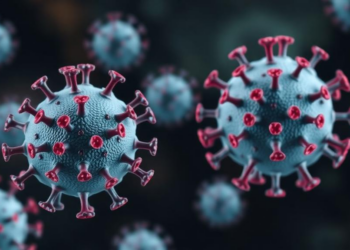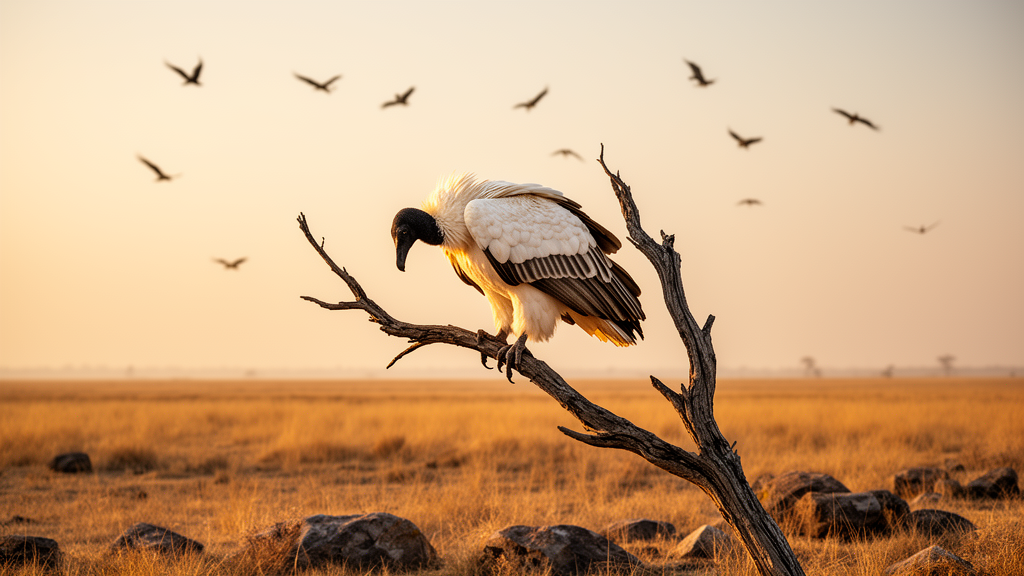
Vultures, one of the most threatened groups of birds in the world, now face a new and dangerous adversary: the highly pathogenic avian influenza virus H5N1. At least 16 of the 23 vulture species currently recognized are of conservation concern, largely as a result of poisoning and other threats stemming from human activity. Against this already precarious backdrop, the H5N1 virus, which has caused a panzootic, the animal equivalent of a pandemic, is spreading widely in regions that are critical for vultures, and researchers warn that it could push some populations toward collapse. A new letter published in the journal Conservation Biology sets out the scale of the problem and proposes concrete courses of action for conservationists and wildlife managers.
The letter was led by Jon Morant, a researcher at the Department of Zoology and Animal Cell Biology of the EHU-University of the Basque Country, working together with several researchers at the Mediterranean Institute for Advanced Studies (IMEDEA) in Mallorca and the Institute for Research in Biodiversity and Environment (INIBIOMA) in Argentina. In addition to Morant, the signatories include Andrea Santangeli of IMEDEA, and Pablo Plaza and Sergio A. Lambertucci of INIBIOMA. Morant, who is also a lecturer and researcher at the Álava Campus of the EHU, is currently undertaking a research stay at the UCD School of Biology and Environmental Science in Dublin as part of a Basque Government postdoctoral programme. The stated aim of the letter is to alert the research community and those responsible for conservation so that they can establish coordinated actions against this emerging threat.
The documented impacts of the current H5N1 panzootic on vultures are already severe. Thousands of American black vultures (Coragyps atratus) and Turkey vultures (Cathartes aura) have died in the United States and South America. The virus has also had a significant impact on the Bearded vulture (Gypaetus barbatus) in Europe, and on the California condor (Gymnogyps californianus) and the Andean condor (Vultur gryphus) in the Americas. The situation is particularly alarming for the California condor, a species that is critically endangered: its wild population fell by 6 percent in just six weeks as a result of the outbreak.
The ecology of vultures makes them unusually vulnerable to this particular virus. In general, vultures are social animals that gather together at feeding stations, places where the risk of contagion is high because many individuals congregate in close proximity. As scavengers, vultures are resistant to many bacteria and pathogens, an adaptation that allows them to thrive on carrion that would be dangerous to other animals. However, Morant explains, this natural resilience is not enough to protect them from the H5N1 virus, which has a high fatality rate in both domestic and wild animals.
Avian influenza is not exclusively a disease of birds. For vultures, the epidemiological logic is stark: the greater the number of infected carcasses in the environment, the greater the risk of contagion for the birds that feed on them. Because these carcasses can themselves become sources of infection, a paradox arises at the population level. As more vultures die, the capacity of the scavenger community to eliminate carrion is reduced, pathogens spread more widely through the environment, and the risk of contagion increases further. This feedback loop means that mortality can, in principle, accelerate rather than stabilize itself, a dynamic that is especially worrying for species already in decline.
The threat carries consequences beyond the birds themselves. Vultures provide what Morant describes as one of the most important ecosystem services for human wellbeing: they feed on decomposing animal carcasses that harbour pathogens. It has been proven that scavengers help prevent or reduce the spread of pathogens, in other words, they prevent disease-causing microorganisms from continuing to spread through the environment. A decline in vulture populations therefore removes a natural barrier against the circulation of infectious agents, with potential implications for both wildlife health and human health. This functional role is a central reason why the authors argue that the threat of H5N1 to vultures deserves urgent and coordinated attention from the research and conservation communities.
In response, the signatories of the letter call on conservationists and managers to adopt a holistic and multi-dimensional approach to reducing the threat posed to vultures by the H5N1 virus, and they set out five specific courses of action. The first is monitoring: the researchers consider it urgent to monitor vulture populations closely.
The second proposed course of action is the implementation of vaccination campaigns when populations are at serious risk and where logistical conditions permit. Morant points to the United States as an example: in the case of the California condor, the research community has implemented a vaccination campaign in response to the high risk of the species becoming extinct. The third course of action concerns the feeding stations used for scavenger birds. Because these sites concentrate large numbers of vultures around supplied carcasses, the authors stress that it is important that the birds are fed with non-contaminated carcasses, so that supplementary feeding does not itself become a route of viral transmission.
The fourth course of action is aimed at researchers themselves. The fifth recommendation is to develop and promote action plans adapted to each context. The countries where vultures live have different socio-economic situations and highly diverse governance models, and the authors argue that effective responses must therefore be tailored to local realities rather than imposed as a single uniform template.
The signatories are openly concerned about the problem, and they hope that, while the letter remains open, researchers and conservation managers will begin to take action. Morant proposes using the letter as a guide, and concludes that to tackle this dangerous epidemiological situation it is urgent to develop coordinated cross-border plans and to integrate these actions into shared governance structures. The article, titled “Emerging threat of avian influenza to the world’s vultures,” was published in Conservation Biology on 19 August 2026. For a group of birds in which at least 16 of 23 species are already of conservation concern, the arrival of a highly contagious, high-fatality virus that exploits the very scavenging behaviour that makes vultures ecologically valuable represents a threat that the authors argue can only be met through rapid, coordinated and internationally concerted action.
Subject of Research: The threat of H5N1 avian influenza to global vulture populations and proposed conservation responses
Article Title: Avian influenza threatens vulture populations worldwide
Article References: Avian influenza threatens vulture populations worldwide. Original publication (Bibliographic details unavailable.)
Image Credits: AI Generated
DOI: Not provided
Keywords: avian influenza, H5N1, vultures, conservation biology, California condor, scavengers, wildlife disease, panzootic, vaccination, ecosystem services, biodiversity, carrion
Cite Scienmag News
Margaret Porter. (October 27, 2026). H5N1 Avian Influenza Emerges as a Global Threat to Already Declining Vulture Populations. Scienmag. https://scienmag.com/h5n1-avian-influenza-emerges-as-a-global-threat-to-already-declining-vulture-populations/
Margaret Porter. "H5N1 Avian Influenza Emerges as a Global Threat to Already Declining Vulture Populations." Scienmag, 27 October 2026, https://scienmag.com/h5n1-avian-influenza-emerges-as-a-global-threat-to-already-declining-vulture-populations/. Accessed 28 October 2026.
Margaret Porter. "H5N1 Avian Influenza Emerges as a Global Threat to Already Declining Vulture Populations." Scienmag. October 27, 2026. https://scienmag.com/h5n1-avian-influenza-emerges-as-a-global-threat-to-already-declining-vulture-populations/