


When a beloved artist falls from grace, something curious happens inside the minds of their fans. Rather than simply admiring the person less from that moment forward, people appear to reach back into their own pasts and revise what they once felt. A new study led by a researcher at the University of South Florida reports that after learning about a creator’s misconduct, people selectively downgrade their remembered past views of the creator while leaving their remembered past enjoyment of the creator’s work remarkably intact. The research, published in the Journal of Experimental Social Psychology, describes this split in recollection as “differential memory reconstruction,” and it suggests that the psychological fallout of a scandal is stranger than a simple loss of admiration.
The study was led by Sally MyungJin Shin, an assistant professor of marketing at the University of South Florida’s Muma College of Business, working with co-authors Paul Rozin of the University of Pennsylvania and Gal Zauberman of Yale University. Across five experiments, the researchers examined participants’ evaluations of creators and their work both before and after those participants learned about transgressions committed by the creators. Rather than focusing on how scandals damage fans’ present-day admiration of an artist, the team wanted to investigate whether a fall from grace could reshape past attitudes.
What the researchers found was not a wholesale rewriting of the past. Supporters reevaluated their past fondness for the creator, revising downward the warmth they believed they had once felt toward the individual. Yet their fond memories of the creations were preserved, shielded from the same downward revision. “In retrospect, (they) selectively downgrade past views of the creator while keeping past enjoyment of the creation shielded,” Shin said. In other words, memory does not behave like a single record that gets uniformly updated when new moral information arrives.
The phenomenon is perhaps easiest to grasp through a cultural example the researchers themselves invoke: Bill Cosby. In the 1990s, The Cosby Show dominated prime-time television, and Cosby, who mesmerized the nation with his wit and humor, found himself at the center of a cultural fallout. A series of lawsuits in 2014 forced his fans to reevaluate their support for Cosby and his shows, raising the question of whether they still remembered him and his work as fondly as they once did. According to the study, the answer splits in two. People may mentally separate creators like Cosby from their creations when reconstructing memories, revising the man while sparing the memory of the enjoyment his work once provided.
Crucially, the pattern is not confined to television. It crosses from film to music. When listeners learned about Ray Charles’s history of parental negligence, their present-day opinions of both the man and his music declined. However, their memories of how much they had loved his music remained just as positive and protected. A similar pattern emerged with John Lennon. When participants were introduced to Lennon’s history of physical abuse, their present admiration for both him and his music dropped. Yet people still remembered loving his music just as much as they had before learning the troubling facts.
Shin and her colleagues describe the underlying mental operation as a kind of “moral surgery.” Rather than resetting the entire memory from the past, the mind appears to cut along a precise line, rewriting how people remember the creator while leaving memories of the work completely untouched. “Most surprisingly, the ability to separate art from the artist exists only when we look back in time,” Shin said. In the present, revelations about misconduct drag down evaluations of both the creator and the creations together, as the Ray Charles and John Lennon results show. But in memory, the two evaluations come apart. The same scandal produces two different outcomes depending on whether the question is asked about now or about then.
Why would the mind work this way? Shin points to the role of human psychology in resolving an inner conflict. Learning disturbing news about an artist whose work once brought genuine joy creates a tension between moral judgment and personal nostalgia. By quietly looking back and lowering their opinion of the person, people protect their happy memories and personal nostalgia from being ruined. On this account, the asymmetric revision is not a failure of memory but a form of self-directed maintenance: the past enjoyment of a song or a sitcom is treated as worth defending, while the past affection for the person who made it becomes the expendable part of the record.
The study, published in the Journal of Experimental Social Psychology under the title “Moral surgery: Negative revelations differentially alter retrospective evaluations of creators and creations,” was an experimental study with people as the subject of research, and its conclusions rest on the five experiments the authors conducted. Within that scope, the findings offer a precise picture of how moral information and memory interact: negative revelations about creators trigger a differential reconstruction in which past views of the creator are selectively downgraded and past enjoyment of the creation is shielded. When fans of a fallen artist insist that they still remember loving the art, even as they revise what they once thought of the artist, they may be reporting their memories exactly as their minds rebuilt them.
Subject of Research: How learning about a creator's misconduct differentially reshapes retrospective memories of the creator and the creation
Article Title: USF study finds we rewrite memories of fallen artists, but preserve memories of their art
Article References: USF study finds we rewrite memories of fallen artists, but preserve memories of their art. Original publication (Bibliographic details unavailable.)
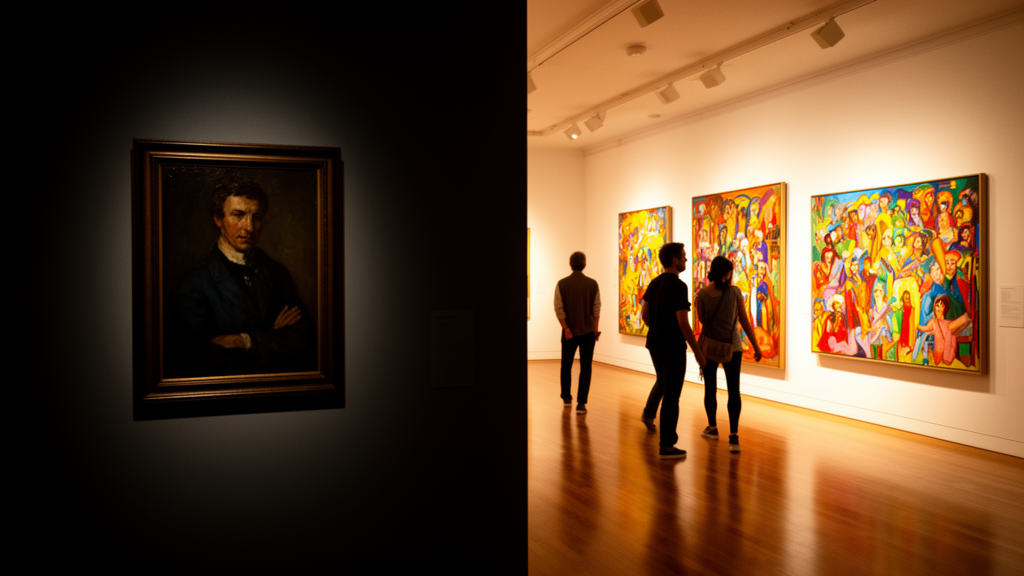
Image Credits: AI Generated
DOI: Not provided
Keywords: memory reconstruction, creator transgressions, art versus artist, social psychology, scandal, nostalgia, retrospective evaluation, Journal of Experimental Social Psychology, experimental study, Bill Cosby, Ray Charles, John Lennon
Cite Scienmag News
Courtney Benton. (October 27, 2026). Scandals rewrite how we remember the artist, but not how we remember the art. Scienmag. https://scienmag.com/scandals-rewrite-how-we-remember-the-artist-but-not-how-we-remember-the-art/
Courtney Benton. "Scandals rewrite how we remember the artist, but not how we remember the art." Scienmag, 27 October 2026, https://scienmag.com/scandals-rewrite-how-we-remember-the-artist-but-not-how-we-remember-the-art/. Accessed 27 October 2026.
Courtney Benton. "Scandals rewrite how we remember the artist, but not how we remember the art." Scienmag. October 27, 2026. https://scienmag.com/scandals-rewrite-how-we-remember-the-artist-but-not-how-we-remember-the-art/


