

Tuesday, October 27, 2026
Science
No Result
View All Result
  • Login
  • HOME
  • SCIENCE NEWS
  • CONTACT US
  • HOME
  • SCIENCE NEWS
  • CONTACT US
No Result
View All Result
Scienmag
No Result
View All Result
Home Science News Marine

Sea slug study reveals tRNA modifications shift during habituation learning

October 27, 2026
in Marine
Cassandra Pierce
By Cassandra Pierce Scienmag Editorial Profile - Systems Neuroscience
Reading Time: 2 mins read
0
Sea slug study reveals tRNA modifications shift during habituation learning

Sea slug study reveals tRNA modifications shift during habituation learning

65
SHARES
587
VIEWS
Share on FacebookShare on Twitter
ADVERTISEMENT

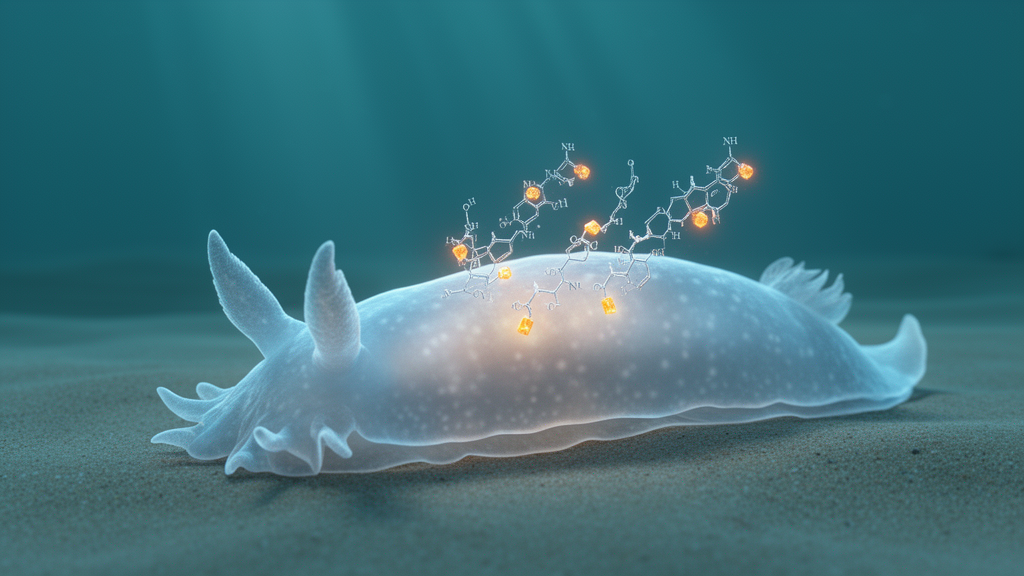
By studying sea slugs in the laboratory, researchers have deciphered how changes in molecules called transfer RNAs (tRNAs) accompany the remodeling of synapses and behavioral habituation, an elemental form of learning. The work, published in Science Signaling, examined the marine mollusk Aplysia californica, a popular model organism for neurobiology research.

tRNA is a common type of RNA that frequently becomes modified, especially in response to environmental cues. Prior research suggests that modifications in tRNAs play central roles in learning and memory, but they are difficult to isolate and study in the intricate mammalian nervous system. To get around this obstacle, Han Huang and colleagues turned to the sea slug, whose relatively simple nervous system nonetheless supports many forms of learning, including behavioral habituation, which occurs when an organism gradually responds less to an applied stimulus.

In their experiments, the researchers gently spritzed water on the slugs’ siphons to produce a defensive withdrawal reflex, and then studied the animals’ nervous systems as they became habituated to the repeated stimulus. Dozens of tRNAs underwent structural modifications as the slugs became habituated, including a rise in the abundance of an amino acid modification named N6-isopentenyladenosine.

Notably, these shifts occurred even though the expression of the tRNAs themselves remained constant, suggesting that habituation instead altered the activity of enzymes that modify tRNAs. This points to a layer of molecular regulation in which the chemical decoration of existing tRNAs, rather than the production of new tRNA molecules, changes as the animal learns to ignore a stimulus.

“Together, our findings reveal that neuronal tRNA modifications are reprogrammed during a learning paradigm, raising new, testable questions about the molecular mechanisms underlying behavioral habituation,” Huang and colleagues write.

The team also observed some unexpected changes in the abundance of small RNA modifications related to feeding in habituated slugs. They speculate that these findings could be related to behavioral patterns in marine mollusks, which suppress feeding behavior in response to aversive stimuli that might hint at the presence of predators.

Because the study was conducted in a laboratory animal model, the findings establish a correlation between tRNA modification changes and habituation rather than proving a causal role for these modifications in learning. Nevertheless, the work opens a new avenue for investigating how chemical modifications to RNA contribute to synaptic plasticity, and it provides a tractable system for testing these questions further, since the same molecular tools can now be applied to Aplysia’s well-mapped neural circuits.

Subject of Research: Changes in neuronal transfer RNA modifications during behavioral habituation in the sea slug Aplysia californica

Article Title: Sea slugs can learn too: Study reveals how RNAs support behavioral habituation and synaptic plasticity in these marine mollusks

Article References: Sea slugs can learn too: Study reveals how RNAs support behavioral habituation and synaptic plasticity in these marine mollusks. Original publication (Bibliographic details unavailable.)

Image Credits: AI Generated

DOI: Not provided

Keywords: Aplysia californica, tRNA modifications, behavioral habituation, synaptic plasticity, learning and memory, neurobiology, RNA modifications, Science Signaling, N6-isopentenyladenosine, marine mollusks, slugs, learn

Cite Scienmag News

Cassandra Pierce. (October 27, 2026). Sea slug study reveals tRNA modifications shift during habituation learning. Scienmag. https://scienmag.com/sea-slug-study-reveals-trna-modifications-shift-during-habituation-learning/


Cassandra Pierce. "Sea slug study reveals tRNA modifications shift during habituation learning." Scienmag, 27 October 2026, https://scienmag.com/sea-slug-study-reveals-trna-modifications-shift-during-habituation-learning/. Accessed 27 October 2026.

Cassandra Pierce. "Sea slug study reveals tRNA modifications shift during habituation learning." Scienmag. October 27, 2026. https://scienmag.com/sea-slug-study-reveals-trna-modifications-shift-during-habituation-learning/

Tags: Aplysia californicabehavioral habituationenvironmental effects on tRNA structurehabituation learning mechanismslearnlearning and memorymarine model organisms for neurosciencemarine mollusksmolecular basis of behavioral adaptationmolecular changes during habituationN6-isopentenyladenosineN6-isopentenyladenosine role in memoryneurobiologyneurochemical signaling in sea slugsRNA modificationsRNA modifications and neural plasticityScience SignalingSea slug neurobiologysimple nervous system learning modelsslugssynaptic plasticitysynaptic remodeling in molluskstRNA modificationstRNA modifications in learning
Share26Tweet16
Previous Post

Centromeres may explain suppressed recombination in sex chromosome evolution

Next Post

Tuition-free university is not cost-free: Ecuadorian students report hidden financial strain

Related Posts

Hidden Ocean Whirlpools: Tiny Eddies Reshape Life on Western Australia’s Shelf
Marine

Hidden Ocean Whirlpools: Tiny Eddies Reshape Life on Western Australia’s Shelf

October 27, 2026
Smoothed seafloors make ocean models overmix the deep Brazil Basin
Marine

Smoothed seafloors make ocean models overmix the deep Brazil Basin

October 27, 2026
Marine bacterium compound shows rapid potency against brain-eating amoeba
Marine

Marine bacterium compound shows rapid potency against brain-eating amoeba

October 26, 2026
Armored fossil reveals first fully marine amphibian from Triassic seas
Marine

Armored fossil reveals first fully marine amphibian from Triassic seas

October 26, 2026
Microbial ecologist Jack Gilbert wins 2026 Rachel Carson Environmental Conservation Award
Marine

Microbial ecologist Jack Gilbert wins 2026 Rachel Carson Environmental Conservation Award

October 24, 2026
Baleen records reveal how marine heatwaves drained humpback whale energy and reproduction
Marine

Baleen records reveal how marine heatwaves drained humpback whale energy and reproduction

October 24, 2026
Next Post
Tuition-free university is not cost-free: Ecuadorian students report hidden financial strain

Tuition-free university is not cost-free: Ecuadorian students report hidden financial strain

  • Mothers who receive childcare support from maternal grandparents show more optimized

    Mothers who receive childcare support from maternal grandparents show more parental warmth, finds NTU Singapore study

    27656 shares
    Share 11059 Tweet 6912
  • University of Seville Breaks 120-Year-Old Mystery, Revises a Key Einstein Concept

    1061 shares
    Share 424 Tweet 265
  • Bee body mass, pathogens and local climate influence heat tolerance

    682 shares
    Share 273 Tweet 171
  • Researchers record first-ever images and data of a shark experiencing a boat strike

    546 shares
    Share 218 Tweet 137
  • Groundbreaking Clinical Trial Reveals Lubiprostone Enhances Kidney Function

    531 shares
    Share 212 Tweet 133
Science

Embark on a thrilling journey of discovery with Scienmag.com—your ultimate source for cutting-edge breakthroughs. Immerse yourself in a world where curiosity knows no limits and tomorrow’s possibilities become today’s reality!

RECENT NEWS

  • Tuition-free university is not cost-free: Ecuadorian students report hidden financial strain
  • Sea slug study reveals tRNA modifications shift during habituation learning
  • Centromeres may explain suppressed recombination in sex chromosome evolution
  • Machine Learning Forecasts Weight Loss and App Engagement in Real-World Digital Obesity Care

Categories

  • Agriculture
  • Anthropology
  • Archaeology
  • Athmospheric
  • Biology
  • Biotechnology
  • Blog
  • Bussines
  • Cancer
  • Chemistry
  • Climate
  • Earth Science
  • Editorial Policy
  • Marine
  • Mathematics
  • Medicine
  • Pediatry
  • Policy
  • Psychology & Psychiatry
  • Science Education
  • Science News
  • Social Science
  • Space
  • Technology and Engineering

Subscribe to Blog via Email

Enter your email address to subscribe to this blog and receive notifications of new posts by email.

Join 5,151 other subscribers

© 2025 Scienmag - Science Magazine

Welcome Back!

Login to your account below

Forgotten Password?

Retrieve your password

Please enter your username or email address to reset your password.

Log In
No Result
View All Result
  • HOME
  • SCIENCE NEWS
  • CONTACT US

© 2025 Scienmag - Science Magazine

Discover more from Science

Subscribe now to keep reading and get access to the full archive.

Continue reading