

Tuesday, October 27, 2026
Science
No Result
View All Result
  • Login
  • HOME
  • SCIENCE NEWS
  • CONTACT US
  • HOME
  • SCIENCE NEWS
  • CONTACT US
No Result
View All Result
Scienmag
No Result
View All Result
Home Science News Biology

Nanopore RNA Sequencing Method Yields Candidate Motifs for Three RNA Modifications

October 27, 2026
in Biology
Juliet Wilcox
By Juliet Wilcox Scienmag Editorial Profile - Human Genetics
Reading Time: 2 mins read
0
Nanopore RNA Sequencing Method Yields Candidate Motifs for Three RNA Modifications

Nanopore RNA Sequencing Method Yields Candidate Motifs for Three RNA Modifications

65
SHARES
587
VIEWS
Share on FacebookShare on Twitter
ADVERTISEMENT

Researchers have developed a computational framework that identifies candidate sequence motifs for RNA modifications using direct RNA sequencing data, according to a study published in BMC Bioinformatics.

RNA modifications act as key regulators of many aspects of RNA biology, which has fueled interest in computational methods for detecting them across the transcriptome. For some modifications, the search space can be narrowed by exploiting characteristic sequence motifs. The best-known example is the canonical DRACH motif associated with N6-methyladenosine, or m6A. However, comparable sequence preferences remain largely unknown for most other RNA modifications, making systematic motif discovery considerably more challenging.

In the new study, Nicolò Alagna, Johannes Miedema, Yahia Basiony and Susanne Gerber applied a technique called exponential population analysis to direct RNA sequencing data. The data came from two human sources: HEK293T cells, a widely used laboratory cell line, and peripheral human blood samples. The goal was to identify candidate motif patterns for three RNA modifications: pseudouridine, inosine and 5-methylcytosine.

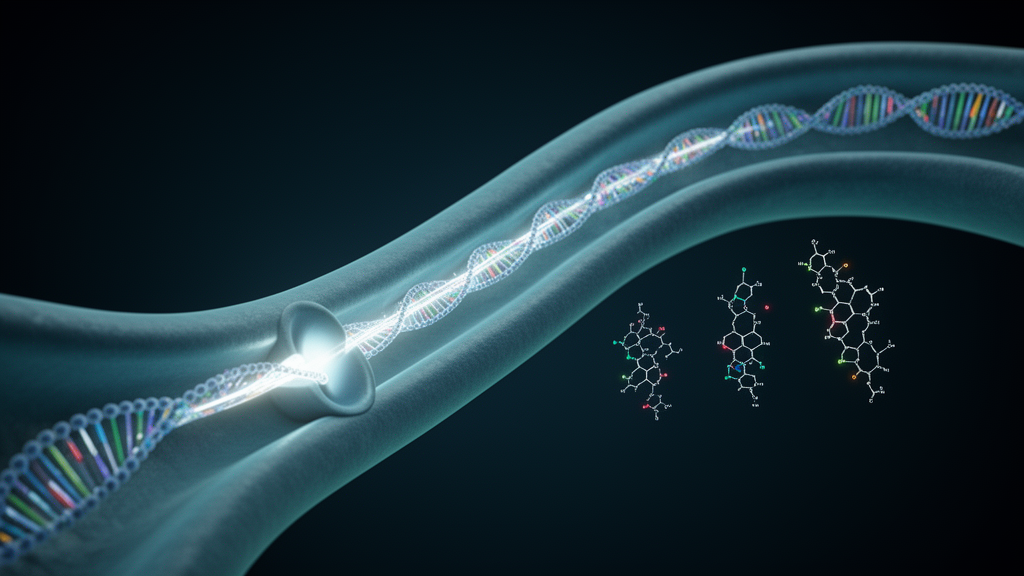
Direct RNA sequencing, a nanopore-based approach, allows RNA molecules to be read natively, and computational predictions of modification sites can be derived from such data. The exponential population analysis method provides a systematic way to mine these predictions for recurring sequence contexts, the authors report. Rather than delivering confirmed biological mechanisms, the analysis prioritizes sequence contexts that merit future biological validation.

The authors emphasize that the framework’s output is a set of candidate motif patterns, not experimentally validated motifs. Because sequence preferences for pseudouridine, inosine and 5-methylcytosine are not well characterized, the identified candidates could guide the design of follow-up experiments aimed at confirming whether the predicted contexts reflect genuine modification signatures. The study was published as an open-access research article on 23 October 2026, and the version shared early is subject to further editorial edits before the final version of record appears.

Subject of Research: Computational discovery of candidate sequence motifs for RNA modifications using direct RNA sequencing

Article Title: Extracting candidate motif patterns for multiple RNA modifications using direct RNA sequencing

Article References: Alagna, N., Miedema, J., Basiony, Y., & Gerber, S. (2026). Extracting candidate motif patterns for multiple RNA modifications using direct RNA sequencing. BMC Bioinformatics, 27(1), Article 246. https://doi.org/10.1186/s12859-026-06724-5

Image Credits: AI Generated

DOI: 10.1186/s12859-026-06724-5

Keywords: RNA modifications, direct RNA sequencing, nanopore sequencing, pseudouridine, inosine, 5-methylcytosine, m6A, DRACH motif, exponential population analysis, HEK293T cells, transcriptome, motif discovery

Cite Scienmag News

Juliet Wilcox. (October 27, 2026). Nanopore RNA Sequencing Method Yields Candidate Motifs for Three RNA Modifications. Scienmag. https://scienmag.com/nanopore-rna-sequencing-method-yields-candidate-motifs-for-three-rna-modifications/


Juliet Wilcox. "Nanopore RNA Sequencing Method Yields Candidate Motifs for Three RNA Modifications." Scienmag, 27 October 2026, https://scienmag.com/nanopore-rna-sequencing-method-yields-candidate-motifs-for-three-rna-modifications/. Accessed 27 October 2026.

Juliet Wilcox. "Nanopore RNA Sequencing Method Yields Candidate Motifs for Three RNA Modifications." Scienmag. October 27, 2026. https://scienmag.com/nanopore-rna-sequencing-method-yields-candidate-motifs-for-three-rna-modifications/

Tags: 5-methylcytosine5-methylcytosine RNA modificationcomputational motif discovery in RNAdirect RNA sequencingdirect RNA sequencing analysisDRACH motifexponential population analysisexponential population analysis for RNAHEK293T cellsidentification of pseudouridine and inosine motifsinosinem6Amotif discoveryNanopore RNA sequencingnanopore sequencingnanopore-based RNA modification profilingnative RNA sequencing techniquespseudouridineRNA biology and regulationRNA modification detectionRNA modificationssequence motif prediction for RNA modificationstranscriptometranscriptome-wide RNA modification mapping
Share26Tweet16
Previous Post

Waste palmyrah kernel shells turned into nitrogen-doped carbon that grabs CO2 efficiently

Next Post

Astrocyte Subtype Marked by CD51 Drives Synapse Formation and Stroke Recovery in Mice

Related Posts

Older organs and older recipients: how ageing is reshaping transplant medicine
Biology

Older organs and older recipients: how ageing is reshaping transplant medicine

October 27, 2026
New duplex qPCR test distinguishes wild-type from persistent O foot-and-mouth virus
Biology

New duplex qPCR test distinguishes wild-type from persistent O foot-and-mouth virus

October 27, 2026
High-Risk NIPT Results Confirmed in Only Half of 1,326 Pregnancies, Study Finds
Biology

High-Risk NIPT Results Confirmed in Only Half of 1,326 Pregnancies, Study Finds

October 27, 2026
Floralozone Shows Cardioprotective Effects in Doxorubicin-Induced Heart Failure in Rats
Biology

Floralozone Shows Cardioprotective Effects in Doxorubicin-Induced Heart Failure in Rats

October 27, 2026
Male or Female? Plant Sex Shapes Photosynthesis in Surprising Ways
Biology

Male or Female? Plant Sex Shapes Photosynthesis in Surprising Ways

October 27, 2026
Genome Study Pinpoints DNA Regions Tied to Milk Quality in Indian Crossbred Cattle
Biology

Genome Study Pinpoints DNA Regions Tied to Milk Quality in Indian Crossbred Cattle

October 27, 2026
Next Post
Astrocyte Subtype Marked by CD51 Drives Synapse Formation and Stroke Recovery in Mice

Astrocyte Subtype Marked by CD51 Drives Synapse Formation and Stroke Recovery in Mice

  • Mothers who receive childcare support from maternal grandparents show more optimized

    Mothers who receive childcare support from maternal grandparents show more parental warmth, finds NTU Singapore study

    27656 shares
    Share 11059 Tweet 6912
  • University of Seville Breaks 120-Year-Old Mystery, Revises a Key Einstein Concept

    1061 shares
    Share 424 Tweet 265
  • Bee body mass, pathogens and local climate influence heat tolerance

    682 shares
    Share 273 Tweet 171
  • Researchers record first-ever images and data of a shark experiencing a boat strike

    546 shares
    Share 218 Tweet 137
  • Groundbreaking Clinical Trial Reveals Lubiprostone Enhances Kidney Function

    531 shares
    Share 212 Tweet 133
Science

Embark on a thrilling journey of discovery with Scienmag.com—your ultimate source for cutting-edge breakthroughs. Immerse yourself in a world where curiosity knows no limits and tomorrow’s possibilities become today’s reality!

RECENT NEWS

  • Astrocyte Subtype Marked by CD51 Drives Synapse Formation and Stroke Recovery in Mice
  • Nanopore RNA Sequencing Method Yields Candidate Motifs for Three RNA Modifications
  • Waste palmyrah kernel shells turned into nitrogen-doped carbon that grabs CO2 efficiently
  • Older organs and older recipients: how ageing is reshaping transplant medicine

Categories

  • Agriculture
  • Anthropology
  • Archaeology
  • Athmospheric
  • Biology
  • Biotechnology
  • Blog
  • Bussines
  • Cancer
  • Chemistry
  • Climate
  • Earth Science
  • Editorial Policy
  • Marine
  • Mathematics
  • Medicine
  • Pediatry
  • Policy
  • Psychology & Psychiatry
  • Science Education
  • Science News
  • Social Science
  • Space
  • Technology and Engineering

Subscribe to Blog via Email

Enter your email address to subscribe to this blog and receive notifications of new posts by email.

Join 5,151 other subscribers

© 2025 Scienmag - Science Magazine

Welcome Back!

Login to your account below

Forgotten Password?

Retrieve your password

Please enter your username or email address to reset your password.

Log In
No Result
View All Result
  • HOME
  • SCIENCE NEWS
  • CONTACT US

© 2025 Scienmag - Science Magazine

Discover more from Science

Subscribe now to keep reading and get access to the full archive.

Continue reading