


People with mild obesity may face more than twice the odds of vital organ failure when acute pancreatitis strikes, and those odds climb further as the degree of obesity increases, according to an international study led by researchers at Semmelweis University. The analysis, published in the journal Pancreatology, drew on data from 2244 patients treated at 29 healthcare centers across 13 countries.
The research team calculated each patient’s body mass index from their measured weight and height, then sorted the cohort into categories of normal weight, overweight, and varying degrees of obesity. The investigators then tracked how the disease progressed in each group. Among patients with mild obesity, the odds of organ failure, defined as severe dysfunction of vital organs such as the kidneys, lungs, or heart, were more than twice as high as among patients of normal weight. The higher the degree of obesity, the higher these odds became, indicating a graded relationship between adiposity and the risk of the disease’s most dangerous complications.
Severe pancreatitis itself also showed a striking pattern. Patients with obesity had more than three times the odds of developing severe acute pancreatitis compared with patients of normal weight, according to the study. In severe cases, the mortality rate can reach 30 percent, which underscores why factors that shift patients toward a severe course are of such clinical interest. Roughly 70 percent of cases follow a mild course, and the disease affects approximately 5000 people annually in Hungary alone.
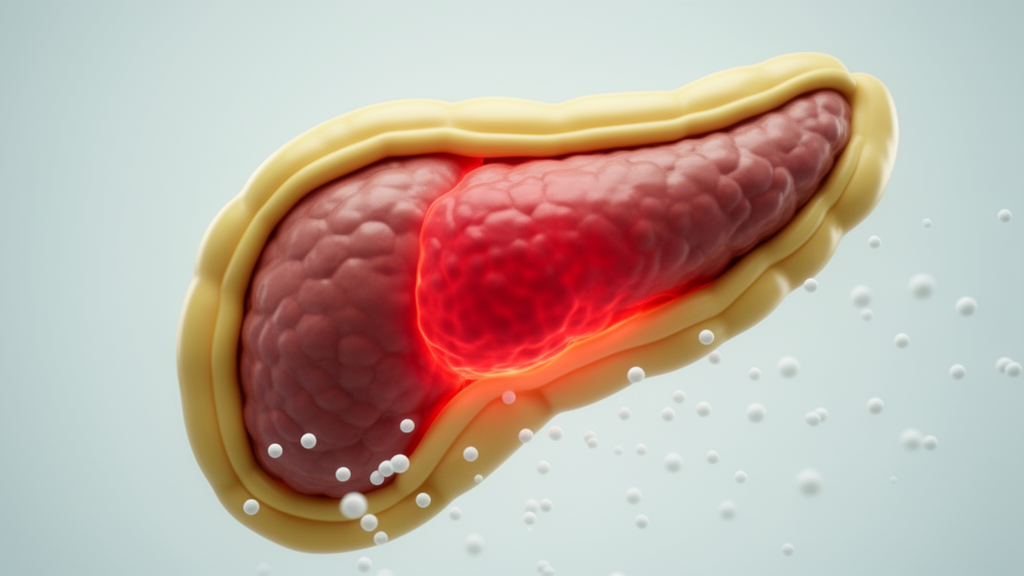
Acute pancreatitis occurs when digestive enzymes, instead of exerting their effects in the small intestine, become prematurely activated within the pancreas and damage its own tissues, triggering inflammation. The condition is most commonly triggered by gallstones or excessive alcohol consumption and typically announces itself with severe abdominal pain.
The study’s first author, Andrea Szentesi, a PhD supervisor at Semmelweis University’s Doctoral College and researcher at the University of Pécs, offered a possible biological explanation for the link. “Even in an asymptomatic state, people with overweight or obesity may have chronic low-grade inflammation. Therefore, when an unexpected disease strikes, their immune system may respond excessively, which may worsen their prognosis,” she explained. In other words, the body’s baseline inflammatory state may prime an exaggerated immune response precisely when the pancreas comes under attack.
Szentesi added that the chances of recovery might be further reduced by other comorbidities linked to overweight, such as circulatory disorders, and by physical problems arising from severe obesity, such as shortness of breath. She noted that overcoming the factors contributing to a more severe course of the disease, including obesity or excessive alcohol consumption, might require adopting a health-conscious lifestyle, while acknowledging that weight loss is extremely difficult for many patients.
“Perhaps the most important message for patients is that obesity may worsen outcomes not only in the long term, but also in the event of a suddenly developing acute disease. For this reason, even a gradual or smaller weight loss might be effective,” said Dr. Péter Hegyi, the last author of the study and Director of the Institute of Pancreatic Diseases and the Centre for Translational Medicine at Semmelweis University. His comment frames the findings as a practical argument for incremental change rather than an all-or-nothing target.
The researchers also emphasize the importance of follow-up examinations after hospital treatment. Because the inflammation may later lead to diabetes or digestive problems, they highlight the value of coordinated care involving doctors, dietitians, and psychologists in the early detection and treatment of these complications. Structured follow-up may therefore matter not only for immediate recovery but for the longer-term health of survivors.
The investigation of obesity is not the end of the team’s work. In an ongoing study, the researchers are examining how other lifestyle factors, including sleep quality, stress, nutrition, and physical activity, might influence the outcome of acute pancreatitis. As a multicenter cohort analysis, the current study establishes associations between body mass index categories and disease severity rather than proving that weight loss directly prevents severe complications, and the authors themselves present the potential benefit of gradual weight reduction as a possibility grounded in these observed odds rather than a demonstrated effect of intervention.
Subject of Research: The relationship between body mass index and the severity of acute pancreatitis
Article Title: The degree of obesity may influence the outcomes of acute pancreatitis
Article References: The degree of obesity may influence the outcomes of acute pancreatitis. Original publication (Bibliographic details unavailable.)
Image Credits: AI Generated
DOI: Not provided
Keywords: acute pancreatitis, obesity, body mass index, organ failure, severe pancreatitis, Semmelweis University, Pancreatology, multicenter cohort study, inflammation, weight loss, gallstones, prognosis
Cite Scienmag News
Daisy Hatcher. (October 27, 2026). Obesity may more than double odds of organ failure in acute pancreatitis. Scienmag. https://scienmag.com/obesity-may-more-than-double-odds-of-organ-failure-in-acute-pancreatitis/
Daisy Hatcher. "Obesity may more than double odds of organ failure in acute pancreatitis." Scienmag, 27 October 2026, https://scienmag.com/obesity-may-more-than-double-odds-of-organ-failure-in-acute-pancreatitis/. Accessed 27 October 2026.
Daisy Hatcher. "Obesity may more than double odds of organ failure in acute pancreatitis." Scienmag. October 27, 2026. https://scienmag.com/obesity-may-more-than-double-odds-of-organ-failure-in-acute-pancreatitis/


