


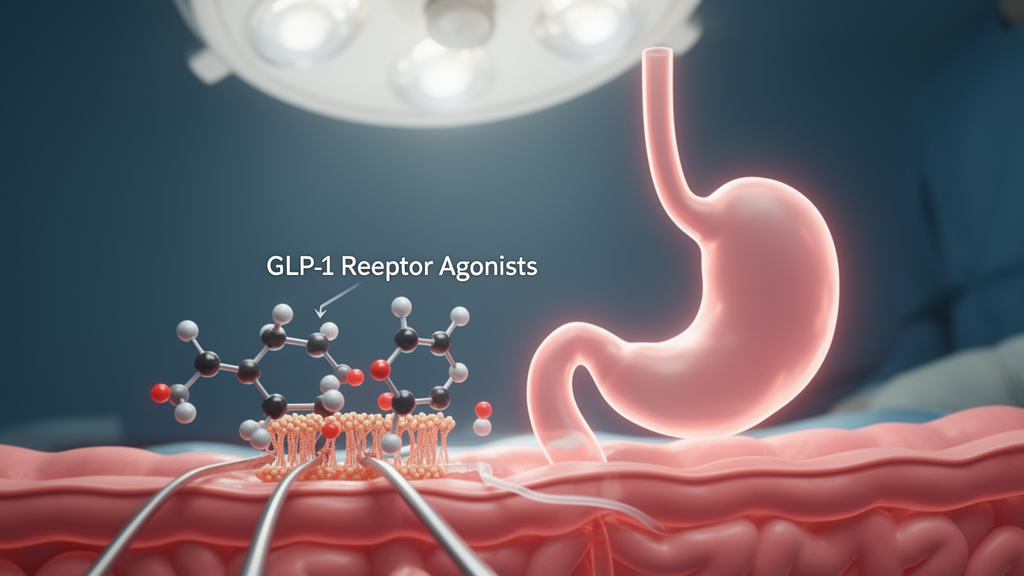
The rapid expansion of glucagon-like peptide-1 receptor agonists (GLP-1RAs) into the treatment of both type 2 diabetes and obesity has created a complex set of challenges for perioperative medicine. As more patients begin these medications, which mimic endogenous GLP-1 to enhance insulin secretion and suppress glucagon, the clinical practice of surgery and procedural sedation is encountering a growing concern: delayed gastric emptying. This delay, a known pharmacological effect of GLP-1RAs, raises significant questions regarding the potential for residual gastric contents and subsequent pulmonary aspiration, even when patients adhere strictly to standard fasting guidelines. While current evidence robustly confirms an increased incidence of retained gastric contents in this patient population, a corresponding increase in pulmonary aspiration has not been established, forcing clinicians to navigate a landscape of evolving guidelines and significant scientific uncertainty.
The mechanism by which GLP-1RAs function—slowing gastric emptying to promote satiety and aid in weight loss—is the very feature that creates this perioperative dilemma. Retrospective studies, large meta-analyses, and prospective investigations have consistently demonstrated a heightened risk of residual gastric contents among individuals receiving GLP-1RA therapy. Specifically, three recent meta-analyses, each incorporating approximately 200,000 patients, reported a four- to six-fold increase in retained gastric contents when compared to non-users. This association is further corroborated by investigations utilizing prospective gastric ultrasonography and upper endoscopy, providing strong clinical evidence linking GLP-1RA use to residual gastric material prior to anesthesia. This finding is clinically relevant because retained food during upper endoscopy has been independently associated with approximately tenfold higher adjusted odds of aspiration.
However, the interpretation of this observational data is complicated by several confounding factors. Potential confounders include pre-existing conditions such as diabetic gastroparesis, prior gastrointestinal surgeries, or concurrent use of opioids, all of which can independently affect gastrointestinal motility. To provide more rigorous, randomized prospective evidence, the OCULUS trial compared patients who continued their scheduled GLP-1RA use against those who withheld one dose before upper endoscopy. The results showed that residual gastric contents were identified in 25% of patients who continued therapy, compared to only 3.1% among those who withheld treatment, thus providing randomized evidence that continued GLP-1RA use contributes to retained gastric contents.
Furthermore, the risk profile is not uniform across all patients or all medications. Several factors appear to modify this risk, including the specific agent, the dose, the duration of treatment, and recent dose escalation. Delayed gastric emptying is observed to be most pronounced during treatment initiation and dose escalation, while the effect may diminish substantially after approximately 12 weeks of therapy. Pharmacological differences also exist; short-acting GLP-1RAs appear to sustain their effects on gastric emptying more consistently, whereas long-acting agents may show attenuation over time, consistent with tachyphylaxis. While some network meta-analyses have found no significant differences among common agents like semaglutide, exenatide, liraglutide, and dulaglutide, other observational studies have suggested greater odds of retained solid gastric contents with tirzepatide, although the data on dose effect for this agent were limited.
The evolution of perioperative recommendations has been a direct response to this accumulating evidence, shifting away from a conservative, blanket approach toward individualized risk assessment. Early guidance, such as the 2023 American Society of Anesthesiologists (ASA) consensus, recommended withholding daily GLP-1RAs on the day of surgery and weekly formulations for one week prior to elective procedures, regardless of the indication or procedure type. This approach, while cautious, reflected significant uncertainty regarding the actual risk of aspiration. However, as more data emerged, contemporary guidance has moved toward considering a broader range of factors. The 2025 multidisciplinary guidance from the Australian Diabetes Society and Gastroenterological Society of Australia suggests continuing GLP-1RAs through the periprocedural period in many patients, provided they adhere to a 24-hour clear-liquid diet, while recommending gastric ultrasound when dietary preparation is uncertain or residual gastric contents are suspected.
In the absence of definitive data, clinicians are increasingly relying on sophisticated risk stratification. Management should now incorporate recent treatment initiation or dose escalation, the presence of gastrointestinal symptoms suggestive of delayed gastric emptying, concurrent conditions affecting gastrointestinal motility, and the planned anesthetic technique. Dietary modification has also emerged as a critical alternative to medication discontinuation. For instance, the OCULUS trial highlighted that patients undergoing colonoscopy with bowel preparation and a clear-liquid diet demonstrated substantially less residual gastric contents than those undergoing upper endoscopy after a regular diet. Longer fasting durations may also contribute to reduced retained solids, though the relative contribution of dietary composition versus fasting time remains uncertain. When surgery cannot be delayed, rapid sequence induction with endotracheal intubation may be considered, though the efficacy of adjunct interventions like cricoid pressure remains controversial.
Gastric point-of-care ultrasound (POCUS) has emerged as a potential tool to provide additional information when residual gastric contents are uncertain. POCUS has been shown to alter anesthetic management in nearly 20% of evaluated cases, making it particularly useful when medication history or symptoms raise concerns. However, its application is constrained by significant limitations. These include operator dependence, difficulties in quantitative assessment of gastric volume, and the absence of standardized thresholds defining what constitutes a clinically significant gastric volume. Furthermore, imaging can be technically challenging in patients with obesity, and standard anatomical landmarks may be altered in those with prior bariatric or gastric surgery. Therefore, POCUS should be viewed as a complementary diagnostic assessment rather than a standalone predictor of pulmonary aspiration risk.
Crucially, the current body of evidence has not demonstrated that the increased prevalence of retained gastric contents translates into a measurable increase in clinically consequential pulmonary aspiration specifically attributable to GLP-1RA therapy. Aspiration is a relatively rare perioperative complication, making it inherently difficult to detect meaningful differences in event rates in large observational studies. While some large studies, including those involving over 300,000 participants, have found no increased incidence of aspiration, the true risk remains uncertain due to the rarity of the events, heterogeneous outcome definitions (which include silent aspiration), and the predominantly retrospective nature of the available data. Consequently, the central unanswered question remains whether GLP-1RA exposure increases retained gastric contents without translating into a clinically significant increase in aspiration.
The challenges are compounded in the pediatric population. While GLP-1RA use is expanding among children with type 2 diabetes and obesity, current recommendations are largely extrapolated from adult data. Developmental differences in gastric physiology and medication tolerance must be considered, as pediatric trials have reported higher rates of gastrointestinal adverse effects, such as vomiting, compared to adults. Furthermore, baseline pediatric factors—including prematurity or congenital airway abnormalities—can independently influence aspiration risk. Until dedicated prospective studies are conducted to define pediatric-specific thresholds for retained gastric contents and aspiration risk, an individualized approach incorporating developmental factors and careful consideration of medication history remains the necessary standard of care.
Subject of Research: Perioperative management of patients receiving GLP-1 receptor agonists, focusing on gastric emptying and aspiration risk.
Article Title: Perioperative management of GLP-1 receptor agonists: adult evidence and future directions
Article References: Varga, G., Lazzareschi, D. V., & Sadhasivam, S. (2026). Perioperative management of GLP-1 receptor agonists: adult evidence and future directions. Frontiers in Anesthesiology, 5, 1991524. https://doi.org/10.3389/fanes.2026.1991524
Image Credits: AI Generated
DOI: 10.3389/fanes.2026.1991524
Keywords: GLP-1 receptor agonists, Perioperative medicine, Gastric emptying, Pulmonary aspiration, Anesthesiology, Obesity treatment, Gastric ultrasound, Risk assessment, Perioperative, management, GLP-1, receptor
Cite Scienmag News
Drew Townsend. (October 27, 2026). GLP-1 Receptor Agonists: Balancing Gastric Risk and Aspiration in Surgery. Scienmag. https://scienmag.com/glp-1-receptor-agonists-balancing-gastric-risk-and-aspiration-in-surgery/
Drew Townsend. "GLP-1 Receptor Agonists: Balancing Gastric Risk and Aspiration in Surgery." Scienmag, 27 October 2026, https://scienmag.com/glp-1-receptor-agonists-balancing-gastric-risk-and-aspiration-in-surgery/. Accessed 27 October 2026.
Drew Townsend. "GLP-1 Receptor Agonists: Balancing Gastric Risk and Aspiration in Surgery." Scienmag. October 27, 2026. https://scienmag.com/glp-1-receptor-agonists-balancing-gastric-risk-and-aspiration-in-surgery/


