

Tuesday, October 27, 2026
Science
No Result
View All Result
  • Login
  • HOME
  • SCIENCE NEWS
  • CONTACT US
  • HOME
  • SCIENCE NEWS
  • CONTACT US
No Result
View All Result
Scienmag
No Result
View All Result
Home Science News Earth Science

Pets, livestock and wildlife proposed as sentinels for tracking emerging contaminants

October 27, 2026
in Earth Science
Margaret Porter
By Margaret Porter Scienmag Editorial Profile - Biodiversity Science
Reading Time: 2 mins read
0
Pets, livestock and wildlife proposed as sentinels for tracking emerging contaminants

Pets, livestock and wildlife proposed as sentinels for tracking emerging contaminants

65
SHARES
587
VIEWS
Share on FacebookShare on Twitter
ADVERTISEMENT

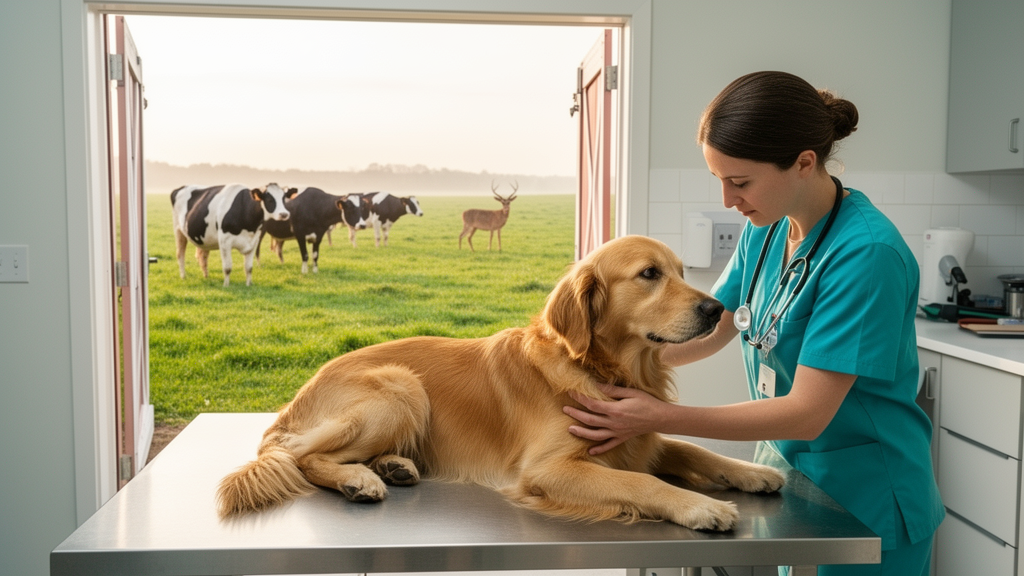
Domestic and wild animals could serve as early-warning sentinels for emerging contaminants in the environment, according to a critical narrative review published in Environmental Monitoring and Assessment.

The review, which used structured keyword selection and literature mapping informed by SANRA quality criteria, integrates evidence on three groups of sentinel animals. Companion animals, sharing homes and lifestyles with people, can help reconstruct indoor and lifestyle exposures. Livestock occupy the interface between feed, water, soil and animal-derived foods, and can therefore flag contamination entering the food chain. Wildlife, meanwhile, integrates exposure at ecosystem, trophic and landscape scales. The contaminants covered include per- and polyfluoroalkyl substances (PFAS), endocrine disruptors, micro- and nanoplastics, pesticides, pharmaceuticals and food-chain contaminants.

The proposed framework outlines monitoring modules, normalization considerations, biospecimen-banking options and tiered operational triggers that connect a sentinel detection to environmental verification and targeted human biomonitoring. Two application models illustrate the approach: a hypothetical localized PFAS plume involving waterfowl and dairy cattle, and an evidence-informed Arctic sled dog model for chronic exposure to long-range transported chemical mixtures. In both scenarios, animal signals are used to support exposure reconstruction, hotspot identification and public-health prioritization rather than to replace direct measurement in people.

The authors are explicit about the limits of the approach. Animal sentinel evidence should be interpreted as early warning and triangulating evidence, not as stand-alone proof of human health risk, the review states. Because the article is a framework and narrative review rather than a new field study, it does not report new measured contaminant concentrations; its contribution lies in organizing existing evidence into an operational structure that environmental and public-health agencies could adapt. The full framework, including the tiered triggers and biospecimen-banking options, is described in the article, which appears in volume 198 of the journal.

Subject of Research: Use of domestic and wild animals as sentinels for monitoring emerging environmental contaminants and assessing human exposure

Article Title: Domestic and wild animals as sentinels for environmental monitoring of emerging contaminants: a One Health framework for biomonitoring and human exposure assessment

Article References: Britti, D. (2026). Domestic and wild animals as sentinels for environmental monitoring of emerging contaminants: a One Health framework for biomonitoring and human exposure assessment. Environmental Monitoring and Assessment, 198(11), Article 1258. https://doi.org/10.1007/s10661-026-16026-1

Image Credits: AI Generated

DOI: 10.1007/s10661-026-16026-1

Keywords: emerging contaminants, PFAS, One Health, biomonitoring, sentinel animals, wildlife, livestock, companion animals, microplastics, endocrine disruptors, environmental monitoring, public health

Cite Scienmag News

Margaret Porter. (October 27, 2026). Pets, livestock and wildlife proposed as sentinels for tracking emerging contaminants. Scienmag. https://scienmag.com/pets-livestock-and-wildlife-proposed-as-sentinels-for-tracking-emerging-contaminants/


Margaret Porter. "Pets, livestock and wildlife proposed as sentinels for tracking emerging contaminants." Scienmag, 27 October 2026, https://scienmag.com/pets-livestock-and-wildlife-proposed-as-sentinels-for-tracking-emerging-contaminants/. Accessed 27 October 2026.

Margaret Porter. "Pets, livestock and wildlife proposed as sentinels for tracking emerging contaminants." Scienmag. October 27, 2026. https://scienmag.com/pets-livestock-and-wildlife-proposed-as-sentinels-for-tracking-emerging-contaminants/

Tags: bioindicators for ecosystem healthbiomonitoringCompanion animalscompanion animals and human healthearly-warning systems for environmental toxinsemerging chemical contaminants detectionemerging contaminantsendocrine disruptorsEnvironmental contaminant monitoringEnvironmental Monitoringfood chain contamination monitoringlivestocklivestock exposure to pollutantsmicroplasticsmicroplastics and nanoplastics in animalsOne Healthpesticides and pharmaceuticals in animalsPFASPublic healthsentinel animalstiered environmental health assessmentwildlifewildlife and livestock exposure reconstructionwildlife as environmental sentinels
Share26Tweet16
Previous Post

Two Genes, Two Fates: How a Collagen Disorder and Marfan Syndrome Broke the Aorta in Different Ways

Next Post

Chronic widespread pain linked to higher cardiovascular risk in type 2 diabetes

Related Posts

Machine Learning Surrogates Slash the Cost of Sensitivity Analysis in Hydrology
Earth Science

Machine Learning Surrogates Slash the Cost of Sensitivity Analysis in Hydrology

October 27, 2026
Scraped data reveal childcare platform work thrives far beyond Swiss cities
Earth Science

Scraped data reveal childcare platform work thrives far beyond Swiss cities

October 27, 2026
New Framework Links Earthquake Shaking, Tsunami and Ground Failure in One Risk Model
Climate

New Framework Links Earthquake Shaking, Tsunami and Ground Failure in One Risk Model

October 27, 2026
Two literatures, one spa: study finds therapeutic architecture and wellness resort research rarely overlap
Earth Science

Two literatures, one spa: study finds therapeutic architecture and wellness resort research rarely overlap

October 27, 2026
Seabed Shape and Soft Sediments Amplify Earthquake Shaking in Hangzhou Bay
Earth Science

Seabed Shape and Soft Sediments Amplify Earthquake Shaking in Hangzhou Bay

October 27, 2026
Machine learning pinpoints what drives coal power across BRICS economies
Earth Science

Machine learning pinpoints what drives coal power across BRICS economies

October 27, 2026
Next Post
Chronic widespread pain linked to higher cardiovascular risk in type 2 diabetes

Chronic widespread pain linked to higher cardiovascular risk in type 2 diabetes

  • Mothers who receive childcare support from maternal grandparents show more optimized

    Mothers who receive childcare support from maternal grandparents show more parental warmth, finds NTU Singapore study

    27656 shares
    Share 11059 Tweet 6912
  • University of Seville Breaks 120-Year-Old Mystery, Revises a Key Einstein Concept

    1061 shares
    Share 424 Tweet 265
  • Bee body mass, pathogens and local climate influence heat tolerance

    682 shares
    Share 273 Tweet 171
  • Researchers record first-ever images and data of a shark experiencing a boat strike

    546 shares
    Share 218 Tweet 137
  • Groundbreaking Clinical Trial Reveals Lubiprostone Enhances Kidney Function

    531 shares
    Share 212 Tweet 133
Science

Embark on a thrilling journey of discovery with Scienmag.com—your ultimate source for cutting-edge breakthroughs. Immerse yourself in a world where curiosity knows no limits and tomorrow’s possibilities become today’s reality!

RECENT NEWS

  • MRI bright stripes after bisphosphonates mimic disease flare in childhood bone disease
  • Chronic widespread pain linked to higher cardiovascular risk in type 2 diabetes
  • Pets, livestock and wildlife proposed as sentinels for tracking emerging contaminants
  • Two Genes, Two Fates: How a Collagen Disorder and Marfan Syndrome Broke the Aorta in Different Ways

Categories

  • Agriculture
  • Anthropology
  • Archaeology
  • Athmospheric
  • Biology
  • Biotechnology
  • Blog
  • Bussines
  • Cancer
  • Chemistry
  • Climate
  • Earth Science
  • Editorial Policy
  • Marine
  • Mathematics
  • Medicine
  • Pediatry
  • Policy
  • Psychology & Psychiatry
  • Science Education
  • Science News
  • Social Science
  • Space
  • Technology and Engineering

Subscribe to Blog via Email

Enter your email address to subscribe to this blog and receive notifications of new posts by email.

Join 5,151 other subscribers

© 2025 Scienmag - Science Magazine

Welcome Back!

Login to your account below

Forgotten Password?

Retrieve your password

Please enter your username or email address to reset your password.

Log In
No Result
View All Result
  • HOME
  • SCIENCE NEWS
  • CONTACT US

© 2025 Scienmag - Science Magazine

Discover more from Science

Subscribe now to keep reading and get access to the full archive.

Continue reading