


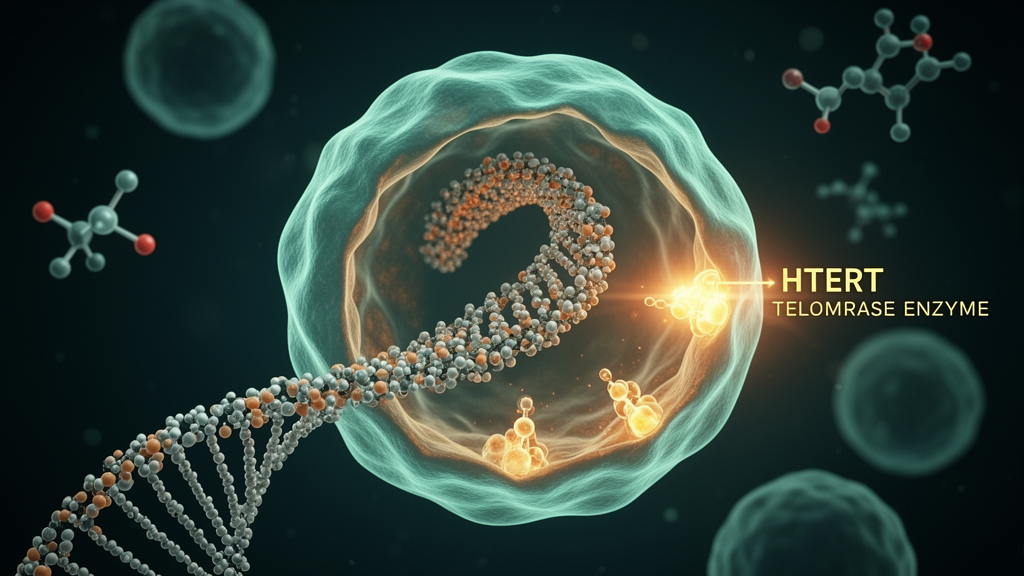
Researchers studying cervical cancer in India report that a specific epigenetic modification of the TERT gene region may help explain how tumours reactivate telomerase, an enzyme that allows cancer cells to keep dividing indefinitely. The study, published in BMC Cancer, analysed tissue samples from 100 cervical cancer patients and 50 controls, measuring hTERT expression, telomere length, methylation of the TERT Hypermethylated Oncological Region (THOR), and HPV status.
The team found that hTERT expression and telomere length were significantly elevated in cervical cancer tissues, and that these measures correlated with patient age, FIGO stage, and menopausal status. THOR hypermethylation emerged as an independent epigenetic regulator of hTERT, operating regardless of clinicopathological parameters. Notably, HPV status showed no association with hTERT expression, telomere length, or THOR methylation, pointing to epigenetic drivers of telomerase reactivation that operate independently of the virus.
To probe the mechanism, the researchers treated several cell lines, including C-33 A, ME-180, HeLa, SiHa, and Saos-2, with 5-aza-2′-deoxycytidine (AZA), a demethylating agent. AZA treatment partially reversed hTERT upregulation and suppressed telomerase activity, with responses varying between cell lines. Using chromatin immunoprecipitation assays, the team also examined menin, a protein involved in gene regulation. Menin enrichment was markedly reduced at hypermethylated THOR but was restored when the region was hypomethylated, which the authors describe as establishing a direct epigenetic link between THOR methylation state and telomere maintenance.
The authors state that this is the first evidence that THOR epigenetic modulation drives telomere maintenance in Indian cervical cancer patients, and they suggest that reduced menin recruitment to hypermethylated THOR identifies an epigenetic axis with potential prognostic and diagnostic value. They also emphasise that the HPV-independent nature of THOR regulation highlights an underexplored target for epigenetic therapy in cervical cancer. The findings are based on a single patient cohort and in vitro experiments, and the reported effects of AZA were partial and cell line-dependent, so further validation will be needed before any clinical application.
Subject of Research: Epigenetic regulation of telomerase reactivation via THOR methylation in cervical cancer
Article Title: THOR hypermethylation and hTERT reactivation define an epigenetic axis in cervical cancer
Article References: Radhakrishnan, M., Parida, B. P., Timalsina, G., Prakash, D., Khoiyang, T., Mishra, H., Mishra, R., Singh, S., & Narayan, G. (2026). THOR hypermethylation and hTERT reactivation define an epigenetic axis in cervical cancer. BMC Cancer. https://doi.org/10.1186/s12885-026-17256-9
Image Credits: AI Generated
DOI: 10.1186/s12885-026-17256-9
Keywords: cervical cancer, THOR, hTERT, telomerase, telomere length, DNA methylation, menin, epigenetics, HPV-independent, azacitidine, BMC Cancer, India
Cite Scienmag News
Nathaniel Bowman. (October 27, 2026). THOR hypermethylation drives hTERT reactivation in cervical cancer. Scienmag. https://scienmag.com/thor-hypermethylation-drives-htert-reactivation-in-cervical-cancer/
Nathaniel Bowman. "THOR hypermethylation drives hTERT reactivation in cervical cancer." Scienmag, 27 October 2026, https://scienmag.com/thor-hypermethylation-drives-htert-reactivation-in-cervical-cancer/. Accessed 27 October 2026.
Nathaniel Bowman. "THOR hypermethylation drives hTERT reactivation in cervical cancer." Scienmag. October 27, 2026. https://scienmag.com/thor-hypermethylation-drives-htert-reactivation-in-cervical-cancer/


