


Generative artificial intelligence can boost the performance of knowledge workers on tasks outside their existing skill sets, but the gains appear to vanish when the technology is taken away. That is the central conclusion of a randomized controlled trial published in Nature Human Behaviour, in which 487 management consultants were given access to and training in ChatGPT to tackle data science problems that normally lie beyond their expertise.
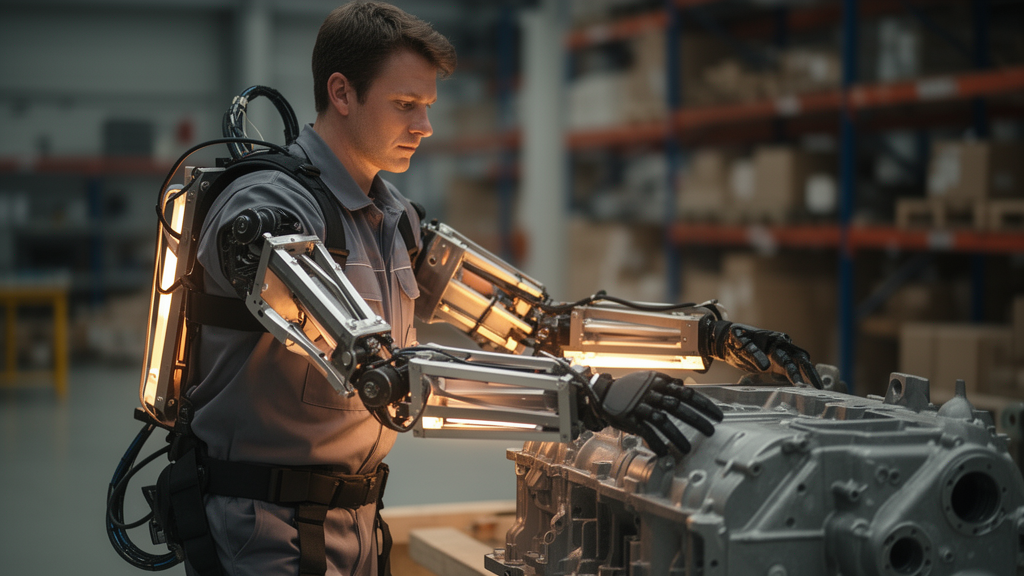
The researchers describe the effect of generative AI on workers as an ‘exoskeleton’: the technology supports and amplifies human capability while it is in use, much as an external frame can help a person lift heavier loads. In the experiment, consultants who received the AI treatment scored higher than a control group on three data science tasks. Importantly, the tasks were designed so that they could not be solved by ChatGPT alone, meaning the treated workers had to combine their own judgment with the tool’s assistance to succeed.
The improvement, however, had clear limits. The study reports that the researchers can reject the hypothesis that AI-assisted consultants performed as well as expert data scientists. In other words, the technology helped non-specialists close some of the gap toward expert-level work, but it did not turn them into experts.
The most striking finding concerns what happened after the experiment. When treated workers were later asked technical questions without access to ChatGPT, they showed no measurable advantage over the control group. The authors interpret this as evidence that the demonstrated technical capabilities during the trial do not imply genuine knowledge acquisition. The upskilling effect, on this evidence, is temporary and dependent on continued use of the technology.
The trial also examined how workers perceived the tool. Among the reported results is an analysis of participants’ predictions about the capabilities of ChatGPT, and separate analyses looked at how the treatment effect varied according to workers’ prior coding experience. These figures suggest the benefit of AI assistance was not uniform across the workforce, although the published abstract does not detail the direction of these subgroup differences.
Upskilling, as the authors define it, is the process by which workers acquire and expand their skills so they can perform different types of work as market demands change. The study’s contribution is to test whether generative AI accelerates that process or merely substitutes for missing skills while it is switched on. The evidence points toward the latter: an enhancement of capability in the moment rather than a durable transfer of expertise into the worker.
For organizations weighing investment in AI training programs, the results carry a cautionary note. Providing access to tools like ChatGPT and teaching staff to use them can raise output quality on unfamiliar technical tasks in the short term. But if the goal is to build lasting internal expertise, this single trial found no evidence that AI-assisted practice produced it, at least among management consultants solving data science problems over the study period.
The findings also speak to a broader debate about whether AI will complement or replace human skill. In this experiment the technology functioned as a complement that raised performance while available, yet the absence of post-experiment knowledge gains suggests the ‘exoskeleton’ metaphor may be more apt than advocates of rapid AI-driven reskilling would hope. Workers walked taller with the frame on, but their underlying abilities were unchanged once it was removed.
As with any single trial, scope matters. The results apply to management consultants, to data science tasks of the type studied, and to the specific tool and training provided. The authors measured performance on three tasks and a post-experiment knowledge test, and their claims are bounded by those measures. Whether longer exposure, different task types, or different professions would produce durable learning remains an open question that this study was not designed to answer.
Subject of Research: A randomized controlled trial testing whether generative AI temporarily enhances management consultants' data science skills without producing lasting knowledge
Article Title: Generative AI and the temporary upskilling of knowledge workers
Article References: Wiles, E., Krayer, L., Abbadi, M., Awasthi, U., Kennedy, R., Mishkin, P., Sack, D., & Candelon, F. (2026). Generative AI and the temporary upskilling of knowledge workers. Nature Human Behaviour. https://doi.org/10.1038/s41562-026-02566-6
Image Credits: AI Generated
DOI: 10.1038/s41562-026-02566-6
Keywords: generative AI, ChatGPT, upskilling, randomized controlled trial, management consultants, data science, knowledge workers, Nature Human Behaviour, skill acquisition, human-AI collaboration, Generative, temporary
Cite Scienmag News
Glenn Wilkins. (October 26, 2026). Generative AI acts as a temporary exoskeleton for worker skills, trial finds. Scienmag. https://scienmag.com/generative-ai-acts-as-a-temporary-exoskeleton-for-worker-skills-trial-finds/
Glenn Wilkins. "Generative AI acts as a temporary exoskeleton for worker skills, trial finds." Scienmag, 26 October 2026, https://scienmag.com/generative-ai-acts-as-a-temporary-exoskeleton-for-worker-skills-trial-finds/. Accessed 26 October 2026.
Glenn Wilkins. "Generative AI acts as a temporary exoskeleton for worker skills, trial finds." Scienmag. October 26, 2026. https://scienmag.com/generative-ai-acts-as-a-temporary-exoskeleton-for-worker-skills-trial-finds/


