

Monday, October 26, 2026
Science
No Result
View All Result
  • Login
  • HOME
  • SCIENCE NEWS
  • CONTACT US
  • HOME
  • SCIENCE NEWS
  • CONTACT US
No Result
View All Result
Scienmag
No Result
View All Result
Home Science News Medicine

Temperature and Humidity Emerge as Key Environmental Drivers of Malaria in Systematic Review

October 26, 2026
in Medicine
Ophelia Keating
By Ophelia Keating Scienmag Editorial Profile - Health Services Research
Reading Time: 3 mins read
0
Temperature and Humidity Emerge as Key Environmental Drivers of Malaria in Systematic Review

Temperature and Humidity Emerge as Key Environmental Drivers of Malaria in Systematic Review

65
SHARES
587
VIEWS
Share on FacebookShare on Twitter
ADVERTISEMENT

A systematic review published in BMC Public Health has synthesized evidence from 53 studies to map how environmental conditions shape malaria transmission, concluding that temperature, humidity, and precipitation are the most influential and most frequently studied environmental determinants of the disease. The review, led by Md. Rasel Hossain and colleagues, drew its evidence base from major bibliographic databases including Web of Science, PubMed, and Scopus, and set out to identify which environmental variables researchers most often examine, how consistently their associations with malaria point in a given direction, and which analytical methods dominate the field.

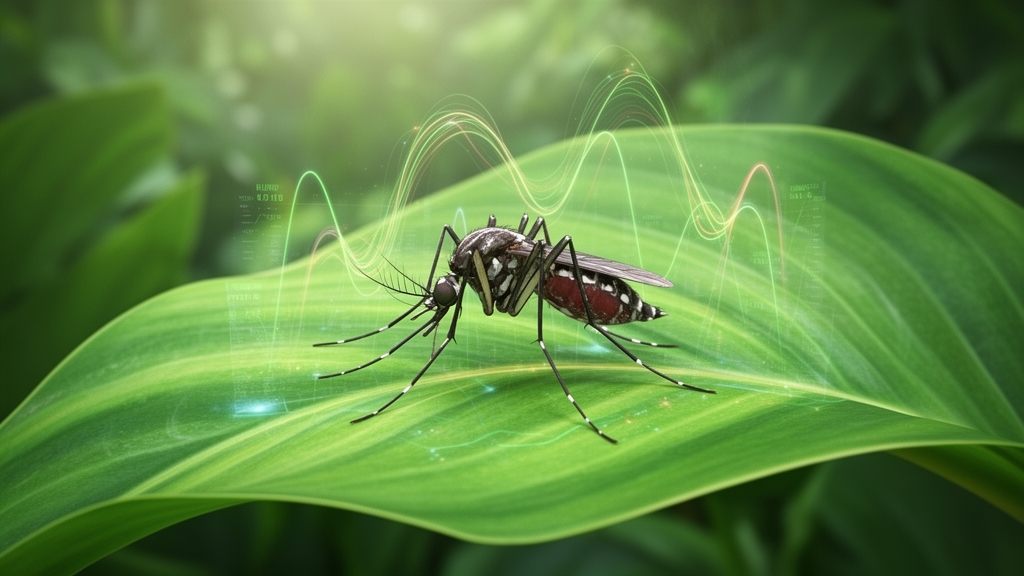
The most commonly investigated environmental variables across the included studies were temperature, precipitation, humidity, wind speed, air pressure, air pollution, and sky clarity. To assess how these factors relate to malaria outcomes, the reviewed research relied predominantly on regression-based and correlation-based statistical approaches. Malaria remains a major mosquito-borne infectious disease, transmitted primarily by female Anopheles mosquitoes, and its transmission is strongly influenced by the surrounding environmental conditions.

Across the evidence base, most studies reported positive associations between temperature, humidity, and malaria transmission, meaning that higher values of these variables tended to accompany greater transmission intensity. The review identified specific minimum temperature thresholds as crucial for transmission: approximately 18 degrees Celsius for Plasmodium falciparum and approximately 15 degrees Celsius for Plasmodium vivax.

Humidity emerged as another decisive factor. The review found that mosquito survival was enhanced when humidity levels rose above 60 percent. Precipitation played a more context-dependent role: it aided mosquito breeding, particularly in dry environments where rainfall creates the standing water that Anopheles larvae require.

Notably, the review did not find unanimous agreement across the literature. Several studies reported negative or non-significant relationships between malaria and environmental conditions, demonstrating variation among locations and study methods. This heterogeneity is an important caution against reading the review as a set of universal dose-response rules.

The authors concluded that environmental determinants, notably temperature, humidity, and precipitation, have a major influence on malaria transmission while their effects vary depending on the situation. On the strength of this synthesis, they argued that environmental variables deserve systematic incorporation into malaria surveillance and prediction models. Doing so, they suggested, could improve early warning systems that flag periods of elevated transmission risk, and could support evidence-based malaria control strategies.

The review’s framing of context-dependent effects carries practical weight for control programs. Because precipitation aids breeding especially in dry environments, rainfall-based indicators may be most valuable in arid and seasonally dry regions, whereas humidity-based indicators may matter more where survival of adult mosquitoes limits transmission.

As a synthesis of previously published research, the review summarizes associations reported across 53 studies rather than testing new interventions or models itself. Its contribution lies in consolidating the direction and consistency of environmental associations with malaria outcomes and in cataloging the analytical methods the field has favored. The authors present the findings as evidence that environmental determinants should be treated as core inputs to malaria prediction, a conclusion grounded in the repeated positive associations with temperature and humidity, the identified parasite-specific temperature thresholds, and the documented humidity and precipitation effects on mosquito survival and breeding.

Subject of Research: Environmental determinants of malaria transmission

Article Title: Impact of environmental determinants on malaria incidence: a systematic review

Article References: Hossain, M. R., Faruk, M. O., Hossain, K., & Bhuiyan, M. E. J. (2026). Impact of environmental determinants on malaria incidence: a systematic review. BMC Public Health. https://doi.org/10.1186/s12889-026-29225-9

Image Credits: AI Generated

DOI: 10.1186/s12889-026-29225-9

Keywords: malaria, systematic review, temperature, humidity, precipitation, Anopheles mosquitoes, Plasmodium falciparum, Plasmodium vivax, early warning systems, environmental determinants, BMC Public Health, Impact

Cite Scienmag News

Ophelia Keating. (October 26, 2026). Temperature and Humidity Emerge as Key Environmental Drivers of Malaria in Systematic Review. Scienmag. https://scienmag.com/temperature-and-humidity-emerge-as-key-environmental-drivers-of-malaria-in-systematic-review/


Ophelia Keating. "Temperature and Humidity Emerge as Key Environmental Drivers of Malaria in Systematic Review." Scienmag, 26 October 2026, https://scienmag.com/temperature-and-humidity-emerge-as-key-environmental-drivers-of-malaria-in-systematic-review/. Accessed 26 October 2026.

Ophelia Keating. "Temperature and Humidity Emerge as Key Environmental Drivers of Malaria in Systematic Review." Scienmag. October 26, 2026. https://scienmag.com/temperature-and-humidity-emerge-as-key-environmental-drivers-of-malaria-in-systematic-review/

Tags: Anopheles mosquitoesBMC Public Healthclimate thresholds for malaria outbreaksearly warning systemsenvironmental conditions affecting Anopheles mosquito behaviorenvironmental determinantsenvironmental drivers of malaria in public healthgeographic variation in environmental malaria determinantshumidityimpactimpact of air pollution on malaria riskinfluence of precipitation on malaria spreadlong-term climate change effects on malaria transmissionmalariamalaria transmission environmental determinantsPlasmodium falciparumPlasmodium vivaxprecipitationrole of environmental variables in malaria transmissionstatistical methods in malaria researchsystematic reviewsystematic review of malaria environmental factorstemperaturetemperature and humidity impact on malaria
Share26Tweet16
Previous Post

New Scale Measures Why Iranian Adults Regulate Their Emotions

Next Post

Co-designed training boosts doctor confidence in coding hospital-acquired adverse events

Related Posts

Perineural Dexamethasone Extends Pain Relief After Hip Replacement in Older Adults
Medicine

Perineural Dexamethasone Extends Pain Relief After Hip Replacement in Older Adults

October 26, 2026
Macrophages, Fibroblasts and Cancer Cells Conspire to Switch On a Tumor-Fueling Protein in Pancreatic Cancer
Medicine

Macrophages, Fibroblasts and Cancer Cells Conspire to Switch On a Tumor-Fueling Protein in Pancreatic Cancer

October 26, 2026
Rare LAMP2 Variants Behind Severe Heart Disease in Two Young Women Misdiagnosed as Amyloidosis
Medicine

Rare LAMP2 Variants Behind Severe Heart Disease in Two Young Women Misdiagnosed as Amyloidosis

October 26, 2026
Poor Sleep Affects Most Chinese Operating Room Nurses, Linked to Stress and Job Satisfaction
Medicine

Poor Sleep Affects Most Chinese Operating Room Nurses, Linked to Stress and Job Satisfaction

October 26, 2026
In rural Malawi, childbirth triage runs on danger signs and paper forms, not formal protocols
Medicine

In rural Malawi, childbirth triage runs on danger signs and paper forms, not formal protocols

October 26, 2026
Routine pathology slides can quantify tumour collagen like SHG microscopy
Medicine

Routine pathology slides can quantify tumour collagen like SHG microscopy

October 26, 2026
Next Post
Co-designed training boosts doctor confidence in coding hospital-acquired adverse events

Co-designed training boosts doctor confidence in coding hospital-acquired adverse events

  • Mothers who receive childcare support from maternal grandparents show more optimized

    Mothers who receive childcare support from maternal grandparents show more parental warmth, finds NTU Singapore study

    27656 shares
    Share 11059 Tweet 6912
  • University of Seville Breaks 120-Year-Old Mystery, Revises a Key Einstein Concept

    1061 shares
    Share 424 Tweet 265
  • Bee body mass, pathogens and local climate influence heat tolerance

    682 shares
    Share 273 Tweet 171
  • Researchers record first-ever images and data of a shark experiencing a boat strike

    546 shares
    Share 218 Tweet 137
  • Groundbreaking Clinical Trial Reveals Lubiprostone Enhances Kidney Function

    531 shares
    Share 212 Tweet 133
Science

Embark on a thrilling journey of discovery with Scienmag.com—your ultimate source for cutting-edge breakthroughs. Immerse yourself in a world where curiosity knows no limits and tomorrow’s possibilities become today’s reality!

RECENT NEWS

  • Platelet-Rich Plasma in Collagen Tubes Restores Nerve Function in Difficult Cases
  • Heartworm DNA Found in Mosquitoes at Mexican Urban Lagoon
  • Energy, Not Just Force, Is the Key to Safer Human-Robot Contact Under ISO Guidelines
  • Fibroblasts May Help Endometrial Tumors Evade Immunity, but the Evidence Is Still Patchy

Categories

  • Agriculture
  • Anthropology
  • Archaeology
  • Athmospheric
  • Biology
  • Biotechnology
  • Blog
  • Bussines
  • Cancer
  • Chemistry
  • Climate
  • Earth Science
  • Editorial Policy
  • Marine
  • Mathematics
  • Medicine
  • Pediatry
  • Policy
  • Psychology & Psychiatry
  • Science Education
  • Science News
  • Social Science
  • Space
  • Technology and Engineering

Subscribe to Blog via Email

Enter your email address to subscribe to this blog and receive notifications of new posts by email.

Join 5,151 other subscribers

© 2025 Scienmag - Science Magazine

Welcome Back!

Login to your account below

Forgotten Password?

Retrieve your password

Please enter your username or email address to reset your password.

Log In
No Result
View All Result
  • HOME
  • SCIENCE NEWS
  • CONTACT US

© 2025 Scienmag - Science Magazine

Discover more from Science

Subscribe now to keep reading and get access to the full archive.

Continue reading