

Monday, October 26, 2026
Science
No Result
View All Result
  • Login
  • HOME
  • SCIENCE NEWS
  • CONTACT US
  • HOME
  • SCIENCE NEWS
  • CONTACT US
No Result
View All Result
Scienmag
No Result
View All Result
Home Science News Earth Science

Bibliometric map shows technology dominates sustainable tourism research while governance stays peripheral

October 26, 2026
in Earth Science
Courtney Benton
By Courtney Benton Scienmag Editorial Profile - Science and Technology Policy
Reading Time: 3 mins read
0
Bibliometric map shows technology dominates sustainable tourism research while governance stays peripheral

Bibliometric map shows technology dominates sustainable tourism research while governance stays peripheral

65
SHARES
587
VIEWS
Share on FacebookShare on Twitter
ADVERTISEMENT

A bibliometric analysis of 1,044 Scopus-indexed publications has mapped how technology-related sustainable tourism research is organised, revealing a field that grew rapidly after 2020 but remains concentrated in a small group of countries and author communities, with governance and evaluation concepts occupying a visibly marginal position. The study, published in Discover Sustainability, applied bibliometric performance analysis and science-mapping techniques in VOSviewer to publications issued between 2010 and 2023, examining publication growth, co-authorship patterns among countries and authors, keyword co-occurrence, and how often governance- and evaluation-related terms appear and connect within the literature.

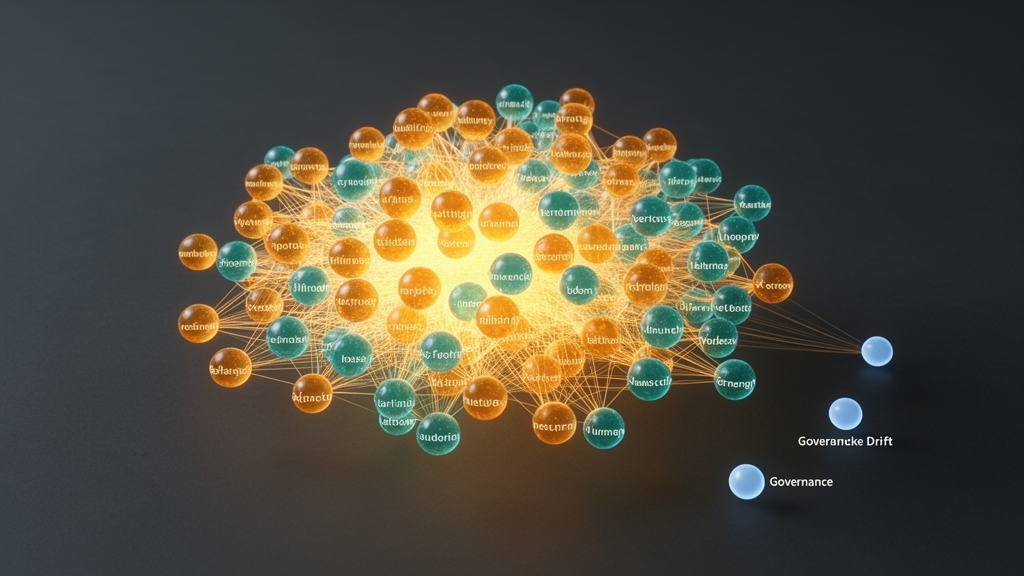
The analysis identified a prominent core where sustainability and technology concepts intersect, centred on sustainable development, smart tourism, artificial intelligence, the Internet of Things, big data, and digital transformation. These themes formed the most prominent cluster in the keyword co-occurrence structure, indicating that scholarly attention has clustered around technological applications. Publication output, citation visibility, and international collaboration, however, were concentrated within a limited set of countries and author communities, indicating that the field’s research base is narrow rather than globally distributed.

A central finding concerns governance visibility. Terms related to governance and evaluation were identifiable in the corpus but remained less prominent and less connected than the dominant sustainability and technology concepts. In network terms, governance vocabulary sits at the periphery of the knowledge structure, linked weakly to the core themes rather than integrated into them. The study describes this as a diagnostic signal about how technological sustainability claims are organised within tourism scholarship, without drawing conclusions about the effectiveness of any technology.

To test whether these patterns were artefacts of the source selection, the researchers conducted a retrospective source-type audit and a sensitivity analysis on a conservative journal-only subset of 611 publications. The principal patterns proved stable. Annual publication trends in the subset were nearly identical to the full corpus, with a correlation of r = 0.999, and the leading indicators were largely retained: nine of the ten leading countries and 18 of the 20 leading keywords reappeared in the reduced dataset. This robustness check supports the conclusion that the observed concentration and the peripheral position of governance terms reflect structural features of the indexed literature rather than database noise.

The study contributes a diagnostic framework combining three lenses: knowledge structure, research concentration, and governance visibility. Applied together, these lenses allow researchers to assess how technological sustainability claims are organised within tourism scholarship, where collaborative capacity is located, and how visible governance concepts are in the conversation. As a bibliometric mapping exercise, the work describes the state of the literature rather than evaluating the effectiveness of any technology, and its scope is limited to Scopus-indexed publications from 2010 to 2023. Within those boundaries, it offers a quantitative portrait of a fast-growing field whose technological core is well developed while its governance dimension remains comparatively thin and weakly connected.

Subject of Research: Bibliometric mapping of technology-related sustainable tourism research

Article Title: Mapping knowledge structures, research concentration, and governance visibility in technology-related sustainable tourism research

Article References: Al Bahri, K. S. K., & Kassim, A. A. M. (2026). Mapping knowledge structures, research concentration, and governance visibility in technology-related sustainable tourism research. Discover Sustainability. https://doi.org/10.1007/s43621-026-04691-8

Image Credits: AI Generated

DOI: 10.1007/s43621-026-04691-8

Keywords: bibliometrics, sustainable tourism, smart tourism, artificial intelligence, Internet of Things, big data, digital transformation, governance, VOSviewer, science mapping, research concentration, Scopus

Cite Scienmag News

Courtney Benton. (October 26, 2026). Bibliometric map shows technology dominates sustainable tourism research while governance stays peripheral. Scienmag. https://scienmag.com/bibliometric-map-shows-technology-dominates-sustainable-tourism-research-while-governance-stays-peripheral/


Courtney Benton. "Bibliometric map shows technology dominates sustainable tourism research while governance stays peripheral." Scienmag, 26 October 2026, https://scienmag.com/bibliometric-map-shows-technology-dominates-sustainable-tourism-research-while-governance-stays-peripheral/. Accessed 26 October 2026.

Courtney Benton. "Bibliometric map shows technology dominates sustainable tourism research while governance stays peripheral." Scienmag. October 26, 2026. https://scienmag.com/bibliometric-map-shows-technology-dominates-sustainable-tourism-research-while-governance-stays-peripheral/

Tags: Artificial Intelligencebibliometric performance analysisbibliometricsbig dataco-authorship and collaboration patternsdigital transformationdigital transformation in sustainable tourismemerging themes in tourism technologygeographical concentration of tourism innovationglobal distribution of sustainable tourism researchgovernancegovernance and evaluation in sustainability studiesimpact of artificial intelligence and Internet of Things on tourismInternet of Thingskeyword co-occurrence in sustainability literatureresearch concentrationscience mappingscience-mapping in tourism researchScopussmart tourismsustainable tourismSustainable tourism bibliometric analysistechnology-driven tourism researchVOSviewer
Share26Tweet16
Previous Post

Confidence with Technology and Social Ties Both Track with Lower Loneliness in Older Iranians

Next Post

AI System Pairs Transformer Memory With Reinforcement Learning to Personalize Digital Psychological Support

Related Posts

Researchers map the social side of sustainable food systems
Earth Science

Researchers map the social side of sustainable food systems

October 26, 2026
Factor analysis maps Johannesburg transport satisfaction priorities
Earth Science

Factor analysis maps Johannesburg transport satisfaction priorities

October 26, 2026
Study finds parallel links between safety management and construction performance
Earth Science

Study finds parallel links between safety management and construction performance

October 26, 2026
Review maps rapid growth in green human resource management research
Earth Science

Review maps rapid growth in green human resource management research

October 26, 2026
Ordered models find limited fuel-affordability gains among rural Madhya Pradesh households
Earth Science

Ordered models find limited fuel-affordability gains among rural Madhya Pradesh households

October 26, 2026
PLS-SEM survey of Moroccan industry links circular logistics, Industry 5.0 and sustainability
Earth Science

PLS-SEM survey of Moroccan industry links circular logistics, Industry 5.0 and sustainability

October 26, 2026
Next Post
AI System Pairs Transformer Memory With Reinforcement Learning to Personalize Digital Psychological Support

AI System Pairs Transformer Memory With Reinforcement Learning to Personalize Digital Psychological Support

  • Mothers who receive childcare support from maternal grandparents show more optimized

    Mothers who receive childcare support from maternal grandparents show more parental warmth, finds NTU Singapore study

    27656 shares
    Share 11059 Tweet 6912
  • University of Seville Breaks 120-Year-Old Mystery, Revises a Key Einstein Concept

    1061 shares
    Share 424 Tweet 265
  • Bee body mass, pathogens and local climate influence heat tolerance

    682 shares
    Share 273 Tweet 171
  • Researchers record first-ever images and data of a shark experiencing a boat strike

    546 shares
    Share 218 Tweet 137
  • Groundbreaking Clinical Trial Reveals Lubiprostone Enhances Kidney Function

    531 shares
    Share 212 Tweet 133
Science

Embark on a thrilling journey of discovery with Scienmag.com—your ultimate source for cutting-edge breakthroughs. Immerse yourself in a world where curiosity knows no limits and tomorrow’s possibilities become today’s reality!

RECENT NEWS

  • Physics-guided neural networks outperform data-only models on fractional LCR circuit
  • Researchers map the social side of sustainable food systems
  • AI System Pairs Transformer Memory With Reinforcement Learning to Personalize Digital Psychological Support
  • Bibliometric map shows technology dominates sustainable tourism research while governance stays peripheral

Categories

  • Agriculture
  • Anthropology
  • Archaeology
  • Athmospheric
  • Biology
  • Biotechnology
  • Blog
  • Bussines
  • Cancer
  • Chemistry
  • Climate
  • Earth Science
  • Editorial Policy
  • Marine
  • Mathematics
  • Medicine
  • Pediatry
  • Policy
  • Psychology & Psychiatry
  • Science Education
  • Science News
  • Social Science
  • Space
  • Technology and Engineering

Subscribe to Blog via Email

Enter your email address to subscribe to this blog and receive notifications of new posts by email.

Join 5,151 other subscribers

© 2025 Scienmag - Science Magazine

Welcome Back!

Login to your account below

Forgotten Password?

Retrieve your password

Please enter your username or email address to reset your password.

Log In
No Result
View All Result
  • HOME
  • SCIENCE NEWS
  • CONTACT US

© 2025 Scienmag - Science Magazine

Discover more from Science

Subscribe now to keep reading and get access to the full archive.

Continue reading