

Monday, October 26, 2026
Science
No Result
View All Result
  • Login
  • HOME
  • SCIENCE NEWS
  • CONTACT US
  • HOME
  • SCIENCE NEWS
  • CONTACT US
No Result
View All Result
Scienmag
No Result
View All Result
Home Science News Agriculture

Genome study reveals north–south genetic divergence in coastal halophyte

October 26, 2026
in Agriculture
Juliet Wilcox
By Juliet Wilcox Scienmag Editorial Profile - Human Genetics
Reading Time: 2 mins read
0
Genome study reveals north–south genetic divergence in coastal halophyte

Genome study reveals north–south genetic divergence in coastal halophyte

65
SHARES
587
VIEWS
Share on FacebookShare on Twitter
ADVERTISEMENT

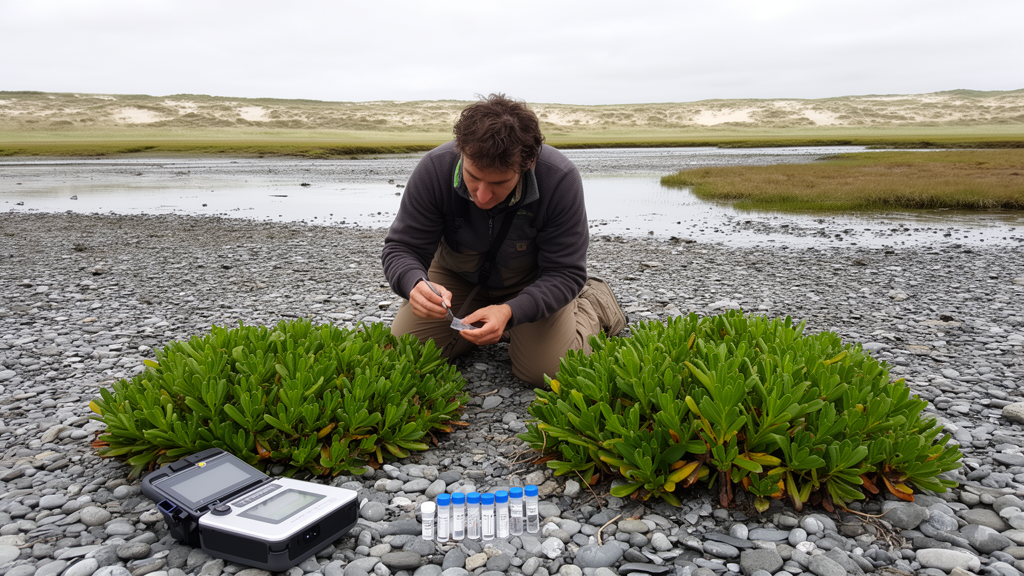
Whole-genome resequencing of 170 individuals from 17 wild populations across the natural distribution range of the recretohalophyte Limonium sinense identified two major genetic lineages, northern and southern, separated by a clear genetic boundary. The study found that geographic isolation was the core factor associated with the divergence, while Holocene climatic oscillations, anthropogenic disturbance and habitat fragmentation helped shape current patterns of genetic diversity, population structure and lineage distribution. The findings were reported in BMC Plant Biology .

Southern populations had higher mean observed heterozygosity, 0.330, and expected heterozygosity, 0.296, with an excess of heterozygotes. Northern populations showed lower mean observed heterozygosity, 0.221, and expected heterozygosity, 0.258. The authors described the northern pattern as indicating a potential risk of inbreeding depression.

Population structure analyses separated the 17 populations into northern and southern lineages, with southern populations displaying a relatively complex ancestral composition and northern populations remaining comparatively homogeneous. Differentiation among populations, evaluated together with an isolation-by-distance model, indicated restricted contemporary gene flow among northern populations. Southern populations showed relatively weak differentiation and more frequent gene exchange.

A Treemix historical gene-flow model detected no large-scale cross-regional gene-flow events between the two lineages. It did identify a high-intensity historical gene-flow event within the northern lineage, reflecting past connectivity, whereas only weak genetic introgression was detected within the southern lineage. Demographic reconstruction, genome-wide neutrality tests using Tajima’s D and Fu’s Fs, and a folded site-frequency spectrum consistently supported the same phased demographic trajectory for the sampled populations.

The sequence consisted of prolonged stability, contraction associated with Holocene climatic oscillations, and synchronous rapid recovery. Southern populations exhibited a greater recovery magnitude than northern populations. Together, the analyses suggest that present-day population differences reflect both contemporary geographic separation and historical demographic events rather than one isolated pressure.

L. sinense inhabits coastal saline-alkali zones and has ecological and economic value. The study notes that coastal development and habitat fragmentation have sharply reduced the size of its wild populations in recent years, making population genetic and evolutionary information relevant to conservation planning. Because northern populations have lower observed genetic diversity and restricted contemporary exchange, while southern populations retain higher diversity and more complex ancestry, the authors proposed region-specific targeted conservation strategies.

Their overall interpretation is that current diversity, genetic structure and lineage distribution are shaped by the combined effects of geographic isolation, climatic oscillations and anthropogenic disturbance associated with habitat fragmentation. The research provides a representative case for studying adaptive evolution in coastal halophytes and for informing germplasm conservation and the sustainable use of the species.

Subject of Research: Population genomics of north–south genetic divergence in the recretohalophyte Limonium sinense

Article Title: Geographic isolation and holocene climatic oscillations drive north–south genetic divergence in the recretohalophyte Limonium sinense

Article References: Zhang, F., Liu, D., Lu, Y., Ma, Y., Zang, D., Zang, F., & Wu, Q. (2026). Geographic isolation and holocene climatic oscillations drive north–south genetic divergence in the recretohalophyte Limonium sinense. BMC Plant Biology. https://doi.org/10.1186/s12870-026-09861-4

Image Credits: AI Generated

DOI: 10.1186/s12870-026-09861-4

Keywords: Limonium sinense, population genomics, whole-genome resequencing, genetic diversity, genetic divergence, coastal halophytes, Holocene climate change, habitat fragmentation, gene flow, inbreeding, Geographic, isolation

Cite Scienmag News

Juliet Wilcox. (October 26, 2026). Genome study reveals north–south genetic divergence in coastal halophyte. Scienmag. https://scienmag.com/genome-study-reveals-north-south-genetic-divergence-in-coastal-halophyte/

Juliet Wilcox. "Genome study reveals north–south genetic divergence in coastal halophyte." Scienmag, 26 October 2026, https://scienmag.com/genome-study-reveals-north-south-genetic-divergence-in-coastal-halophyte/. Accessed 26 October 2026.

Juliet Wilcox. "Genome study reveals north–south genetic divergence in coastal halophyte." Scienmag. October 26, 2026. https://scienmag.com/genome-study-reveals-north-south-genetic-divergence-in-coastal-halophyte/


Tags: coastal halophytesconservation genetics of coastal plantsevolutionary history of Limonium sinensegene flowgenetic divergencegenetic divergence in coastal halophyteGenetic diversitygeographicgeographic isolation and gene flowhabitat fragmentationhabitat fragmentation effects on genetic diversityheterozygosity and inbreeding riskHolocene climate changeHolocene climatic influence on population divergenceimpact of anthropogenic disturbance on genetic structureinbreedingisolationLimonium sinensenorthern and southern genetic lineagespopulation genomicspopulation structure analysiswhole-genome resequencing
Share26Tweet16
Previous Post

Study links two language barriers to migrant health-service use

Next Post

Extended antimicrobial prophylaxis showed no infection reduction after colorectal resection

Related Posts

Induced cassava mutations link more starch with less lignin
Agriculture

Induced cassava mutations link more starch with less lignin

October 26, 2026
Rubber Tree Genome Links Wood Traits to 33 Genetic Associations
Agriculture

Rubber Tree Genome Links Wood Traits to 33 Genetic Associations

October 26, 2026
Machine learning assesses lemon balm responses to drought, fungi and TiO₂ nanoparticles
Agriculture

Machine learning assesses lemon balm responses to drought, fungi and TiO₂ nanoparticles

October 26, 2026
Treated oilfield wastewater supports Eucalyptus rooting in nursery trial
Agriculture

Treated oilfield wastewater supports Eucalyptus rooting in nursery trial

October 26, 2026
Oat drought study identifies predicted miR156-centered RNA network
Agriculture

Oat drought study identifies predicted miR156-centered RNA network

October 26, 2026
Genome analysis maps 540 GST genes across four legumes
Agriculture

Genome analysis maps 540 GST genes across four legumes

October 26, 2026
Next Post
Extended antimicrobial prophylaxis showed no infection reduction after colorectal resection

Extended antimicrobial prophylaxis showed no infection reduction after colorectal resection

  • Mothers who receive childcare support from maternal grandparents show more optimized

    Mothers who receive childcare support from maternal grandparents show more parental warmth, finds NTU Singapore study

    27656 shares
    Share 11059 Tweet 6912
  • University of Seville Breaks 120-Year-Old Mystery, Revises a Key Einstein Concept

    1061 shares
    Share 424 Tweet 265
  • Bee body mass, pathogens and local climate influence heat tolerance

    682 shares
    Share 273 Tweet 171
  • Researchers record first-ever images and data of a shark experiencing a boat strike

    546 shares
    Share 218 Tweet 137
  • Groundbreaking Clinical Trial Reveals Lubiprostone Enhances Kidney Function

    531 shares
    Share 212 Tweet 133
Science

Embark on a thrilling journey of discovery with Scienmag.com—your ultimate source for cutting-edge breakthroughs. Immerse yourself in a world where curiosity knows no limits and tomorrow’s possibilities become today’s reality!

RECENT NEWS

  • AI pipeline summarizes and classifies insurance policies
  • Eye tracking identifies VR workload, less accurately in chronic pain
  • Holographic visualization shows no significant preparation-quality advantage in dental training
  • Continuity, regularity linked to ambulatory use in Shanghai cohort

Categories

  • Agriculture
  • Anthropology
  • Archaeology
  • Athmospheric
  • Biology
  • Biotechnology
  • Blog
  • Bussines
  • Cancer
  • Chemistry
  • Climate
  • Earth Science
  • Editorial Policy
  • Marine
  • Mathematics
  • Medicine
  • Pediatry
  • Policy
  • Psychology & Psychiatry
  • Science Education
  • Science News
  • Social Science
  • Space
  • Technology and Engineering

Subscribe to Blog via Email

Enter your email address to subscribe to this blog and receive notifications of new posts by email.

Join 5,151 other subscribers

© 2025 Scienmag - Science Magazine

Welcome Back!

Login to your account below

Forgotten Password?

Retrieve your password

Please enter your username or email address to reset your password.

Log In
No Result
View All Result
  • HOME
  • SCIENCE NEWS
  • CONTACT US

© 2025 Scienmag - Science Magazine

Discover more from Science

Subscribe now to keep reading and get access to the full archive.

Continue reading