

Monday, October 26, 2026
Science
No Result
View All Result
  • Login
  • HOME
  • SCIENCE NEWS
  • CONTACT US
  • HOME
  • SCIENCE NEWS
  • CONTACT US
No Result
View All Result
Scienmag
No Result
View All Result
Home Science News Psychology & Psychiatry

Self-medication common among Brazilian health science students, study finds

October 26, 2026
in Psychology & Psychiatry
Glenn Wilkins
By Glenn Wilkins Scienmag Editorial Profile - Clinical Psychology
Reading Time: 3 mins read
0
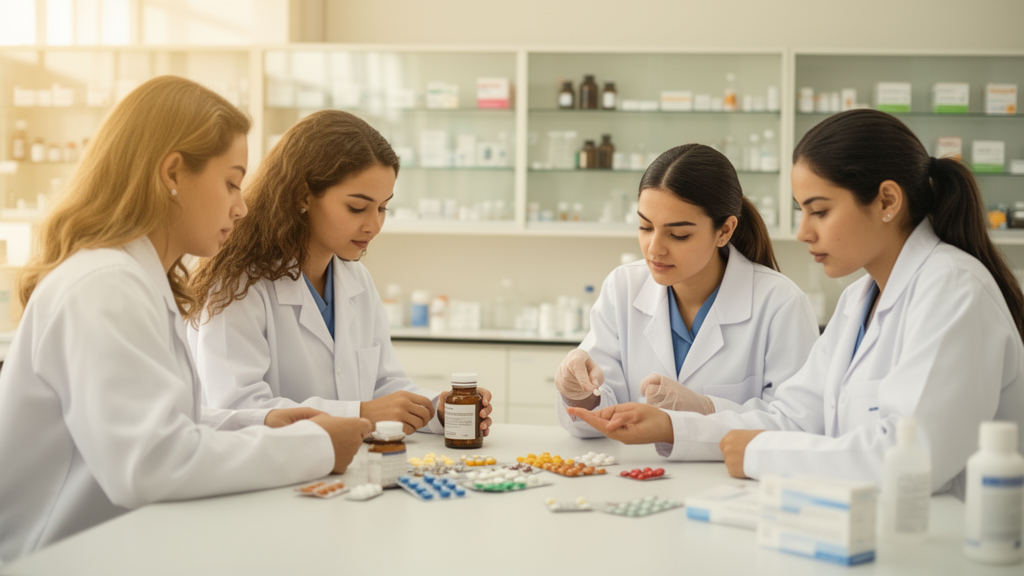
Self-medication common among Brazilian health science students, study finds

Self-medication common among Brazilian health science students, study finds

65
SHARES
587
VIEWS
Share on FacebookShare on Twitter
ADVERTISEMENT

Self-medication was reported by most undergraduate health science students surveyed at a private Brazilian institution, with 81.0% of participants saying they had medicated themselves at some point in their lives and 68.7% reporting self-medication during the previous 30 days. The cross-sectional study, conducted from May through December 2025, included 163 students in Dentistry, Psychology, and Nursing programs at an institution in Jundiaí, São Paulo. Although anxiety scores differed modestly between programs before adjustment, the researchers found no independent association between academic program and either anxiety or depression after accounting for other variables.

The survey used a structured questionnaire to assess self-medication, the Beck Anxiety Inventory, the Beck Depression Inventory-II, and a multidimensional measure of religiousness and spirituality. Because one item was missing from the electronic Beck Anxiety Inventory dataset, investigators prorated scores from the 20 administered items onto the conventional 0–63 scale. They used Poisson regression with robust variance to estimate adjusted prevalence ratios for self-medication and linear regression with HC3 robust standard errors to evaluate anxiety and depression scores. Complete-case analyses contained 162 students for each self-medication model, 159 for anxiety, and 150 for depression.

Students had a mean age of 30.0 years, with a median of 27 years, and ranged from 18 to 68. Nine participants, or 5.5%, attributed their self-medication to stress, while the broader pattern involved use that was substantially more common. Multivariable analyses linked living with parents and current psychiatric medication use with higher anxiety scores: the adjusted coefficients were 5.28 points for living with parents and 12.14 points for psychiatric medication use. Neither association remained stable in sensitivity analyses that assessed the influence of individual observations, and the researchers cautioned against interpreting these anxiety estimates as robust causal or even fully independent relationships.

Depression scores did not differ significantly by undergraduate program in the unadjusted comparison. In the adjusted model, several characteristics were associated with higher or lower scores. Male sex was associated with scores 7.01 points lower, while non-White self-reported race or skin color was associated with scores 4.21 points higher. Current psychiatric medication use was associated with an 11.05-point difference, and each additional year of age was associated with a 0.16-point difference. Self-rated spirituality was associated with depression scores 3.21 points lower, but self-rated religiousness was not independently associated with depression after adjustment.

The findings remain exploratory because the study used a cross-sectional design and non-probability sampling at one institution, so it cannot establish whether spirituality, psychiatric medication use, living arrangements, or other factors precede the measured symptoms. The inverse association between self-rated spirituality and depressive symptoms is not evidence that spirituality prevents depression, and the same restriction applies to all other associations. Diagnostic checks showed no problematic multicollinearity but identified heteroscedasticity and a small number of influential observations, supporting the use of robust inference and cautious interpretation. The authors call for longitudinal, multicenter research using complete validated instruments and prespecified analyses to examine whether the reported patterns persist over time and across student populations.

Subject of Research: Cross-sectional associations among self-medication, psychological symptoms, and spirituality in Brazilian health science undergraduates

Article Title: Self-medication and psychological symptoms among undergraduate health science students: exploratory associations with religiousness and spirituality in a cross-sectional study

Article References: Rodrigues, G. T., Rodrigues, P. B., Marconato, J. V., & Genaro, L. E. (2026). Self-medication and psychological symptoms among undergraduate health science students: exploratory associations with religiousness and spirituality in a cross-sectional study. BMC Psychology. https://doi.org/10.1186/s40359-026-05497-z

Image Credits: AI Generated

DOI: 10.1186/s40359-026-05497-z

Keywords: self-medication, student mental health, anxiety, depression, spirituality, religiousness, health science education, cross-sectional study, psychiatric medication, psychological, symptoms, undergraduate

Cite Scienmag News

Glenn Wilkins. (October 26, 2026). Self-medication common among Brazilian health science students, study finds. Scienmag. https://scienmag.com/self-medication-common-among-brazilian-health-science-students-study-finds/

Glenn Wilkins. "Self-medication common among Brazilian health science students, study finds." Scienmag, 26 October 2026, https://scienmag.com/self-medication-common-among-brazilian-health-science-students-study-finds/. Accessed 26 October 2026.

Glenn Wilkins. "Self-medication common among Brazilian health science students, study finds." Scienmag. October 26, 2026. https://scienmag.com/self-medication-common-among-brazilian-health-science-students-study-finds/


Tags: anxietyanxiety and depression levels in health science studentscross-sectional studycross-sectional study on self-medication practicesDepressionfactors influencing self-medication in medical studentshealth risks associated with self-medication among studentshealth science educationimpact of academic programs on student mental healthprevalence of self-medication in university studentspsychiatric medicationpsychologicalpsychometric assessment of anxiety and depression in studentsreligiousnessreligiousness and spirituality in student health behaviorsself-medicationSelf-medication among Brazilian health science studentsself-medication and mental health in healthcare studentsspiritualitystudent mental healthsurvey methods for assessing self-medicationsymptomsundergraduate
Share26Tweet16
Previous Post

Bias-corrected climate models sharpen Kulfo River streamflow projections

Next Post

Modeled App-Based Oral Lesion Diagnosis Saves Costs in Brazil

Related Posts

Research report: Beyond the clinic: a feasibility trial of the super skills for life program for childhood anxiety in Pakistan
Psychology & Psychiatry

Research report: Beyond the clinic: a feasibility trial of the super skills for life program for childhood anxiety in Pakistan

October 26, 2026
Systematic review finds 12 transference assessment tools, only two patient-based
Psychology & Psychiatry

Systematic review finds 12 transference assessment tools, only two patient-based

October 26, 2026
Student engagement linked to later well-being in novice male English teachers
Psychology & Psychiatry

Student engagement linked to later well-being in novice male English teachers

October 26, 2026
Qualitative study examines uncertainty in 12 vestibular schwannoma surgery patients
Psychology & Psychiatry

Qualitative study examines uncertainty in 12 vestibular schwannoma surgery patients

October 26, 2026
Review maps psychosocial challenges faced by Chinese childhood cancer survivors
Psychology & Psychiatry

Review maps psychosocial challenges faced by Chinese childhood cancer survivors

October 26, 2026
Zhejiang study links Chinese-learning motivation tiers to engagement and self-efficacy
Psychology & Psychiatry

Zhejiang study links Chinese-learning motivation tiers to engagement and self-efficacy

October 26, 2026
Next Post
Modeled App-Based Oral Lesion Diagnosis Saves Costs in Brazil

Modeled App-Based Oral Lesion Diagnosis Saves Costs in Brazil

  • Mothers who receive childcare support from maternal grandparents show more optimized

    Mothers who receive childcare support from maternal grandparents show more parental warmth, finds NTU Singapore study

    27656 shares
    Share 11059 Tweet 6912
  • University of Seville Breaks 120-Year-Old Mystery, Revises a Key Einstein Concept

    1061 shares
    Share 424 Tweet 265
  • Bee body mass, pathogens and local climate influence heat tolerance

    682 shares
    Share 273 Tweet 171
  • Researchers record first-ever images and data of a shark experiencing a boat strike

    546 shares
    Share 218 Tweet 137
  • Groundbreaking Clinical Trial Reveals Lubiprostone Enhances Kidney Function

    531 shares
    Share 212 Tweet 133
Science

Embark on a thrilling journey of discovery with Scienmag.com—your ultimate source for cutting-edge breakthroughs. Immerse yourself in a world where curiosity knows no limits and tomorrow’s possibilities become today’s reality!

RECENT NEWS

  • Modeled App-Based Oral Lesion Diagnosis Saves Costs in Brazil
  • Self-medication common among Brazilian health science students, study finds
  • Bias-corrected climate models sharpen Kulfo River streamflow projections
  • Cell biologist Chouchani named 2026 Blavatnik National Award finalist

Categories

  • Agriculture
  • Anthropology
  • Archaeology
  • Athmospheric
  • Biology
  • Biotechnology
  • Blog
  • Bussines
  • Cancer
  • Chemistry
  • Climate
  • Earth Science
  • Editorial Policy
  • Marine
  • Mathematics
  • Medicine
  • Pediatry
  • Policy
  • Psychology & Psychiatry
  • Science Education
  • Science News
  • Social Science
  • Space
  • Technology and Engineering

Subscribe to Blog via Email

Enter your email address to subscribe to this blog and receive notifications of new posts by email.

Join 5,151 other subscribers

© 2025 Scienmag - Science Magazine

Welcome Back!

Login to your account below

Forgotten Password?

Retrieve your password

Please enter your username or email address to reset your password.

Log In
No Result
View All Result
  • HOME
  • SCIENCE NEWS
  • CONTACT US

© 2025 Scienmag - Science Magazine

Discover more from Science

Subscribe now to keep reading and get access to the full archive.

Continue reading