

Monday, October 26, 2026
Science
No Result
View All Result
  • Login
  • HOME
  • SCIENCE NEWS
  • CONTACT US
  • HOME
  • SCIENCE NEWS
  • CONTACT US
No Result
View All Result
Scienmag
No Result
View All Result
Home Science News Cancer

Fluorescent agent helps surgeons identify residual lung cancer in animal trial

October 26, 2026
in Cancer
Nathaniel Bowman
By Nathaniel Bowman Scienmag Editorial Profile - Precision Oncology
Reading Time: 2 mins read
0
Fluorescent agent helps surgeons identify residual lung cancer in animal trial

Fluorescent agent helps surgeons identify residual lung cancer in animal trial

65
SHARES
587
VIEWS
Share on FacebookShare on Twitter
ADVERTISEMENT

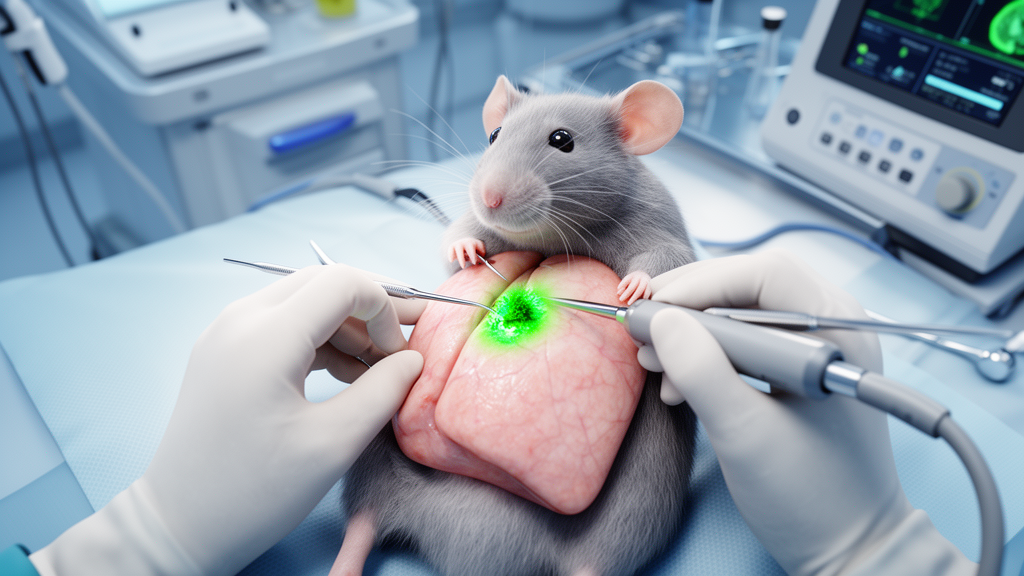
A fluorescent imaging agent called JAS239 identified close tumor margins and a hidden lung lesion missed after removal of the main tumor in a veterinary trial involving 20 dogs with pre-existing lung cancer, according to a peer-reviewed study in Science Translational Medicine. The findings also showed that the agent could image metastatic lung lesions in mice and accumulate in excised human lung tumors, providing preliminary evidence for real-time guidance during cancer surgery.

JAS239 is a near-infrared fluorescent imaging agent designed to make residual cancer tissue easier for surgeons to recognize during an operation. Such guidance could address a central challenge in lung cancer surgery: surgeons may leave behind lesions or pockets of cancer cells at resection margins that are difficult to detect by visual inspection alone. The study tested the agent in mice, canine patients and human lung tumor samples, but the results do not yet establish that it improves survival or other patient outcomes in people.

The agent works by selectively binding to choline kinase alpha, or ChoKα, a biomarker reported to be expressed in 60% of human lung tumors but not in healthy lung tissue. After binding, the targeted cells can be detected with near-infrared fluorescence. According to the research team, the approach combines metabolic targeting with optical and pharmacokinetic properties intended to support real-time surgical use. The supplied report does not provide detailed numerical measures of image brightness, drug performance or clinical benefit beyond the observations described.

Researchers first confirmed that JAS239 could image metastatic lung lesions in mice. They then conducted the canine trial in 20 dogs that already had lung cancer tumors. JAS239 highlighted tumor boundaries close to the surgical margins, and in one case detected a hidden lesion that had escaped removal of the main tumor. This observation supports the agent’s potential to reveal clinically relevant tissue during surgery, although the trial was conducted in animals and the release does not describe a randomized comparison or assess long-term postoperative outcomes.

The researchers also examined excised human lung tumors. JAS239 accumulated in the tumor tissue and highlighted regions where ChoKα was expressed, indicating that the agent reached the intended biomarker-positive tissue in the clinical samples. The authors described JAS239 as a next-generation near-infrared fluorescent imaging agent for intraoperative molecular guidance. Further human studies would be needed to determine whether the fluorescence can reliably identify residual cancer in routine lung surgery, how accurately surgeons can interpret the images and whether using the agent changes surgical decisions or improves outcomes.

Subject of Research: Near-infrared fluorescence imaging of residual lung cancer tissue with the ChoKα-targeted agent JAS239

Article Title: Fluorescent imaging agent could enable more pinpointed removal of lung cancer tumors, suggests trial in large animals

Article References: Fluorescent imaging agent could enable more pinpointed removal of lung cancer tumors, suggests trial in large animals. Original publication (Bibliographic details unavailable.)

Image Credits: AI Generated

DOI: Not provided

Keywords: lung cancer, fluorescent imaging, JAS239, intraoperative imaging, ChoKα, canine cancer, tumor margins, near-infrared fluorescence, cancer surgery, Science Translational Medicine, Fluorescent, imaging

Cite Scienmag News

Nathaniel Bowman. (October 26, 2026). Fluorescent agent helps surgeons identify residual lung cancer in animal trial. Scienmag. https://scienmag.com/fluorescent-agent-helps-surgeons-identify-residual-lung-cancer-in-animal-trial/


Nathaniel Bowman. "Fluorescent agent helps surgeons identify residual lung cancer in animal trial." Scienmag, 26 October 2026, https://scienmag.com/fluorescent-agent-helps-surgeons-identify-residual-lung-cancer-in-animal-trial/. Accessed 26 October 2026.

Nathaniel Bowman. "Fluorescent agent helps surgeons identify residual lung cancer in animal trial." Scienmag. October 26, 2026. https://scienmag.com/fluorescent-agent-helps-surgeons-identify-residual-lung-cancer-in-animal-trial/

Tags: animal models in lung cancer surgical studiesbiomarkers for lung cancer imagingCancer surgerycanine cancerChoKαcholine kinase alpha (ChoKα) in cancer detectionfluorescentfluorescent imagingFluorescent imaging in lung cancer surgeryimagingimproving surgical outcomes with fluorescence-guided surgeryintraoperative imagingJAS239JAS239 tumor margin detectionlung cancermetastatic lung lesion imaging in micenear-infrared cancer imaging agentsnear-infrared fluorescencereal-time surgical guidance for lung tumorsresidual lung cancer detection in veterinary trialsScience Translational Medicinetargeted cancer cell visualization using fluorescent agentstranslational research in cancer imagingtumor margins
Share26Tweet16
Previous Post

Warm-climate tracking may have helped crocodilian relatives survive the dinosaur extinction

Next Post

Beyond integration: a coherence and transparency framework for mixed methods research in the era of generative AI

Related Posts

Single case links delayed fatal TEN to urothelial cancer combination therapy
Cancer

Single case links delayed fatal TEN to urothelial cancer combination therapy

October 26, 2026
Observational study refines relapse risk after blinatumomab in childhood leukemia
Cancer

Observational study refines relapse risk after blinatumomab in childhood leukemia

October 26, 2026
First human Phase 1 data for AI-designed ISM6331 to be presented
Cancer

First human Phase 1 data for AI-designed ISM6331 to be presented

October 26, 2026
Physician warmth and competence shape reactions to normal test results
Cancer

Physician warmth and competence shape reactions to normal test results

October 26, 2026
Preclinical plug-and-play CAR T cells can be reconfigured after treatment
Cancer

Preclinical plug-and-play CAR T cells can be reconfigured after treatment

October 26, 2026
Hidden immune activity may explain colorectal cancer risk in PSC
Cancer

Hidden immune activity may explain colorectal cancer risk in PSC

October 26, 2026
Next Post
Beyond integration: a coherence and transparency framework for mixed methods research in the era of generative AI

Beyond integration: a coherence and transparency framework for mixed methods research in the era of generative AI

  • Mothers who receive childcare support from maternal grandparents show more optimized

    Mothers who receive childcare support from maternal grandparents show more parental warmth, finds NTU Singapore study

    27656 shares
    Share 11059 Tweet 6912
  • University of Seville Breaks 120-Year-Old Mystery, Revises a Key Einstein Concept

    1061 shares
    Share 424 Tweet 265
  • Bee body mass, pathogens and local climate influence heat tolerance

    682 shares
    Share 273 Tweet 171
  • Researchers record first-ever images and data of a shark experiencing a boat strike

    546 shares
    Share 218 Tweet 137
  • Groundbreaking Clinical Trial Reveals Lubiprostone Enhances Kidney Function

    531 shares
    Share 212 Tweet 133
Science

Embark on a thrilling journey of discovery with Scienmag.com—your ultimate source for cutting-edge breakthroughs. Immerse yourself in a world where curiosity knows no limits and tomorrow’s possibilities become today’s reality!

RECENT NEWS

  • UK survey links cognitive distortions, not emotion dysregulation, to IED violence
  • Liquid membranes bend 100 times more easily than lipid membranes
  • Lightweight pose model recognizes fitness actions and counts repetitions accurately
  • Beyond integration: a coherence and transparency framework for mixed methods research in the era of generative AI

Categories

  • Agriculture
  • Anthropology
  • Archaeology
  • Athmospheric
  • Biology
  • Biotechnology
  • Blog
  • Bussines
  • Cancer
  • Chemistry
  • Climate
  • Earth Science
  • Editorial Policy
  • Marine
  • Mathematics
  • Medicine
  • Pediatry
  • Policy
  • Psychology & Psychiatry
  • Science Education
  • Science News
  • Social Science
  • Space
  • Technology and Engineering

Subscribe to Blog via Email

Enter your email address to subscribe to this blog and receive notifications of new posts by email.

Join 5,151 other subscribers

© 2025 Scienmag - Science Magazine

Welcome Back!

Login to your account below

Forgotten Password?

Retrieve your password

Please enter your username or email address to reset your password.

Log In
No Result
View All Result
  • HOME
  • SCIENCE NEWS
  • CONTACT US

© 2025 Scienmag - Science Magazine

Discover more from Science

Subscribe now to keep reading and get access to the full archive.

Continue reading