

Monday, October 26, 2026
Science
No Result
View All Result
  • Login
  • HOME
  • SCIENCE NEWS
  • CONTACT US
  • HOME
  • SCIENCE NEWS
  • CONTACT US
No Result
View All Result
Scienmag
No Result
View All Result
Home Science News Technology and Engineering

Glycine Crystals Power Biodegradable Nanogenerators for Tissue Healing

October 26, 2026
in Technology and Engineering
Denise Maddox
By Denise Maddox Scienmag Editorial Profile - Mechanical Engineering
Reading Time: 3 mins read
0
Glycine Crystals Power Biodegradable Nanogenerators for Tissue Healing

Glycine Crystals Power Biodegradable Nanogenerators for Tissue Healing

65
SHARES
587
VIEWS
Share on FacebookShare on Twitter
ADVERTISEMENT

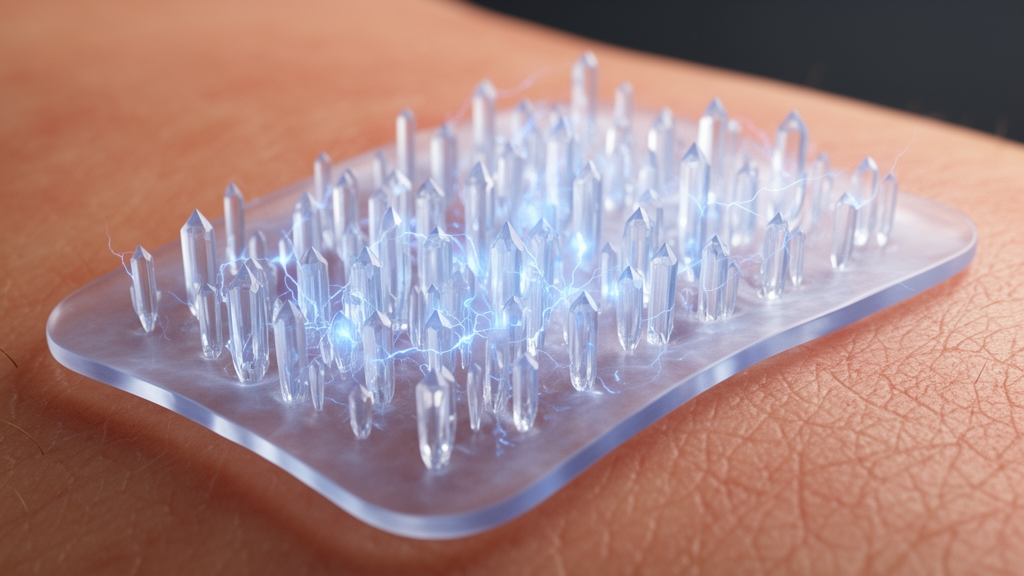
A new review in Advanced Composites and Hybrid Materials positions glycine-based piezoelectric nanogenerators as a leading option for self-powered medical devices that can sense movement, generate electricity, and biodegrade when no longer needed. Authors Rajendra K. Singh and Hae-Won Kim survey the field, tracing the technology from fundamental crystal science to applications in regenerating nerves, muscles, skin, and bone.

The appeal of glycine lies in its piezoelectric behavior: certain crystal forms of the molecule convert mechanical deformation into electrical charge without an external power source. The review examines how researchers work with glycine’s different polymorphs and assemble them into functional architectures, including microtubules, reinforced composites, and fibrous materials, each designed to harvest energy from body motion. Because the devices are fully biodegradable, the authors frame them as candidates for power systems that are safe for the body, a need driven by the rapid growth of wearable and implantable electronics.

What distinguishes this review from a simple energy-harvesting story is its emphasis on mechanodynamics, the idea that the physical motion of a device and the electrical signals it produces can actively guide cell behavior. Singh and Kim describe how the mechanical deformation and generated charge from glycine nanogenerators can regulate mechanotransduction signaling, the pathway by which cells convert physical cues into biochemical instructions that steer growth. In this framing, the device is not merely a power source but an active participant in tissue repair, simultaneously sensing movement and delivering stimulatory signals to surrounding cells.

The authors also highlight the intrinsic biological role of glycine itself. Beyond its structural function in the device, glycine is described as modulating immune responses and protecting cells, properties that could complement the electrical stimulation delivered by the nanogenerator. This dual function, in which the same molecule serves as both structural material and bioactive agent, is presented as a notable feature of the platform.

The review catalogs regenerative applications across multiple tissue types, with reported uses in nerve, muscle, skin, and bone repair. For each context, the authors connect the device’s electromechanical output to the relevant healing process, while also addressing the practical requirements for biocompatibility that any implantable or wearable system must satisfy. The discussion of safety considerations is framed as an essential step toward clinical translation, though the work remains a review of the field rather than a demonstration of clinical outcomes.

Overall, the authors position glycine-based nanogenerators among the key technologies for future self-powered medical devices for tissue healing and regenerative purposes, where a single device could in principle monitor motion, generate electrical cues, and deliver a bioactive molecule before degrading. The review, published open access, consolidates the crystal science, device architectures, biological mechanisms, and application examples now available in the literature, offering a roadmap for researchers working at the intersection of biodegradable electronics and regenerative medicine.

Subject of Research: Glycine-based piezoelectric nanogenerators for self-powered tissue regeneration

Article Title: Glycine-based piezoelectric nanogenerators for mechanodynamic tissue regeneration

Article References: Singh, R. K., & Kim, H.-W. (2026). Glycine-based piezoelectric nanogenerators for mechanodynamic tissue regeneration. Advanced Composites and Hybrid Materials. https://doi.org/10.1007/s42114-026-02148-0

Image Credits: AI Generated

DOI: 10.1007/s42114-026-02148-0

Keywords: glycine, piezoelectric nanogenerator, tissue regeneration, biodegradable electronics, mechanotransduction, self-powered implants, regenerative medicine, biocompatibility, crystal polymorphs, wearable electronics, Glycine-based, piezoelectric

Cite Scienmag News

Denise Maddox. (October 26, 2026). Glycine Crystals Power Biodegradable Nanogenerators for Tissue Healing. Scienmag. https://scienmag.com/glycine-crystals-power-biodegradable-nanogenerators-for-tissue-healing/

Denise Maddox. "Glycine Crystals Power Biodegradable Nanogenerators for Tissue Healing." Scienmag, 26 October 2026, https://scienmag.com/glycine-crystals-power-biodegradable-nanogenerators-for-tissue-healing/. Accessed 26 October 2026.

Denise Maddox. "Glycine Crystals Power Biodegradable Nanogenerators for Tissue Healing." Scienmag. October 26, 2026. https://scienmag.com/glycine-crystals-power-biodegradable-nanogenerators-for-tissue-healing/


Tags: bio-compatible energy systemsbiocompatibilitybiodegradable electronicsbiodegradable medical devicescrystal polymorphscrystal polymorphs in biomaterialscrystal science in biomedical engineeringenergy harvesting from body motionglycineGlycine-basedglycine-based piezoelectric nanogeneratorsmechanotransductionmechanotransduction signalingnanogenerator architecturespiezoelectricpiezoelectric nanogeneratorRegenerative Medicineregenerative medicine applicationsself-powered implantsself-powered sensorstissue regenerationwearable and implantable electronicswearable electronics
Share26Tweet16
Previous Post

Calsequestrin clustering powers calcium waves in heart cells

Next Post

Glyphosate Herbicide Alters Brain Oxidative Stress and Metabolic Reserve in Pacú Fish

Related Posts

Satellite Fire Sensors Miss Far More Blazes Than Assumed, New Detection Limits Reveal
Earth Science

Satellite Fire Sensors Miss Far More Blazes Than Assumed, New Detection Limits Reveal

October 26, 2026
Calsequestrin clustering powers calcium waves in heart cells
Biology

Calsequestrin clustering powers calcium waves in heart cells

October 26, 2026
Single-barrier fixes yield under 0.02% gain in algorithmic recourse model
Medicine

Single-barrier fixes yield under 0.02% gain in algorithmic recourse model

October 26, 2026
Synthetic Japanese claims benchmark puts healthcare fraud detection to a frozen, one-shot test
Technology and Engineering

Synthetic Japanese claims benchmark puts healthcare fraud detection to a frozen, one-shot test

October 26, 2026
Forest residues could cut concrete’s carbon footprint, but only with rigorous cold-region testing
Science News

Forest residues could cut concrete’s carbon footprint, but only with rigorous cold-region testing

October 26, 2026
Capsule Network Meets Recurrent Unit to Decode Ambiguous Biomedical Words
Technology and Engineering

Capsule Network Meets Recurrent Unit to Decode Ambiguous Biomedical Words

October 26, 2026
Next Post
Glyphosate Herbicide Alters Brain Oxidative Stress and Metabolic Reserve in Pacú Fish

Glyphosate Herbicide Alters Brain Oxidative Stress and Metabolic Reserve in Pacú Fish

  • Mothers who receive childcare support from maternal grandparents show more optimized

    Mothers who receive childcare support from maternal grandparents show more parental warmth, finds NTU Singapore study

    27656 shares
    Share 11059 Tweet 6912
  • University of Seville Breaks 120-Year-Old Mystery, Revises a Key Einstein Concept

    1061 shares
    Share 424 Tweet 265
  • Bee body mass, pathogens and local climate influence heat tolerance

    682 shares
    Share 273 Tweet 171
  • Researchers record first-ever images and data of a shark experiencing a boat strike

    546 shares
    Share 218 Tweet 137
  • Groundbreaking Clinical Trial Reveals Lubiprostone Enhances Kidney Function

    531 shares
    Share 212 Tweet 133
Science

Embark on a thrilling journey of discovery with Scienmag.com—your ultimate source for cutting-edge breakthroughs. Immerse yourself in a world where curiosity knows no limits and tomorrow’s possibilities become today’s reality!

RECENT NEWS

  • Satellite Fire Sensors Miss Far More Blazes Than Assumed, New Detection Limits Reveal
  • Glyphosate Herbicide Alters Brain Oxidative Stress and Metabolic Reserve in Pacú Fish
  • Glycine Crystals Power Biodegradable Nanogenerators for Tissue Healing
  • Calsequestrin clustering powers calcium waves in heart cells

Categories

  • Agriculture
  • Anthropology
  • Archaeology
  • Athmospheric
  • Biology
  • Biotechnology
  • Blog
  • Bussines
  • Cancer
  • Chemistry
  • Climate
  • Earth Science
  • Editorial Policy
  • Marine
  • Mathematics
  • Medicine
  • Pediatry
  • Policy
  • Psychology & Psychiatry
  • Science Education
  • Science News
  • Social Science
  • Space
  • Technology and Engineering

Subscribe to Blog via Email

Enter your email address to subscribe to this blog and receive notifications of new posts by email.

Join 5,151 other subscribers

© 2025 Scienmag - Science Magazine

Welcome Back!

Login to your account below

Forgotten Password?

Retrieve your password

Please enter your username or email address to reset your password.

Log In
No Result
View All Result
  • HOME
  • SCIENCE NEWS
  • CONTACT US

© 2025 Scienmag - Science Magazine

Discover more from Science

Subscribe now to keep reading and get access to the full archive.

Continue reading