

Monday, October 26, 2026
Science
No Result
View All Result
  • Login
  • HOME
  • SCIENCE NEWS
  • CONTACT US
  • HOME
  • SCIENCE NEWS
  • CONTACT US
No Result
View All Result
Scienmag
No Result
View All Result
Home Science News Biology

Native long reads reveal dimeric plasmid and fragmented prophages in Wolbachia

October 26, 2026
in Biology, Biotechnology
Juliet Wilcox
By Juliet Wilcox Scienmag Editorial Profile - Human Genetics
Reading Time: 2 mins read
0
Native long reads reveal dimeric plasmid and fragmented prophages in Wolbachia

Native long reads reveal dimeric plasmid and fragmented prophages in Wolbachia

65
SHARES
587
VIEWS
Share on FacebookShare on Twitter
ADVERTISEMENT

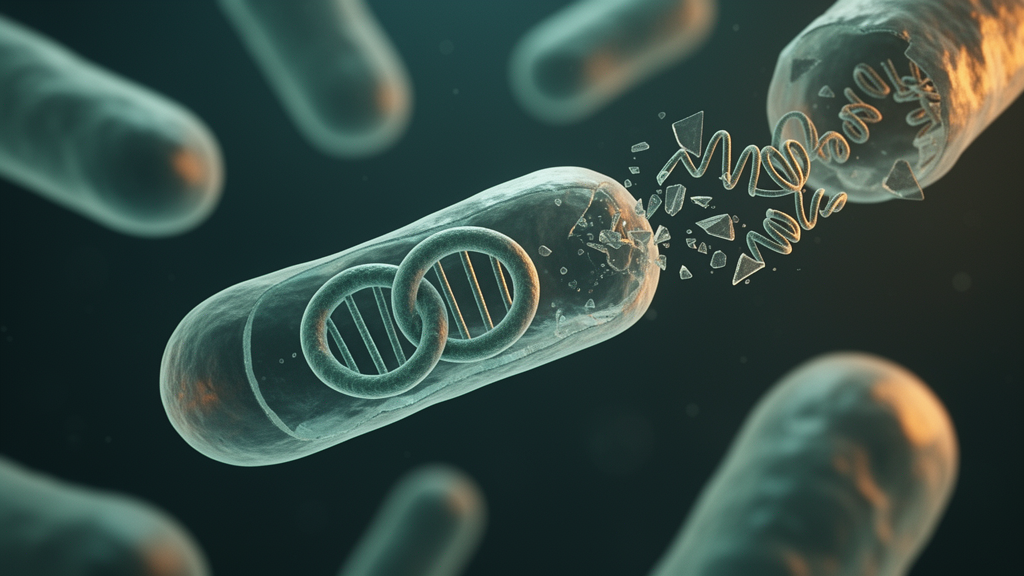
Wolbachia, obligate intracellular bacteria that manipulate the reproduction of their arthropod hosts and are deployed worldwide to suppress arbovirus transmission, carry heavily reduced genomes that nonetheless harbor a rich mobilome of phages, insertion sequences and plasmids. These repeat-rich mobile elements are notoriously difficult to assemble, and conventional short-read approaches can generate artificial chimeric sequences that obscure their true diversity. A new study of Wolbachia infecting the mosquito vector Culex pipiens molestus reports the first near-complete endosymbiont genome and its mobile elements recovered directly from native long-read molecules, revealing a candidate dimeric form of the pWCP plasmid and extensive fragmentation of prophage WO regions.

To overcome the assembly problems posed by repetitive mobile DNA, the researchers established a PCR-free Oxford Nanopore long-read sequencing strategy built on single dissected female ovaries. Avoiding prior amplification allowed them to read native DNA molecules directly, and additional short reads from individuals of the same strain were used to assess and validate candidate mutations, particularly in repetitive regions. The approach yielded the first near-complete Wolbachia genome characterized from individual ovaries of this mosquito strain, together with a structural picture of its mobile elements that earlier methods could not provide.

Among the key findings is a newly reported dimeric structure of the pWCP plasmid. The authors describe this as a candidate dimeric plasmid, suggesting that such multimeric plasmid forms may be associated with active replication, although this interpretation remains a hypothesis rather than a demonstrated mechanism.

The prophage WO regions told a more complex story. Even with long-read sequencing, the team observed extensive fragmentation of these integrated viral elements, underscoring their structural complexity. Analyses of the raw long reads recovered multiple alternative gene syntenies within the WO regions, indicating heterogeneous prophage architectures that the final assembly missed. This marked diversity of WO elements in Wolbachia of Culex pipiens, the wPip group strains, points to substantial mobilome heterogeneity within a single host strain.

Taken together, the results illuminate the structural heterogeneity of the endosymbiont genome as it is shaped by both integrated and episomal mobile elements. The findings are limited to a single Culex pipiens molestus strain and remain observational; the dimeric plasmid is described as a candidate structure, and the functional consequences of the alternative prophage syntenies have not been tested. Even so, the study demonstrates that PCR-free native long reads from minute tissue samples can expose mobilome diversity that conventional sequencing and assembly pipelines leave hidden.

Subject of Research: Mobilome heterogeneity in Wolbachia endosymbionts of the mosquito Culex pipiens

Article Title: Extensive mobilome heterogeneity in a widespread endosymbiont: A candidate dimeric plasmid and highly fragmented prophages in Wolbachia from Culex pipiens

Article References: Brunner, A., Mahout, M., Amoros, J., Rahmoun, M., Jarry, M., Bordenstein, S. R., Bordenstein, S. R., Trouche, B., & Reveillaud, J. (2026). Extensive mobilome heterogeneity in a widespread endosymbiont: A candidate dimeric plasmid and highly fragmented prophages in Wolbachia from Culex pipiens. PLOS Genetics, 22(10), e1012347. https://doi.org/10.1371/journal.pgen.1012347

Image Credits: AI Generated

DOI: 10.1371/journal.pgen.1012347

Keywords: Wolbachia, Culex pipiens, mobilome, plasmid, prophage WO, Oxford Nanopore, long-read sequencing, endosymbiont, mobile genetic elements, genome assembly, mosquito vector, Extensive

Cite Scienmag News

Juliet Wilcox. (October 26, 2026). Native long reads reveal dimeric plasmid and fragmented prophages in Wolbachia. Scienmag. https://scienmag.com/native-long-reads-reveal-dimeric-plasmid-and-fragmented-prophages-in-wolbachia/


Juliet Wilcox. "Native long reads reveal dimeric plasmid and fragmented prophages in Wolbachia." Scienmag, 26 October 2026, https://scienmag.com/native-long-reads-reveal-dimeric-plasmid-and-fragmented-prophages-in-wolbachia/. Accessed 26 October 2026.

Juliet Wilcox. "Native long reads reveal dimeric plasmid and fragmented prophages in Wolbachia." Scienmag. October 26, 2026. https://scienmag.com/native-long-reads-reveal-dimeric-plasmid-and-fragmented-prophages-in-wolbachia/

Tags: challenges of assembling repeat-rich mobile elementsCulex pipiensdimeric plasmid in WolbachiaendosymbiontExtensivefragmented prophage WO regionsgenome assemblygenome characterization from mosquito ovariesimpact of repetitive DNA on genomelong-read sequencinglong-read sequencing of mobile genetic elementsmobile elements in obligate intracellular bacteriamobile genetic elementsmobilomemosquito vectornative DNA sequencing in endosymbiontsOxford NanoporePCR-free Oxford Nanopore sequencingplasmidprophage WOstructural analysis of Wolbachia mobile elementsWolbachiaWolbachia genome assemblyWolbachia's role in arthropod reproductive manipulation
Share26Tweet16
Previous Post

High-Altitude Tibetan Study Maps Hyperuricemia Risk Across Elevation Gradients

Next Post

LPS boosts gallbladder cancer cell migration and invasion via NF-κB–CXCR4 axis

Related Posts

Ticks in Kashmir Valley Carry Babesia bovis and Theileria Sequences, Survey Finds
Biology

Ticks in Kashmir Valley Carry Babesia bovis and Theileria Sequences, Survey Finds

October 26, 2026
Single-cell atlas maps ovarian cell changes during the pig estrus switch
Biology

Single-cell atlas maps ovarian cell changes during the pig estrus switch

October 26, 2026
How You Brew It Matters: Preparation Method Shapes the Digestive Fate of Yerba Mate Bioactives
Biology

How You Brew It Matters: Preparation Method Shapes the Digestive Fate of Yerba Mate Bioactives

October 26, 2026
Hidden bone marrow progenitor offers alternative route to macrophage production
Biology

Hidden bone marrow progenitor offers alternative route to macrophage production

October 26, 2026
Small RNA shields the blood–brain barrier by silencing DDX58 after injury
Biology

Small RNA shields the blood–brain barrier by silencing DDX58 after injury

October 26, 2026
Two decades of Mendelian randomization mapped: pleiotropy tops the field’s methodological worries
Biology

Two decades of Mendelian randomization mapped: pleiotropy tops the field’s methodological worries

October 26, 2026
Next Post
LPS boosts gallbladder cancer cell migration and invasion via NF-κB–CXCR4 axis

LPS boosts gallbladder cancer cell migration and invasion via NF-κB–CXCR4 axis

  • Mothers who receive childcare support from maternal grandparents show more optimized

    Mothers who receive childcare support from maternal grandparents show more parental warmth, finds NTU Singapore study

    27656 shares
    Share 11059 Tweet 6912
  • University of Seville Breaks 120-Year-Old Mystery, Revises a Key Einstein Concept

    1061 shares
    Share 424 Tweet 265
  • Bee body mass, pathogens and local climate influence heat tolerance

    682 shares
    Share 273 Tweet 171
  • Researchers record first-ever images and data of a shark experiencing a boat strike

    546 shares
    Share 218 Tweet 137
  • Groundbreaking Clinical Trial Reveals Lubiprostone Enhances Kidney Function

    531 shares
    Share 212 Tweet 133
Science

Embark on a thrilling journey of discovery with Scienmag.com—your ultimate source for cutting-edge breakthroughs. Immerse yourself in a world where curiosity knows no limits and tomorrow’s possibilities become today’s reality!

RECENT NEWS

  • Ticks in Kashmir Valley Carry Babesia bovis and Theileria Sequences, Survey Finds
  • LPS boosts gallbladder cancer cell migration and invasion via NF-κB–CXCR4 axis
  • Native long reads reveal dimeric plasmid and fragmented prophages in Wolbachia
  • High-Altitude Tibetan Study Maps Hyperuricemia Risk Across Elevation Gradients

Categories

  • Agriculture
  • Anthropology
  • Archaeology
  • Athmospheric
  • Biology
  • Biotechnology
  • Blog
  • Bussines
  • Cancer
  • Chemistry
  • Climate
  • Earth Science
  • Editorial Policy
  • Marine
  • Mathematics
  • Medicine
  • Pediatry
  • Policy
  • Psychology & Psychiatry
  • Science Education
  • Science News
  • Social Science
  • Space
  • Technology and Engineering

Subscribe to Blog via Email

Enter your email address to subscribe to this blog and receive notifications of new posts by email.

Join 5,151 other subscribers

© 2025 Scienmag - Science Magazine

Welcome Back!

Login to your account below

Forgotten Password?

Retrieve your password

Please enter your username or email address to reset your password.

Log In
No Result
View All Result
  • HOME
  • SCIENCE NEWS
  • CONTACT US

© 2025 Scienmag - Science Magazine

Discover more from Science

Subscribe now to keep reading and get access to the full archive.

Continue reading