


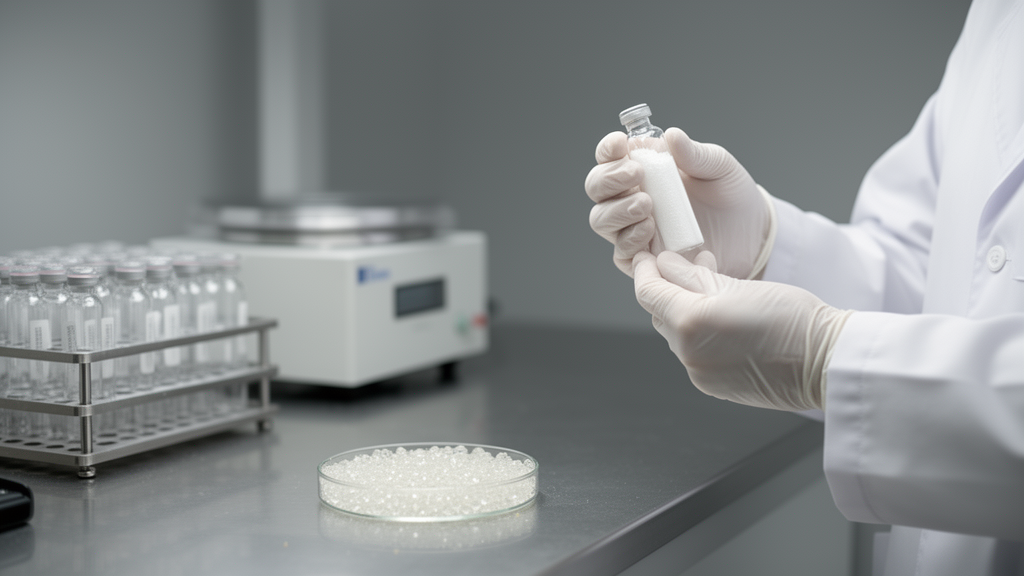
Protein-based therapeutics now make up a substantial fraction of FDA-approved biologics, but keeping these fragile molecules intact from the factory floor to the patient remains one of the toughest challenges in pharmaceutical science. A review published in the Journal of Pharmaceutical Investigation examines how high-molecular-weight polymeric excipients are reshaping the way scientists stabilize protein drugs in the solid state, potentially complementing or even surpassing the traditional sugar-based stabilizers that have dominated the field for decades. The authors, led by Chanakya D. Patil and Li Lily Qu, argue that polymers deserve a central place in next-generation formulation design, provided that researchers can master their complex interactions with proteins and satisfy regulatory expectations.
The case for solid-state formulations rests on a simple physical principle: removing water dramatically slows the molecular motion that drives degradation. Liquid protein formulations remain vulnerable to both chemical degradation pathways, such as deamidation, oxidation, and glycation, and physical instabilities, including conformational perturbations and aggregation. Drying techniques like lyophilization, spray drying, and spray freeze-drying reduce molecular mobility and can extend shelf life considerably. Yet the drying processes themselves introduce punishing stresses. During freezing, proteins can undergo cold denaturation as nonpolar residues become more soluble at low temperatures, disrupting native folding. Ice formation creates ice-water interfaces where proteins adsorb and partially unfold, while cryoconcentration raises solute concentrations, viscosity, and ionic strength in the unfrozen layer, sometimes pushing stabilizing sugars and buffer salts into supersaturation and crystallization.
Dehydration brings its own hazards. Removing a protein’s hydration shell disrupts water-mediated hydrogen bonding and alters protonation states, changing charge distribution and encouraging protein-protein interactions that can destroy native structure. Spray drying adds thermal stress that accelerates chemical degradation, plus shear forces during atomization and exposure to air-liquid interfaces where amphiphilic proteins readily accumulate and unfold. The review explains that polymeric excipients counteract these stressors through three well-established mechanisms: water replacement, in which excipients form hydrogen bonds with polar residues on the protein surface to compensate for lost water interactions; vitrification, in which a rigid amorphous glassy matrix immobilizes proteins and suppresses the molecular motions, including alpha and beta relaxations, that promote degradation; and interfacial stabilization, in which surface-active excipients shield proteins from air-water and ice-water interfaces.
Polymers hold a distinct advantage over the disaccharides sucrose and trehalose, which have long served as the workhorses of protein stabilization. These sugars have glass transition temperatures that are highly sensitive to residual moisture, which acts as a plasticizer. Reports cited in the review indicate that trehalose can lose more than 12 degrees Celsius of Tg with just a 1 percent increase in moisture by weight, while sucrose Tg can drop from 70 to 35 degrees Celsius as moisture rises from 0 to 3 percent. Such reductions can trigger crystallization, phase separation, and reduced storage stability. Polymers, with their long-chain bulky structures and inherently high Tg, can raise the glass transition temperature of the entire matrix, reduce molecular mobility, and slow or inhibit crystallization of the sugars themselves.
Among carbohydrate-based polymers, dextran stands out for its regulatory pedigree: 40, 70, and 75 kDa dextrans appear in FDA-approved parenteral products, and the lyophilized drug Mylotarg, containing gemtuzumab ozogamicin, includes 40 kDa dextran. But the review reveals a complicated picture. Dextran’s terminal glucose residues can drive glycation reactions that increase protein aggregation, and studies on monoclonal antibody formulations found that dextran alone did not confer lyoprotection, though combining it with sucrose at a 1:1 ratio enhanced stability. The influence of molecular weight remains inconsistent across studies: higher molecular weight dextran reduced storage stability in monoclonal antibody work, yet a study of lyophilized glucose-6-phosphate dehydrogenase found that 512 kDa dextran provided the best thermal stability among the weights tested, with stability declining again at 2000 kDa. In spray drying, dextran has often underperformed, possibly because proteins migrate to particle surfaces during formation, a hypothesis supported by X-ray photoelectron spectroscopy data showing elevated protein content at particle surfaces of spray-dried bovine serum albumin particles.
Hydroxypropyl-beta-cyclodextrin, or HPβCD, has emerged as one of the most promising polymeric stabilizers. Already used in several FDA-approved parenteral formulations as a solubility enhancer for small molecules, HPβCD combines a high glass transition temperature with weak surface activity and accessible hydroxyl groups. In spray-drying studies, an antibody formulation with HPβCD at a 1:3 weight ratio remained stable for up to one year at ambient conditions when processed at inlet temperatures of 120 and 150 degrees Celsius, though stability dropped significantly at 200 degrees. A spray-dried trastuzumab formulation with HPβCD showed superior monomer retention and biological activity compared with beta-cyclodextrin or trehalose, and recent work found HPβCD outperformed trehalose at a 1:1 weight ratio. In spray freeze-drying, HPβCD preserved parathyroid hormone even at concentrations as low as 0.04 to 0.08 percent by weight when combined with trehalose. Human volunteer studies have shown HPβCD is well tolerated up to 470 milligrams per kilogram per day, though the authors stress that dose optimization remains essential.
Surfactant-based polymers bring their own trade-offs. Poloxamer 188, a non-ionic triblock copolymer, can stabilize proteins during freeze-thaw cycles and lyophilization, but it crystallizes during freezing, which can harm protein stability. Sucrose at ratios of 1:1 and 1:2 with poloxamer 188 effectively inhibited this crystallization, and long-term storage studies found the best stabilization of lactate dehydrogenase at a sucrose-to-poloxamer ratio of 2:1. High concentrations of poloxamer 188, around 10 percent by weight, induced lysozyme aggregation during freezing, although the aggregation reversed upon thawing. Polysorbates, the most widely used surfactants in approved biologics, preserve protein structure during freezing and prevent reconstitution-induced aggregation, but they plasticize the dried matrix by lowering Tg and can undergo oxidation and hydrolysis that generate subvisible particles. These degradation concerns have fueled growing interest in poloxamers as alternatives to polysorbates.
Protein-based and synthetic polymers round out the toolkit. Gelatin and its hydrolysates continue to stabilize FDA-approved liquid and lyophilized vaccines even though the FDA has withdrawn all intravenous gelatin products over safety concerns including anaphylaxis and bleeding. In recent comparative spray-drying studies, hydrolyzed gelatin and HPβCD both outperformed trehalose and mannitol at a 1:1 weight ratio, and further improvements were seen when either was combined with trehalose or mannitol. Human serum albumin, used in marketed biologics such as Betaseron and Avonex, prevents surface adsorption through surfactant-like properties and can also reduce mannitol crystallization during lyophilization, maintaining the amorphous matrix preferred for stability. Polyvinylpyrrolidone raises matrix Tg and suppresses crystallization of sucrose and mannitol, with 5 percent by weight of 300 kDa PVP significantly increasing both Tg and crystallization temperature of lyophilized sucrose. Polyethylene glycol stabilizes through preferential exclusion but cannot form extensive hydrogen bonds with proteins due to steric hindrance, so it generally requires trehalose as a partner; low molecular weight PEGs of 200 to 600 daltons actually destabilized catalase during lyophilization.
Perhaps the most striking findings involve novel designed polymers. A trehalose-based glycopolymer outperformed trehalose alone in stabilizing beta-galactosidase and horseradish peroxidase during lyophilization and heat stress. A polyacrylamide-derived copolymer called MoNi stabilized bovine serum albumin and human IgG in microparticles composed of roughly 95 percent protein and only 5 percent polymer, achieving stabilization comparable to formulations containing 30 percent trehalose, a dramatic reduction in excipient load. Hyperbranched poly(3-(oxiran-2-ylmethoxy)propane-1,2-diol) provided equal or superior stabilization of insulin, lysozyme, beta-galactosidase, and antibodies under freezing, thermal, and lyophilization stresses. However, none of these novel materials currently holds Generally Recognized as Safe status or appears in the FDA Inactive Ingredient Database for parenteral administration, meaning their use in injectables would demand extensive toxicological evaluation covering immunogenicity, biodegradability, accumulation, and clearance.
The review’s central message is that polymer selection cannot follow a one-size-fits-all recipe. Dextran’s rigidity builds stable matrices but excessive rigidity creates non-homogeneous systems; inulin outperforms dextran of similar molecular size thanks to greater molecular flexibility, yet still falls short of trehalose under sugar-rich conditions; pullulan offers a glass transition temperature above 200 degrees Celsius and GRAS status but awaits systematic evaluation as a protein stabilizer. The authors conclude that strategic combinations of polymers with traditional disaccharides or sugar alcohols can deliver synergistic improvements in glass formation, mobility reduction, and interfacial protection. As protein modalities continue to expand, rationally selected polymeric excipients may define the next generation of stable, high-performing biologic medicines, provided mechanistic understanding and regulatory alignment keep pace with the chemistry.
Subject of Research: Polymeric excipients for solid-state stabilization of protein formulations
Article Title: Polymeric excipients for solid-state stabilization of protein formulations
Article References: Patil, C. D., Huang, Y., Arte, K. S., Mutukuri, T. T., Nie, H., Zhou, Q. T., & Qu, L. L. (2026). Polymeric excipients for solid-state stabilization of protein formulations. Journal of Pharmaceutical Investigation. https://doi.org/10.1007/s40005-026-00835-0
Image Credits: AI Generated
DOI: 10.1007/s40005-026-00835-0
Keywords: protein formulations, polymeric excipients, solid-state stabilization, lyophilization, spray drying, glass transition temperature, dextran, cyclodextrin, poloxamer, biologics, pharmaceutical excipients, drug stability
Cite Scienmag News
Ophelia Keating. (October 26, 2026). Polymeric Excipients Emerge as Key Stabilizers for Solid-State Protein Drugs. Scienmag. https://scienmag.com/polymeric-excipients-emerge-as-key-stabilizers-for-solid-state-protein-drugs/
Ophelia Keating. "Polymeric Excipients Emerge as Key Stabilizers for Solid-State Protein Drugs." Scienmag, 26 October 2026, https://scienmag.com/polymeric-excipients-emerge-as-key-stabilizers-for-solid-state-protein-drugs/. Accessed 26 October 2026.
Ophelia Keating. "Polymeric Excipients Emerge as Key Stabilizers for Solid-State Protein Drugs." Scienmag. October 26, 2026. https://scienmag.com/polymeric-excipients-emerge-as-key-stabilizers-for-solid-state-protein-drugs/


