


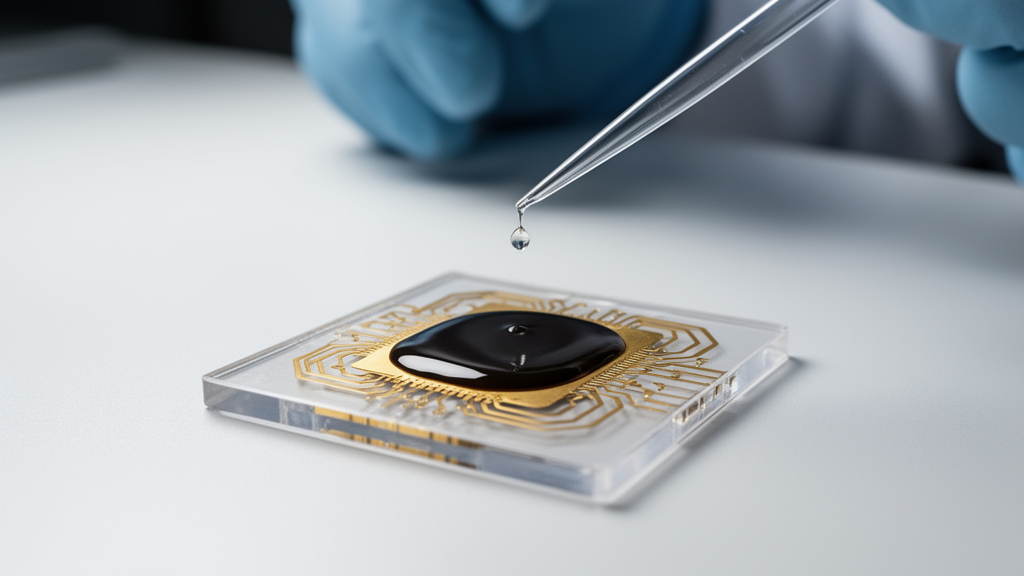
Dopamine is a chemical messenger produced in the adrenal gland that influences movement, attention span, memory, sleep, mood regulation, and learning, and imbalances in its concentration are associated with conditions such as schizophrenia, Parkinson’s disease, and attention deficit hyperactivity disorder. Detecting this molecule precisely is therefore an active goal in biosensing research. Now, a team of researchers reporting in the journal Discover Electrochemistry has revealed a surprising design rule for the transistor platform many scientists consider a promising route to real-time dopamine monitoring: the geometry of the device itself, long treated as a secondary detail, turns out to decide whether the sensor performs at its peak or falls far short of it.
The platform in question is the organic electrochemical transistor, or OECT, first invented in the 1980s by White and colleagues. These devices combine several properties that biosensor engineers prize: high signal amplification, compatibility with water, biocompatibility, low operating voltages, and, most distinctively, the ability to convert ionic signals in an electrolyte into electronic signals in a circuit. That ionic-to-electronic transduction means an OECT can sit at the interface between wet, salty biology and clean electronics, sensing everything from simple salt concentrations and biomolecules to bacteria and the integrity of cellular barriers. For dopamine specifically, OECTs have attracted attention since the 2010s, when researchers showed that gate electrode material matters enormously. One study using platinum gate electrodes and a PEDOT:PSS channel achieved detection limits below 5 nanomolar at gate voltages around +0.6 volts, while later work added a molecularly imprinted polymer studded with dopamine-shaped cavities, allowing the sensor to distinguish dopamine from ascorbic acid, a common interferent, across detection ranges spanning nanomolar to micromolar concentrations.
Yet one fundamental question has remained largely unexamined: how do the physical dimensions of the transistor affect its dopamine-sensing ability? The new study, led by Shreeteja Golla, Henrique Frulani de Paula Barbosa, Ugo Bruno, Daniela Rana, Francesca Santoro, Ludger Kempen, and Björn Lüssem, tackles this question head-on by systematically varying a single geometric parameter across an unusually wide range. That parameter, called the channel-gate area ratio and denoted by the Greek letter gamma, is defined as the ratio between the channel and gate capacitances, which scales with the ratio of their surface areas. The team fabricated OECTs with six different gamma values: 0.01, 0.1, 1, 10, 100, and 1000, spanning four orders of magnitude. At one extreme sit devices with gate electrodes a hundred times larger than their channels; at the other, gates a thousand times smaller.
The reason geometry was expected to matter comes from an established model of OECT sensing, originally developed for glucose detection by Bernards and colleagues and extended by Cicoira’s group. In that enzyme-based scenario, glucose and its reaction byproducts shift the effective gate voltage of the transistor. The model predicts that this shift grows with the factor (1 + gamma), meaning smaller gate areas increase gamma, which in turn amplifies the voltage shift and, consequently, the change in drain current. The logical conclusion seemed clear: shrink the gate as much as possible and sensitivity should climb without limit. Dopamine appeared to fit this framework neatly, because it oxidizes at the gate electrode into dopamine o-quinone, releasing two protons and two electrons, the very same byproducts that glucose sensing produces. The protons and electrons interact with the gate and channel, promoting dedoping of the PEDOT:PSS and shifting the drain current baseline away from its initial level.
To test whether the glucose-derived rule transfers to dopamine, the researchers built their devices on silicon wafers coated with silicon dioxide, using layers of polyimide for insulation and passivation, gold electrodes structured by photolithography and wet etching, and spin-coated films of PEDOT:PSS roughly 200 nanometers thick. The PEDOT:PSS mixture contained ethylene glycol, dodecylbenzenesulfonic acid, and a silane crosslinker to optimize film properties. Crucially, both the channel and the gate were made of the same PEDOT:PSS material, so the only variable was geometry. The devices operated in an electrolyte of 0.1 molar sodium chloride in deionized water, a concentration chosen because it naturally occurs in the human body, for example in tears and sweat.
Before any dopamine entered the picture, the team characterized the transistors in the plain salt solution, sweeping the gate voltage from 0 to +0.8 volts while holding the drain voltage constant at −0.2 volts. The transfer curves revealed a trend that immediately complicated the received wisdom. Devices with smaller gamma values, meaning larger gate electrodes, generated a larger modulation in drain current. This showed up in the On/Off ratio, the highest drain current achieved in a transfer curve divided by the lowest. The physics behind this is captured by a simple relation: the electrical potential inside the electrolyte equals the applied gate voltage divided by (1 + gamma). Larger gates reduce the voltage drop across the gate-electrolyte interface, so more of the gate voltage reaches the transistor channel, driving cation migration into the PEDOT:PSS more efficiently, dedoping the polymer more completely, lowering the Off current, and raising the switching ratio. Consistent with this, devices with gamma of 0.01 needed a gate voltage near 0 volts to reach a reference current level, while devices with gamma of 1000 required around +0.8 volts.
Transconductance, the measure of how strongly the drain current responds to changes in gate voltage and therefore the device’s intrinsic signal amplification, told the same story. Maximum transconductance dropped steadily as the channel-gate area ratio increased, and the voltage at which the transconductance peak occurred shifted strongly toward higher gate voltages. For the largest gamma values, the peak moved to the edge of the applied voltage range, suggesting it would occur above +0.8 volts, a regime that may be inaccessible in water-based electrolytes because water hydrolysis at such voltages can damage the channel material. In short, the baseline characterization indicated that big gates make better amplifiers, while the glucose model predicted that tiny gates make better sensors. Something had to give.
The dopamine experiments resolved the tension in a way neither trend alone predicted. The team used a transient sensing protocol with gate pulses of +0.3 volts, 5 seconds wide and 5 seconds apart, first measuring 180 seconds in the reference electrolyte, then adding three successive 5-microliter aliquots of a 30 micromolar dopamine hydrochloride solution. Each addition raised the overall dopamine concentration in the electrolyte, from 2.7 to 5 and finally 6.9 micromolar, and the entire four-measurement sequence was repeated three times for every transistor of every gamma value, with four devices per geometry, to confirm reproducibility. The result was unambiguous: OECTs with a gamma of 10 showed the highest signal change and the highest sensitivity after the full 15 microliters of dopamine solution had been added. Sensitivity did not rise monotonically as gates shrank, contradicting the glucose-derived expectation. Instead, it peaked at an intermediate gate size. The devices with gamma of 10 did display slightly larger standard deviations than other geometries, which the authors hypothesize may stem from the pressure of needle probes contacting the source, drain, and gate pads, since fabrication and measurement protocols were identical across all devices.
The researchers also verified that the peak was not an artifact of device degradation. After dopamine exposure, they re-evaluated transistor performance and found that despite small variations in On/Off ratio and in the voltage position of the maximum transconductance for specific geometries, the signal amplification and the lateral shift of the transfer characteristic remained undisturbed, indicating that dopamine sensing does not permanently alter the devices. The optimal gamma of 10, the authors explain, emerges from a balance between two opposing trends. Smaller gates concentrate the voltage drop at the gate-electrolyte interface, making the transistor more sensitive to the redox reaction that dopamine undergoes there, exactly as the established model predicts. Larger gates, meanwhile, deliver higher transconductance and stronger signal amplification, and they reach their transconductance peak at gate voltages closer to the pulse levels used in the sensing protocol. Maximum sensitivity occurs where these competing effects meet, at a channel roughly ten times the gate area.
The implications reach well beyond dopamine. The authors hypothesize that the same trade-off between redox sensitivity at the gate and transconductance-driven amplification governs other analytes sensed by OECTs, most likely any redox-based OECT sensor. For decades, the design intuition borrowed from enzyme-based glucose sensing pushed engineers toward ever-smaller gates; this study shows that intuition breaks down for dopamine and suggests it may need revisiting across the biosensing field. Careful optimization of the channel-gate area ratio, rather than blind minimization of the gate, appears to be the key to unlocking the full potential of organic electrochemical transistors, whether the goal is tracking neurotransmitters, monitoring metabolic molecules, or building bio-hybrid devices such as the dopamine-modulated artificial synapse demonstrated by Keene and colleagues, in which dopaminergic cells release the neurotransmitter directly into the transistor’s electrolyte. Because dopamine detection is considered crucial for the prevention and early diagnosis of Parkinson’s disease, schizophrenia, and ADHD, geometry may prove to be a quiet but decisive variable in the performance of future OECT sensors.
Subject of Research: Effect of channel-gate geometry on dopamine sensing by organic electrochemical transistors
Article Title: Influence of geometry on dopamine sensing by organic electrochemical transistors
Article References: Golla, S., Frulani de Paula Barbosa, H., Bruno, U., Rana, D., Santoro, F., Kempen, L., & Lüssem, B. (2026). Influence of geometry on dopamine sensing by organic electrochemical transistors. Discover Electrochemistry, 3(1), Article 90. https://doi.org/10.1007/s44373-026-00179-2
Image Credits: AI Generated
DOI: 10.1007/s44373-026-00179-2
Keywords: organic electrochemical transistors, dopamine sensing, biosensors, PEDOT:PSS, transconductance, device geometry, neurotransmitters, channel-gate area ratio, redox sensing, signal amplification, Influence, geometry
Cite Scienmag News
Bethany Barker. (October 26, 2026). Optimal Geometry Unlocks Peak Dopamine Sensing in Organic Transistors. Scienmag. https://scienmag.com/optimal-geometry-unlocks-peak-dopamine-sensing-in-organic-transistors/
Bethany Barker. "Optimal Geometry Unlocks Peak Dopamine Sensing in Organic Transistors." Scienmag, 26 October 2026, https://scienmag.com/optimal-geometry-unlocks-peak-dopamine-sensing-in-organic-transistors/. Accessed 26 October 2026.
Bethany Barker. "Optimal Geometry Unlocks Peak Dopamine Sensing in Organic Transistors." Scienmag. October 26, 2026. https://scienmag.com/optimal-geometry-unlocks-peak-dopamine-sensing-in-organic-transistors/


