


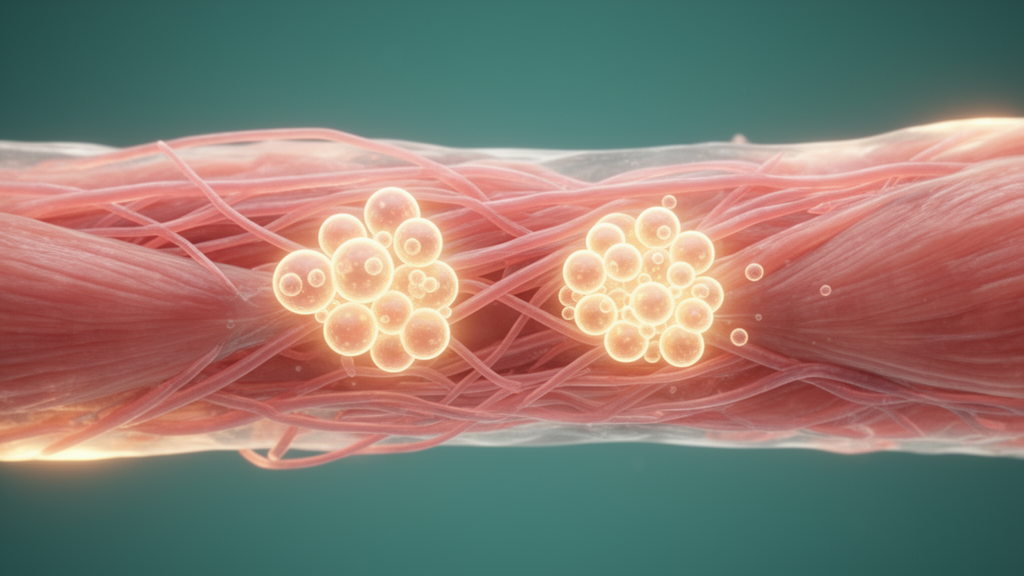
Rainbow trout muscle stem cells do not follow a single differentiation path as the fish grows. A single-cell transcriptomic study of juvenile Oncorhynchus mykiss, published in BMC Genomics, uncovered two transcriptionally distinct stem cell fates: one present only during hyperplastic growth, when new muscle fibers are generated, and another maintained throughout growth, when existing fibers enlarge through hypertrophy. The finding links separable stem cell states to the two growth strategies that vertebrate skeletal muscle can adopt and establishes a comparative framework for exploring postnatal muscle growth across vertebrates.
The research team, led by Sabrina Jagot and Jean-Charles Gabillard, generated a single-cell transcriptomic atlas of muscle-derived cells from juvenile trout at five growth stages. Their analysis identified fifteen tissue-resident cell populations, including eight myogenic subpopulations spanning the full life history of the muscle lineage, from quiescent stem cells to terminally differentiating myocytes. The atlas documents the cellular composition of growing fish muscle and the transcriptional states its stem cells occupy at each stage.
The researchers uncovered two transcriptionally distinct trajectories. One was present only during hyperplastic growth, while the other was maintained throughout the entire growth period. This pattern raises the possibility that muscle stem cells in trout specialize toward either hyperplasia or hypertrophy, effectively representing two separable stem cell fates rather than a single linear differentiation path.
Because the study is observational, the authors describe these fates as correlated with, not causally driving, the two growth modes. Still, the correlation is biologically suggestive. Comparative analyses with human single-cell atlases revealed that some trout myogenic subpopulations associated with hyperplastic or hypertrophic growth share similarities with human fetal or adult myogenic subpopulations, respectively.
Beyond the myogenic lineage itself, the study identified a tissue-resident population of pax7+/pdgfrα+ cells. According to the authors, the co-expression of these markers indicates plasticity toward the fibroblastic lineage, and the researchers associated these cells with hypertrophic growth. Their presence provides new insight into muscle stem cell plasticity and how stem cells may relate to the mesenchymal compartment of the muscle niche.
The analysis also documented extrinsic changes accompanying growth. Remodeling of the extracellular matrix occurred alongside the intrinsic transcriptional changes in muscle stem cells, suggesting a dynamic crosstalk between the myogenic and mesenchymal compartments during skeletal muscle expansion. The authors present this coupling as evidence that the stem cell niche itself is restructured as growth proceeds.
The work establishes a comparative framework for exploring the regulation of postnatal muscle growth across vertebrates. By mapping trout muscle stem cell states onto human reference atlases, the study connects fish-specific biology, such as prolonged hyperplasia into juvenile stages, with transcriptional programs shared with mammals. The authors note that the molecular mechanisms governing the transition between hyperplastic-hypertrophic and purely hypertrophic growth in fish remain an open question, and the atlas provides a resource for future functional studies addressing it.
As with any single-cell transcriptomic study, the findings describe correlations between cell states and growth phases rather than demonstrated mechanisms. The trajectories inferred by RNA velocity are predictions of cell fate direction, and the association of pax7+/pdgfrα+ cells with hypertrophic growth will require functional validation. Nevertheless, the identification of two transcriptionally distinct stem cell fates, together with a resident population poised toward fibroblastic identity, gives researchers concrete molecular entry points for investigating how vertebrate muscle decides between making new fibers and enlarging existing ones.
Subject of Research: Distinct muscle stem cell fates correlated with hyperplasia and hypertrophy during skeletal muscle growth in rainbow trout
Article Title: Distinct muscle stem cell fates correlated with hyperplasia and hypertrophy during skeletal muscle growth in rainbow trout
Article References: Jagot, S., Babarit, C., Sabin, N., Le Grand, F., Rouger, K., & Gabillard, J.-C. (2026). Distinct muscle stem cell fates correlated with hyperplasia and hypertrophy during skeletal muscle growth in rainbow trout. BMC Genomics. https://doi.org/10.1186/s12864-026-13482-4
Image Credits: AI Generated
DOI: 10.1186/s12864-026-13482-4
Keywords: Distinct, muscle, stem, cell, fates, correlated, hyperplasia, hypertrophy, during, skeletal, growth, rainbow
Cite Scienmag News
Drew Townsend. (October 26, 2026). Two Muscle Stem Cell Fates Track Hyperplasia and Hypertrophy in Growing Trout. Scienmag. https://scienmag.com/two-muscle-stem-cell-fates-track-hyperplasia-and-hypertrophy-in-growing-trout/
Drew Townsend. "Two Muscle Stem Cell Fates Track Hyperplasia and Hypertrophy in Growing Trout." Scienmag, 26 October 2026, https://scienmag.com/two-muscle-stem-cell-fates-track-hyperplasia-and-hypertrophy-in-growing-trout/. Accessed 26 October 2026.
Drew Townsend. "Two Muscle Stem Cell Fates Track Hyperplasia and Hypertrophy in Growing Trout." Scienmag. October 26, 2026. https://scienmag.com/two-muscle-stem-cell-fates-track-hyperplasia-and-hypertrophy-in-growing-trout/


