

Monday, October 26, 2026
Science
No Result
View All Result
  • Login
  • HOME
  • SCIENCE NEWS
  • CONTACT US
  • HOME
  • SCIENCE NEWS
  • CONTACT US
No Result
View All Result
Scienmag
No Result
View All Result
Home Science News Climate

Lidar and satellites trace a dust layer polluting Shiraz skies

October 26, 2026
in Climate
Russell Cooper
By Russell Cooper Scienmag Editorial Profile - Environmental Pollution
Reading Time: 2 mins read
0
Lidar and satellites trace a dust layer polluting Shiraz skies

Lidar and satellites trace a dust layer polluting Shiraz skies

65
SHARES
587
VIEWS
Share on FacebookShare on Twitter
ADVERTISEMENT

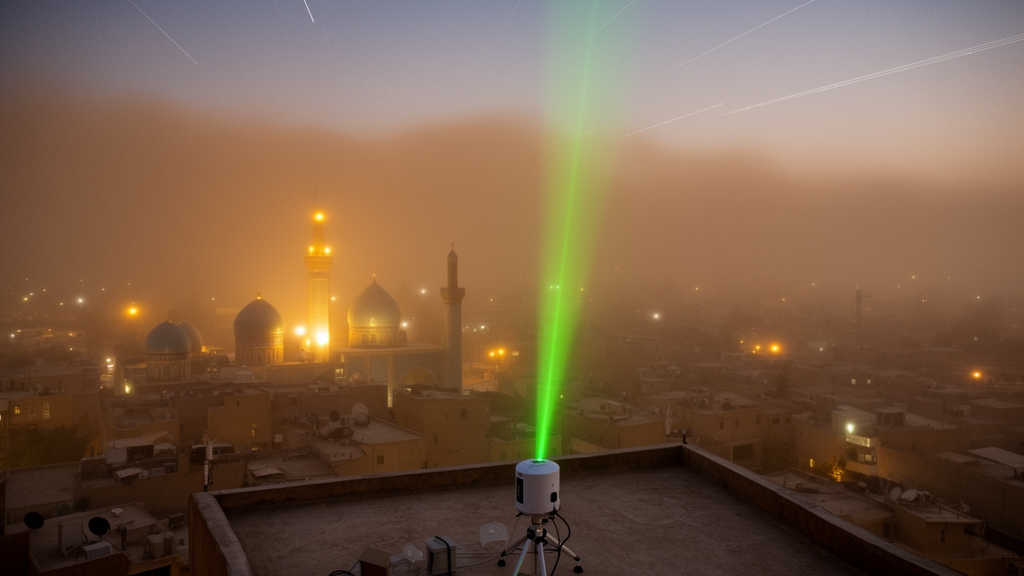
On 6 July 2006, a dust episode settled over Shiraz, a city in southern Iran whose atmosphere is shaped both by long-range dust transport and by local emission sources. Researchers at Shiraz University have now reported what they describe as the first analysis of a dust-related pollution episode over the city that combines ground-based lidar measurements with CALIPSO and MODIS satellite observations, CAMS aerosol data, ECMWF reanalysis fields and HYSPLIT trajectory modeling. The work, published in Air Quality, Atmosphere & Health, reconstructs the vertical structure of the pollution layer and the wind patterns that carried it.

The dust event was selected because it coincided with ground-based lidar observations collected at Shiraz University during the early operational period of the system, giving the team a vertical profile of the atmosphere over the city at the moment pollution concentrations spiked. Model-based concentration data captured the severity of the episode. CAMS-derived PM10 concentrations rose to 94 micrograms per cubic meter, and PM2.5 reached 70.3 micrograms per cubic meter, at 00:00 UTC on 6 July 2006.

To classify what was floating overhead, the team applied the one-step POLIPHON method, a retrieval technique that separates aerosol types and estimates the mass concentration corresponding to each type. Both the lidar retrieval and the satellite record pointed in the same direction: mineral dust dominated the aerosol column over Shiraz during the event. The satellite perspective came from CALIOP, the lidar aboard the CALIPSO satellite, which profiles aerosols from orbit, and from MODIS observations.

Together with the ground-based lidar, these observations revealed a dust-dominated aerosol layer over the city, allowing the researchers to examine how the pollution was stacked vertically rather than merely how thick it appeared from the surface. A key diagnostic was optical. The layer-integrated particulate depolarization ratio, measured at the 532-nanometer wavelength, came in at approximately 0.23.

This optical fingerprint, combined with the POLIPHON retrieval, established mineral dust as the dominant component of the layer. Where did the dust come from? HYSPLIT trajectory modeling traced the paths air parcels took before arriving over Shiraz, while ECMWF reanalysis data supplied the wind patterns responsible for dispersing the aerosols.

The combined analysis suggested regional transport, with possible contributions from dust-active regions in Mesopotamia and southeastern Iraq, alongside local or regional dust uplift within Fars Province, the province that contains Shiraz. That dual origin matters for interpretation. The study's findings indicate that both mechanisms plausibly contributed to the 6 July 2006 episode, producing the complex vertical pollution structure that motivated the analysis.

Beyond the single case, the researchers highlight the methodological value of the approach.

Subject of Research: Vertical distribution and transport of mineral dust aerosols over Shiraz, Iran, analyzed with ground-based lidar, satellite observations and atmospheric models

Article Title: Synergistic use of satellite and ground-based lidar observations to analyze the vertical distribution of atmospheric pollution over Shiraz, Iran

Article References: Razavi, K., Nadgaran, H., & Bayat, F. (2026). Synergistic use of satellite and ground-based lidar observations to analyze the vertical distribution of atmospheric pollution over Shiraz, Iran. Air Quality, Atmosphere & Health, 19(11), Article 245. https://doi.org/10.1007/s11869-026-02136-9

Image Credits: AI Generated

DOI: 10.1007/s11869-026-02136-9

Keywords: atmospheric aerosols, mineral dust, lidar, CALIPSO, MODIS, HYSPLIT, POLIPHON, air quality, Shiraz, Iran, PM10, PM2.5

Cite Scienmag News

Russell Cooper. (October 26, 2026). Lidar and satellites trace a dust layer polluting Shiraz skies. Scienmag. https://scienmag.com/lidar-and-satellites-trace-a-dust-layer-polluting-shiraz-skies/

Russell Cooper. "Lidar and satellites trace a dust layer polluting Shiraz skies." Scienmag, 26 October 2026, https://scienmag.com/lidar-and-satellites-trace-a-dust-layer-polluting-shiraz-skies/. Accessed 26 October 2026.

Russell Cooper. "Lidar and satellites trace a dust layer polluting Shiraz skies." Scienmag. October 26, 2026. https://scienmag.com/lidar-and-satellites-trace-a-dust-layer-polluting-shiraz-skies/


Tags: air qualityatmospheric aerosolsCALIPSOCALIPSO satellite observationsCAMS aerosol concentrationdust episode environmental impactDust pollutiondust transport modelingECMWF reanalysis fieldsHYSPLITHYSPLIT trajectory modelingIranLiDARlidar atmospheric profilingmineral dustMODISMODIS satellite dataPM10PM2.5POLIPHONsatellite-based aerosol monitoringShirazShiraz air quality analysisvertical structure of dust layers
Share26Tweet16
Previous Post

Parents Encourage Emotional Talk Most When Children Feel Worried or Angry

Next Post

Quantum Coherence Emerges as a Thermodynamic Fuel in Squeezed Reservoir Study

Related Posts

Africa’s Drought Hotspots Face Sharper Future as Warming Reshapes Rainfall Drivers
Climate

Africa’s Drought Hotspots Face Sharper Future as Warming Reshapes Rainfall Drivers

October 26, 2026
Witnesses, models and mud reveal Chile’s 1989 glacial flood was vastly underestimated
Climate

Witnesses, models and mud reveal Chile’s 1989 glacial flood was vastly underestimated

October 26, 2026
Nine years of wind tunnel data on turbine wakes released to the public for the first time
Climate

Nine years of wind tunnel data on turbine wakes released to the public for the first time

October 26, 2026
Neural Network Model Projects Near-Total Farming of Indonesia’s Toba Highland Peatlands by 2038
Climate

Neural Network Model Projects Near-Total Farming of Indonesia’s Toba Highland Peatlands by 2038

October 25, 2026
Early sowing and smart nitrogen use could soften climate blows to Ethiopian highland wheat
Climate

Early sowing and smart nitrogen use could soften climate blows to Ethiopian highland wheat

October 25, 2026
Genetic Algorithm Sculpts Compact High-Frequency Transformer for Solid-State Power Conversion
Climate

Genetic Algorithm Sculpts Compact High-Frequency Transformer for Solid-State Power Conversion

October 25, 2026
Next Post
Quantum Coherence Emerges as a Thermodynamic Fuel in Squeezed Reservoir Study

Quantum Coherence Emerges as a Thermodynamic Fuel in Squeezed Reservoir Study

  • Mothers who receive childcare support from maternal grandparents show more optimized

    Mothers who receive childcare support from maternal grandparents show more parental warmth, finds NTU Singapore study

    27656 shares
    Share 11059 Tweet 6912
  • University of Seville Breaks 120-Year-Old Mystery, Revises a Key Einstein Concept

    1061 shares
    Share 424 Tweet 265
  • Bee body mass, pathogens and local climate influence heat tolerance

    682 shares
    Share 273 Tweet 171
  • Researchers record first-ever images and data of a shark experiencing a boat strike

    546 shares
    Share 218 Tweet 137
  • Groundbreaking Clinical Trial Reveals Lubiprostone Enhances Kidney Function

    531 shares
    Share 212 Tweet 133
Science

Embark on a thrilling journey of discovery with Scienmag.com—your ultimate source for cutting-edge breakthroughs. Immerse yourself in a world where curiosity knows no limits and tomorrow’s possibilities become today’s reality!

RECENT NEWS

  • Gene Mutations Flag Poor Survival in Advanced Myeloproliferative Neoplasms
  • Plasma Protein Signatures Predict Rheumatoid Arthritis Years Before Symptoms Appear
  • Ketamine Infusions Rise Sharply Among the Sickest Preterm Infants With Severe Lung Disease
  • NRAS mutation renders ovarian cancer cells vulnerable to MEK inhibitor trametinib

Categories

  • Agriculture
  • Anthropology
  • Archaeology
  • Athmospheric
  • Biology
  • Biotechnology
  • Blog
  • Bussines
  • Cancer
  • Chemistry
  • Climate
  • Earth Science
  • Editorial Policy
  • Marine
  • Mathematics
  • Medicine
  • Pediatry
  • Policy
  • Psychology & Psychiatry
  • Science Education
  • Science News
  • Social Science
  • Space
  • Technology and Engineering

Subscribe to Blog via Email

Enter your email address to subscribe to this blog and receive notifications of new posts by email.

Join 5,151 other subscribers

© 2025 Scienmag - Science Magazine

Welcome Back!

Login to your account below

Forgotten Password?

Retrieve your password

Please enter your username or email address to reset your password.

Log In
No Result
View All Result
  • HOME
  • SCIENCE NEWS
  • CONTACT US

© 2025 Scienmag - Science Magazine

Discover more from Science

Subscribe now to keep reading and get access to the full archive.

Continue reading