

Monday, October 26, 2026
Science
No Result
View All Result
  • Login
  • HOME
  • SCIENCE NEWS
  • CONTACT US
  • HOME
  • SCIENCE NEWS
  • CONTACT US
No Result
View All Result
Scienmag
No Result
View All Result
Home Science News Technology and Engineering

Survey maps how machine learning can run on encrypted data

October 26, 2026
in Technology and Engineering
Teresa Odom
By Teresa Odom Scienmag Editorial Profile - Machine Learning
Reading Time: 3 mins read
0
Survey maps how machine learning can run on encrypted data

Survey maps how machine learning can run on encrypted data

65
SHARES
587
VIEWS
Share on FacebookShare on Twitter
ADVERTISEMENT

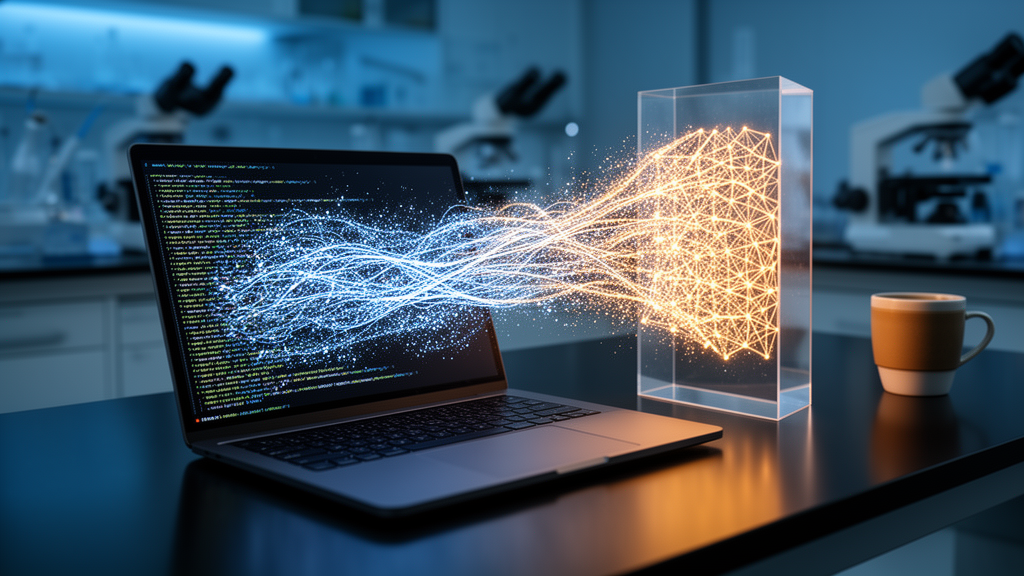
Machine learning now touches some of the most sensitive information people generate, from medical records to financial transactions, and the push to keep that data private while still extracting intelligence from it has become one of the defining tensions of modern AI. A new peer-reviewed survey, published open access in Artificial Intelligence Review, examines a cryptographic answer to this tension: fully homomorphic encryption, or FHE, a technique that allows computations to be performed directly on encrypted data without ever decrypting it. The appeal of FHE is easy to state.

If a model can operate on ciphertexts, the party holding the data never has to reveal it to the party running the computation. In principle, this offers a cryptographically rigorous foundation for privacy-preserving machine learning in healthcare, finance, and user-facing services, where exposing raw data is often the greatest risk. In practice, the survey's authors argue, integrating FHE into modern machine learning pipelines is far from straightforward.

The encryption imposes substantial constraints on arithmetic, numerical precision, and computational efficiency, and these constraints do not sit quietly at the edge of a system. They fundamentally affect how models are designed, which algorithms can be selected in the first place, and how the resulting systems perform. The review examines how a wide range of machine learning models, including traditional algorithms, deep neural networks, and emerging transformer architectures, have been adapted to operate under the restrictions that FHE imposes.

A central contribution of the paper is a unifying taxonomy that organizes the literature along key design dimensions. These include the choice of encryption scheme, strategies for handling nonlinear operations, which are notoriously difficult under encrypted arithmetic, the families of models being adapted, system-level optimizations, and the privacy objectives each approach pursues. The framework is intended to make it easier for researchers to compare methods that would otherwise be scattered across cryptography and machine learning venues.

Using this framework, the authors synthesize existing approaches and analyze the trade-offs between accuracy, efficiency, and security that recur throughout the field. They also identify recurring design patterns across the literature, offering a structured picture of how practitioners have repeatedly solved the same classes of problems when running learning systems on encrypted data. The survey does not stop at summarization.

It discusses practical limitations and deployment considerations that shape whether privacy-preserving machine learning under encryption can move from demonstration to production, and it lays out open research challenges that the authors see as defining the field's future direction. The abstract makes clear that these challenges remain open rather than solved. By bridging cryptographic techniques and modern AI system design, the authors position the work as a reference for researchers and practitioners seeking to build machine learning systems that are secure, scalable, and trustworthy.

As machine learning continues to spread into domains where data sensitivity is paramount, the survey suggests that managing the costs and constraints of encrypted computation will be central to making privacy-preserving AI practical.

Subject of Research: Machine learning over encrypted data: a survey of fully homomorphic encryption for AI systems

Article Title: Machine learning over encrypted data: a survey of fully homomorphic encryption for AI systems

Article References: Davidson, D., Jackson, M., Hussain, R., Xiong, Z., & Son, J. (2026). Machine learning over encrypted data: a survey of fully homomorphic encryption for AI systems. Artificial Intelligence Review. https://doi.org/10.1007/s10462-026-11707-2

Image Credits: AI Generated

DOI: 10.1007/s10462-026-11707-2

Keywords: Machine, learning, over, encrypted, data, survey, fully, homomorphic, encryption, systems, scientific research

Cite Scienmag News

Teresa Odom. (October 26, 2026). Survey maps how machine learning can run on encrypted data. Scienmag. https://scienmag.com/survey-maps-how-machine-learning-can-run-on-encrypted-data/

Teresa Odom. "Survey maps how machine learning can run on encrypted data." Scienmag, 26 October 2026, https://scienmag.com/survey-maps-how-machine-learning-can-run-on-encrypted-data/. Accessed 26 October 2026.

Teresa Odom. "Survey maps how machine learning can run on encrypted data." Scienmag. October 26, 2026. https://scienmag.com/survey-maps-how-machine-learning-can-run-on-encrypted-data/


Tags: challenges of homomorphic encryption in machine learningcomputational constraints of FHEcryptographic methods for secure AIdataencryptedencrypted computation on sensitive user dataencrypted data processing in healthcareencrypted machine learning pipelinesencryptionfullyfully homomorphic encryption in AIhomomorphicintegration of cryptography in AI systemslearninglimitations and prospects of homomorphic encryptionmachineoverprivacy-focused AI applicationsprivacy-preserving machine learningScientific Researchsecure financial data analysis with encryptionsurveysystems
Share26Tweet16
Previous Post

Faulty vesicle recycling gene VPS25 linked to lethal neonatal encephalopathy

Next Post

First fully marine amphibian relative discovered in 237-million-year-old Chinese rocks

Related Posts

Lightweight SLAM System Helps Robots Navigate Crowded, Changing Scenes
Technology and Engineering

Lightweight SLAM System Helps Robots Navigate Crowded, Changing Scenes

October 26, 2026
AI Framework Spots Unsafe Miner Behavior in Real Time with Dual Attention Pose Network
Technology and Engineering

AI Framework Spots Unsafe Miner Behavior in Real Time with Dual Attention Pose Network

October 26, 2026
Adaptive Probability Maps Sharpen AI Human Pose Estimates Under Occlusion
Technology and Engineering

Adaptive Probability Maps Sharpen AI Human Pose Estimates Under Occlusion

October 26, 2026
Phase-aware pose modeling sharpens throw-distance prediction from broadcast video
Technology and Engineering

Phase-aware pose modeling sharpens throw-distance prediction from broadcast video

October 26, 2026
New Workflow Sizes Aircraft Flap Structures in Minutes to Guide Early Wing Design
Technology and Engineering

New Workflow Sizes Aircraft Flap Structures in Minutes to Guide Early Wing Design

October 26, 2026
AI is rewriting social engineering, from phishing defenses to autonomous machine deception
Science News

AI is rewriting social engineering, from phishing defenses to autonomous machine deception

October 26, 2026
Next Post
First fully marine amphibian relative discovered in 237-million-year-old Chinese rocks

First fully marine amphibian relative discovered in 237-million-year-old Chinese rocks

  • Mothers who receive childcare support from maternal grandparents show more optimized

    Mothers who receive childcare support from maternal grandparents show more parental warmth, finds NTU Singapore study

    27656 shares
    Share 11059 Tweet 6912
  • University of Seville Breaks 120-Year-Old Mystery, Revises a Key Einstein Concept

    1061 shares
    Share 424 Tweet 265
  • Bee body mass, pathogens and local climate influence heat tolerance

    682 shares
    Share 273 Tweet 171
  • Researchers record first-ever images and data of a shark experiencing a boat strike

    546 shares
    Share 218 Tweet 137
  • Groundbreaking Clinical Trial Reveals Lubiprostone Enhances Kidney Function

    531 shares
    Share 212 Tweet 133
Science

Embark on a thrilling journey of discovery with Scienmag.com—your ultimate source for cutting-edge breakthroughs. Immerse yourself in a world where curiosity knows no limits and tomorrow’s possibilities become today’s reality!

RECENT NEWS

  • Conservation Genomists Call Time on the Vague Term Hybrid Swarm
  • First fully marine amphibian relative discovered in 237-million-year-old Chinese rocks
  • Survey maps how machine learning can run on encrypted data
  • Faulty vesicle recycling gene VPS25 linked to lethal neonatal encephalopathy

Categories

  • Agriculture
  • Anthropology
  • Archaeology
  • Athmospheric
  • Biology
  • Biotechnology
  • Blog
  • Bussines
  • Cancer
  • Chemistry
  • Climate
  • Earth Science
  • Editorial Policy
  • Marine
  • Mathematics
  • Medicine
  • Pediatry
  • Policy
  • Psychology & Psychiatry
  • Science Education
  • Science News
  • Social Science
  • Space
  • Technology and Engineering

Subscribe to Blog via Email

Enter your email address to subscribe to this blog and receive notifications of new posts by email.

Join 5,151 other subscribers

© 2025 Scienmag - Science Magazine

Welcome Back!

Login to your account below

Forgotten Password?

Retrieve your password

Please enter your username or email address to reset your password.

Log In
No Result
View All Result
  • HOME
  • SCIENCE NEWS
  • CONTACT US

© 2025 Scienmag - Science Magazine

Discover more from Science

Subscribe now to keep reading and get access to the full archive.

Continue reading