


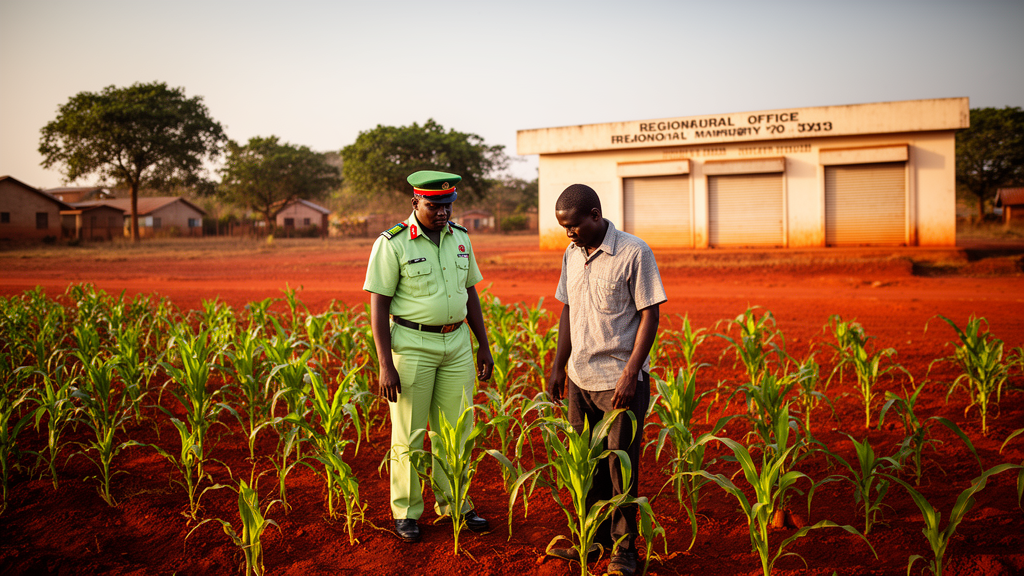
A qualitative study of Ghana’s decentralization reforms has found that, despite successive governments introducing institutional reforms and legal frameworks intended to strengthen decentralized governance, agricultural extension services delivered through local assemblies remain constrained by irregular funding, the recentralization of central government procurement, and the actions of some development partners. The research, published in Humanities and Social Sciences Communications, examined the Agriculture Department’s integration into Ghana’s Metropolitan, Municipal, and District Assemblies (MMDAs), the local government units responsible for delivering decentralized agricultural extension services.
The study is underpinned by the Soufflé theory of decentralization and used a qualitative research approach to investigate both governments’ efforts to strengthen decentralization and the practical difficulties that undermine decentralized agricultural extension delivery. According to the findings, while policy frameworks have been established to devolve agricultural services to the local level, severe implementation challenges persist that limit the effectiveness of the district-level institutions charged with providing these services.
Central among the problems identified is the treatment of the District Assemblies Common Fund (DACF), the fiscal mechanism intended to resource local assemblies. The study argues that the capping of the DACF, together with persistent delays in its disbursement, renders the MMDAs ineffective and underscores the predicaments that circumscribe agricultural extension service delivery across Ghana. When locally allocated funds are capped or arrive late, district agriculture departments face constraints in carrying out the extension work that decentralization was designed to support.
The research also points to recentralization of central government procurement as a factor working against the decentralization process, alongside conduct by some development partners that the study identifies as undermining local delivery structures. These findings suggest that the obstacles facing Ghana’s decentralized agricultural services are not limited to domestic fiscal arrangements but extend to how procurement authority and external development support interact with local governance.
Overall, the study frames Ghana’s decentralization agenda in the agricultural sector as an effort with sound intentions that has been tested by harsh operational realities. It positions the funding and procurement issues affecting the MMDAs as central to understanding why decentralized agricultural extension services have struggled to function as envisioned, and it argues that these predicaments must be addressed for local-level agricultural service delivery to become effective.
Subject of Research: Decentralization of agricultural extension services in Ghana
Article Title: Decentralization in Ghana: noble intentions under harsh realities in the agricultural sector
Article References: Pervarah, M. (2026). Decentralization in Ghana: noble intentions under harsh realities in the agricultural sector. Humanities and Social Sciences Communications. https://doi.org/10.1057/s41599-026-09416-w
Image Credits: AI Generated
DOI: 10.1057/s41599-026-09416-w
Keywords: Ghana, decentralization, agricultural extension, local government, MMDAs, District Assemblies Common Fund, public service delivery, governance, funding delays, procurement, noble, intentions
Cite Scienmag News
Courtney Benton. (October 26, 2026). Ghana’s agricultural decentralization undermined by funding delays and recentralization. Scienmag. https://scienmag.com/ghanas-agricultural-decentralization-undermined-by-funding-delays-and-recentralization/
Courtney Benton. "Ghana’s agricultural decentralization undermined by funding delays and recentralization." Scienmag, 26 October 2026, https://scienmag.com/ghanas-agricultural-decentralization-undermined-by-funding-delays-and-recentralization/. Accessed 26 October 2026.
Courtney Benton. "Ghana’s agricultural decentralization undermined by funding delays and recentralization." Scienmag. October 26, 2026. https://scienmag.com/ghanas-agricultural-decentralization-undermined-by-funding-delays-and-recentralization/


