

Sunday, October 25, 2026
Science
No Result
View All Result
  • Login
  • HOME
  • SCIENCE NEWS
  • CONTACT US
  • HOME
  • SCIENCE NEWS
  • CONTACT US
No Result
View All Result
Scienmag
No Result
View All Result
Home Science News Medicine

Haptic Design and Material Choice Steer Performance of Dual-Optic Accommodative Lenses

October 25, 2026
in Medicine
Ophelia Keating
By Ophelia Keating Scienmag Editorial Profile - Health Services Research
Reading Time: 3 mins read
0
Haptic Design and Material Choice Steer Performance of Dual-Optic Accommodative Lenses

Haptic Design and Material Choice Steer Performance of Dual-Optic Accommodative Lenses

65
SHARES
587
VIEWS
Share on FacebookShare on Twitter
ADVERTISEMENT

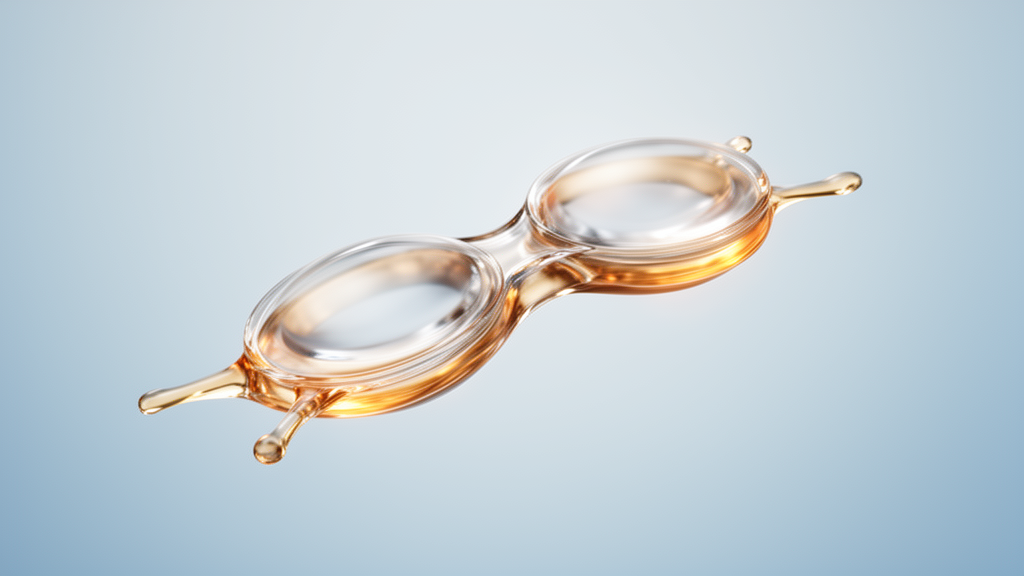
Artificial lenses that could restore the eye’s lost ability to change focus remain a goal of cataract surgery research, and a new computational study suggests that two engineering choices, the shape of the lens supports and the materials used, may strongly shape how such devices perform. In a finite element analysis published in Annals of Biomedical Engineering, researchers built twelve simulated dual-optic accommodative intraocular lenses and subjected each to the same inward radial compression, then traced how mechanical deformation translated into changes in optical power. The results show that haptic design and material selection jointly determine both the mechanical behavior and the paraxial power response of these lenses.

Dual-optic accommodative intraocular lenses, or AIOLs, consist of two optics connected by flexible haptic supports, and they are intended to mimic the natural accommodation that the crystalline lens loses with age and after cataract removal. The team, which included Yunxin Xia, Jiangzhen Guo, Chunjing Tao, Barbara K. Pierscionek and Kehao Wang, constructed models combining three haptic designs, described as non-folded, mono-folded, and multi-folded, with four different combinations of optic materials. A prescribed radial inward displacement was applied to every model, allowing the researchers to calculate deformation patterns, reaction forces, and stress distributions. The resulting deformations were then fed into optical ray tracing to evaluate how much the refractive power changed under each configuration.

The simulations revealed a clear hierarchy among the haptic designs. At a common radial displacement, both the multi-folded and mono-folded haptics produced greater changes in optical power than the non-folded design. The multi-folded design yielded a greater power change per unit force than the mono-folded design, meaning that less mechanical effort is required for the same optical effect in the simulated conditions. Material combinations also influenced the magnitude of refractive power change, indicating that neither geometry nor material properties alone can be optimized in isolation when designing these lenses.

The stress analysis added a further dimension to the comparison. In the mono-folded and multi-folded configurations, high stresses concentrated at the peripheral region of the anterior optic, while in the non-folded design they accumulated at the junction between the posterior optic and the haptic. The authors conclude that the simulated paraxial power response and biomechanical behavior of dual-optic AIOLs are jointly determined by haptic design and material selection, and that both factors should be considered together in future AIOL development.

The study is limited by its computational nature: the findings derive from finite element modeling under prescribed radial compression rather than from clinical or experimental measurements, so real-world performance in the eye remains to be verified. Even so, the work offers a practical engineering reference. By showing that a multi-folded haptic architecture converted mechanical compression into optical power change more efficiently than the alternatives in these simulations, and by pinpointing where stresses concentrate in each design, the analysis gives lens developers concrete parameters to refine. For cataract patients who currently rely on fixed-focus artificial lenses, the prospect of a truly accommodating implant depends on exactly this kind of optomechanical optimization, and the new models suggest that the path forward runs through careful co-design of haptic geometry and lens materials.

Subject of Research: Optomechanical finite element analysis of dual-optic accommodative intraocular lenses

Article Title: An Optomechanical Analysis Revealing the Importance of Haptic Design and Material Selection in Shaping the Performance of Dual-Optic Accommodative IOLs

Article References: Xia, Y., Guo, J., Tao, C., Pierscionek, B. K., & Wang, K. (2026). An Optomechanical Analysis Revealing the Importance of Haptic Design and Material Selection in Shaping the Performance of Dual-Optic Accommodative IOLs. Annals of Biomedical Engineering. https://doi.org/10.1007/s10439-026-04441-x

Image Credits: AI Generated

DOI: 10.1007/s10439-026-04441-x

Keywords: accommodative intraocular lenses, cataract surgery, finite element analysis, haptic design, biomaterials, optics, biomedical engineering, optomechanics, ray tracing, stress analysis, Optomechanical, Analysis

Cite Scienmag News

Ophelia Keating. (October 25, 2026). Haptic Design and Material Choice Steer Performance of Dual-Optic Accommodative Lenses. Scienmag. https://scienmag.com/haptic-design-and-material-choice-steer-performance-of-dual-optic-accommodative-lenses/


Ophelia Keating. "Haptic Design and Material Choice Steer Performance of Dual-Optic Accommodative Lenses." Scienmag, 25 October 2026, https://scienmag.com/haptic-design-and-material-choice-steer-performance-of-dual-optic-accommodative-lenses/. Accessed 25 October 2026.

Ophelia Keating. "Haptic Design and Material Choice Steer Performance of Dual-Optic Accommodative Lenses." Scienmag. October 25, 2026. https://scienmag.com/haptic-design-and-material-choice-steer-performance-of-dual-optic-accommodative-lenses/

Tags: accommodative intraocular lensesanalysisbiomaterialsbiomedical engineeringcataract surgerydesign optimization for cataract surgery implantsdual-optic AIOL performancefinite element analysisfinite element analysis of intraocular lenseshaptic designHaptic design in accommodative intraocular lensesinfluence of haptic support on lens functionalitylens support shapes and optical powermaterial selection for artificial eye lensesmaterials impact on intraocular lens flexibilitymechanical deformation of accommodative lensesmodeling of accommodative lens behavioroptical power response in AIOLsopticsOptomechanicaloptomechanicsray tracingstress analysisstress distribution in dual-optic lenses
Share26Tweet16
Previous Post

Mamba-based model tames noisy urban traffic prediction with frequency-domain filtering

Next Post

Bean Plants Thrive When Rhizobium Inoculation Meets Moderate Swine Compost Rates

Related Posts

Research report: Case Report: Superficial spreading squamous cell carcinoma of the cervix: a retrospective single-center case series and review of the literature
Medicine

Research report: Case Report: Superficial spreading squamous cell carcinoma of the cervix: a retrospective single-center case series and review of the literature

October 25, 2026
Malaria’s anemia link is strongest in older Tanzanian children
Medicine

Malaria’s anemia link is strongest in older Tanzanian children

October 25, 2026
Twenty-Year Groin Abscesses Traced to a Rare Appendiceal Fistula
Medicine

Twenty-Year Groin Abscesses Traced to a Rare Appendiceal Fistula

October 25, 2026
US vaping became more frequent and widespread from 2013 to 2023
Medicine

US vaping became more frequent and widespread from 2013 to 2023

October 25, 2026
Taurolidine locks associated with fewer pediatric catheter infections, safety remains uncertain
Medicine

Taurolidine locks associated with fewer pediatric catheter infections, safety remains uncertain

October 25, 2026
Age and West Nile virus patterns in eastern Hungarian CNS infections
Medicine

Age and West Nile virus patterns in eastern Hungarian CNS infections

October 25, 2026
Next Post
Bean Plants Thrive When Rhizobium Inoculation Meets Moderate Swine Compost Rates

Bean Plants Thrive When Rhizobium Inoculation Meets Moderate Swine Compost Rates

  • Mothers who receive childcare support from maternal grandparents show more optimized

    Mothers who receive childcare support from maternal grandparents show more parental warmth, finds NTU Singapore study

    27656 shares
    Share 11059 Tweet 6912
  • University of Seville Breaks 120-Year-Old Mystery, Revises a Key Einstein Concept

    1061 shares
    Share 424 Tweet 265
  • Bee body mass, pathogens and local climate influence heat tolerance

    682 shares
    Share 273 Tweet 171
  • Researchers record first-ever images and data of a shark experiencing a boat strike

    546 shares
    Share 218 Tweet 137
  • Groundbreaking Clinical Trial Reveals Lubiprostone Enhances Kidney Function

    531 shares
    Share 212 Tweet 133
Science

Embark on a thrilling journey of discovery with Scienmag.com—your ultimate source for cutting-edge breakthroughs. Immerse yourself in a world where curiosity knows no limits and tomorrow’s possibilities become today’s reality!

RECENT NEWS

  • Bean Plants Thrive When Rhizobium Inoculation Meets Moderate Swine Compost Rates
  • Haptic Design and Material Choice Steer Performance of Dual-Optic Accommodative Lenses
  • Mamba-based model tames noisy urban traffic prediction with frequency-domain filtering
  • Pelletized straw cuts nitrous oxide emissions in saline-alkali soil

Categories

  • Agriculture
  • Anthropology
  • Archaeology
  • Athmospheric
  • Biology
  • Biotechnology
  • Blog
  • Bussines
  • Cancer
  • Chemistry
  • Climate
  • Earth Science
  • Editorial Policy
  • Marine
  • Mathematics
  • Medicine
  • Pediatry
  • Policy
  • Psychology & Psychiatry
  • Science Education
  • Science News
  • Social Science
  • Space
  • Technology and Engineering

Subscribe to Blog via Email

Enter your email address to subscribe to this blog and receive notifications of new posts by email.

Join 5,151 other subscribers

© 2025 Scienmag - Science Magazine

Welcome Back!

Login to your account below

Forgotten Password?

Retrieve your password

Please enter your username or email address to reset your password.

Log In
No Result
View All Result
  • HOME
  • SCIENCE NEWS
  • CONTACT US

© 2025 Scienmag - Science Magazine

Discover more from Science

Subscribe now to keep reading and get access to the full archive.

Continue reading