


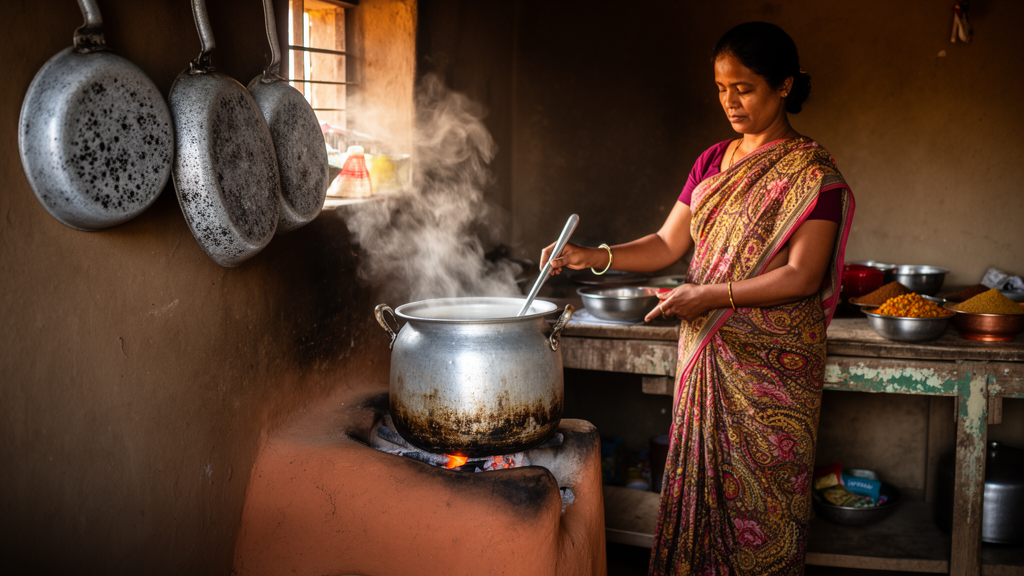
Artisanal aluminum cookware, cast from recycled scrap metal in small workshops across Bangladesh, releases measurable amounts of lead into food during ordinary cooking, according to a study published in the Journal of Exposure Science & Environmental Epidemiology. The research team, led by Raphael Kim and colleagues including Jenna E. Forsyth, combined laboratory extraction tests with real cooking experiments to quantify how much lead migrates from these pots into the meals prepared in them. Their results show that lead release is not a marginal or occasional event: it occurs under typical household conditions and, in the experiments reported, consistently pushed food above the United States Food and Drug Administration limit of 10 micrograms per kilogram for food intended for babies and young children.
The investigators used two complementary experimental approaches. The first simulated cooking liquid foods by reacting pot material with 4 percent acetic acid. The second assessed solid foods by cooking plain rice and khichuri, a widely eaten rice dish, in the pots. Lead concentrations in the pots themselves were measured using X-ray fluorescence, and lead released into the extraction solutions and cooked foods was measured in the laboratory. This design allowed the team to separate the effects of acidity, pot age, and physical handling on lead transfer.
The acetic acid experiments revealed that lead release is driven by three main factors: acidity, the usage history of the pot, and physical agitation. Abrasive scrubbing produced the highest lead concentrations of any condition tested. In new pots, scrubbing released roughly five times more lead than use without scrubbing during the initial use, and nearly three times more during the second use. Because abrasive cleaning is a routine practice in households using these pots, the authors note that this common behavior accelerates surface degradation and intensifies lead release rather than removing it.
Usage history emerged as a decisive variable. Lead release was highest during the initial uses of new pots and declined progressively with continued use. The pattern suggests that the most readily leachable lead resides in the pot surface and is depleted as the pot is used repeatedly. Used pots released less lead than new ones under the same conditions, but the decline did not bring food contents below regulatory thresholds in the experiments reported.
The cooking experiments translated these laboratory findings into dietary terms. In new pots, mean lead contents in food reached 305 micrograms per kilogram for rice and 420 micrograms per kilogram for khichuri during the first use. Cooking rice in used pots also resulted in lead release. Even after repeated use, both initially new pots and pots already in service consistently yielded lead contents exceeding the FDA limit of 10 micrograms per kilogram for food intended for babies and young children. The authors emphasize that these are experimental measurements of lead transfer under the tested conditions, not direct measurements of lead in the blood of consumers.
Lead is a potent neurotoxin, and exposure through household items is a public health concern, particularly for children. The study positions artisanal cookware as a suspected but previously under-quantified source of exposure in Bangladesh, where such pots are cast from scrap metal. The X-ray fluorescence measurements of the pot material identified the lead present in the cookware itself, providing the reservoir from which extraction into food occurs.
The study’s impact statement frames artisanal aluminum cookware as a significant and underrecognized source of dietary lead exposure in Bangladesh, embedded in everyday food preparation. Because lead is released at quantities consistently exceeding regulatory limits under typical cooking conditions, the authors argue that this pathway should be considered in public health efforts to reduce lead exposure at the household level. They call for targeted interventions, improved manufacturing standards, and regulatory oversight of the artisanal cookware sector.
The findings also carry practical implications for how exposure risk changes over a pot’s lifetime. The substantially greater release from new pots, with the highest concentrations during initial use followed by progressive decline, suggests that the period immediately after purchase is when dietary lead transfer is greatest. At the same time, the persistence of exceedances in used pots indicates that continued use does not eliminate the hazard, and abrasive cleaning can re-expose degraded surfaces. The authors state that all data generated or analyzed in the study are provided in the Supplementary Information, allowing independent scrutiny of the extraction and cooking measurements underlying these conclusions.
Subject of Research: Lead extraction from artisanal aluminum cookware into food in Bangladesh
Article Title: Toxic cookware: lead exposure from aluminum pots in Bangladesh
Article References: Kim, R., Namayandeh, A., McGoran, H., Lopez, A., Sultana, J., Baker, M., Rahman, M., Luby, S. P., Fendorf, S., & Forsyth, J. E. (2026). Toxic cookware: lead exposure from aluminum pots in Bangladesh. Journal of Exposure Science & Environmental Epidemiology. https://doi.org/10.1038/s41370-026-00988-y
Image Credits: AI Generated
DOI: 10.1038/s41370-026-00988-y
Keywords: lead exposure, aluminum cookware, Bangladesh, food safety, khichuri, rice cooking, acetic acid extraction, scrap metal, FDA limits, XRF, public health, neurotoxin
Cite Scienmag News
Ophelia Keating. (October 25, 2026). Lead leaches from artisanal aluminum cookware in Bangladeshi kitchens. Scienmag. https://scienmag.com/lead-leaches-from-artisanal-aluminum-cookware-in-bangladeshi-kitchens/
Ophelia Keating. "Lead leaches from artisanal aluminum cookware in Bangladeshi kitchens." Scienmag, 25 October 2026, https://scienmag.com/lead-leaches-from-artisanal-aluminum-cookware-in-bangladeshi-kitchens/. Accessed 25 October 2026.
Ophelia Keating. "Lead leaches from artisanal aluminum cookware in Bangladeshi kitchens." Scienmag. October 25, 2026. https://scienmag.com/lead-leaches-from-artisanal-aluminum-cookware-in-bangladeshi-kitchens/


