


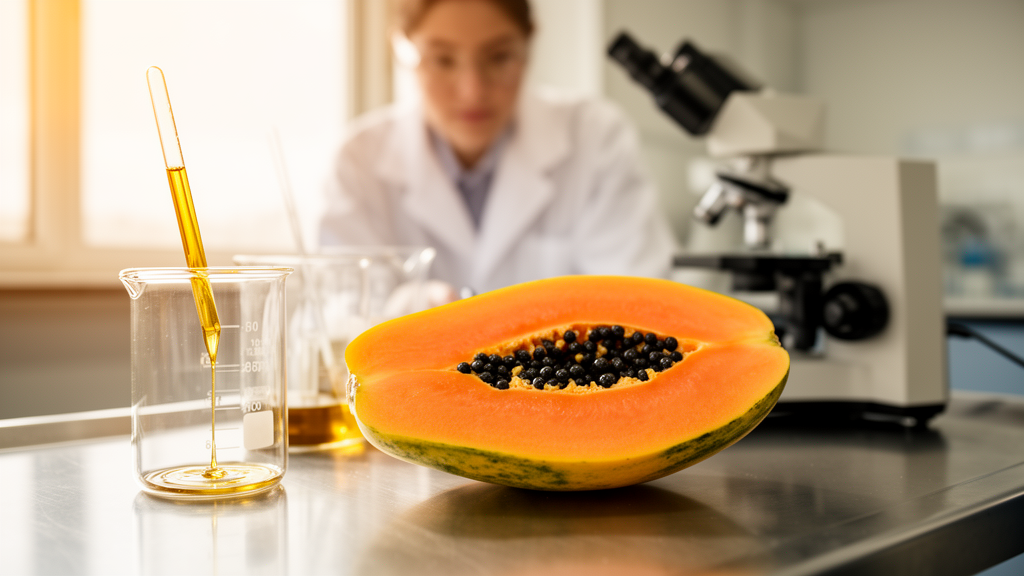
A comprehensive review of experimental research on Carica papaya, the tropical plant better known as papaya, concludes that preparations made from its leaves, seeds, fruit, and fermented products display neuroprotective activity across a range of laboratory and animal models of neurodegeneration. The analysis, which synthesized peer-reviewed in vitro and in vivo studies examining antioxidant, anti-inflammatory, and neuromodulatory outcomes, reports improvements in oxidative-stress markers, antioxidant enzyme activity, neurotransmitter balance, amyloid-beta-related toxicity, and selected behavioral measures. Yet the review is equally explicit about the limits of that evidence: nearly everything known about papaya’s effects on the brain comes from test tubes and small animal experiments, and no clinical trial identified in the review tested any papaya preparation against a diagnosed neurodegenerative disorder.
The motivation for the synthesis lies in the scale of the problem it addresses. Neurodegenerative disorders, including Alzheimer’s disease, Parkinson’s disease, Huntington’s disease, and stroke-related neurodegeneration, are progressive conditions marked by the gradual loss of neuronal structure and function. Alzheimer’s disease alone affects more than 50 million people worldwide, a figure projected to triple by 2050 as populations age, with annual care costs estimated at around one trillion dollars. Current therapies, such as cholinesterase inhibitors for Alzheimer’s disease and levodopa for Parkinson’s disease, offer largely symptomatic benefit without halting disease progression, and they carry side effects including nausea, hallucinations, and cognitive disturbances. This therapeutic gap has fueled interest in natural products whose phytochemicals might act on several disease mechanisms at once.
Papaya’s phytochemical profile is unusually diverse and unevenly distributed across the plant. Liquid chromatography–mass spectrometry analyses have identified phenolic acids and flavonoids such as caffeic acid, gallic acid derivatives, quercetin, rutin, kaempferol, and myricetin in the fruit, with the peel containing a broader spectrum than the flesh. The pulp is dominated by carotenoids, chiefly lycopene, followed by beta-cryptoxanthin and beta-carotene. Leaves contain a complex mixture of phenylpropanoids and flavonoids, including chlorogenic, quinic, coumaric, vanillic, and protocatechuic acids alongside naringenin, hesperidin, and rutin. The seeds are rich in the glucosinolate glucotropaeolin, which yields benzyl isothiocyanate upon enzymatic hydrolysis, compounds largely absent from the pulp. This chemical heterogeneity means that extracts from different plant parts are, in effect, different drugs, a point the review treats as central to interpreting the literature.
In cell-free and cellular assays, papaya preparations show measurable antioxidant and enzyme-inhibitory activity. A methanolic leaf extract scavenged DPPH and ABTS radicals with half-maximal inhibitory concentrations of 59.27 and 39.84 micrograms per milliliter respectively, and inhibited acetylcholinesterase at 60.95 micrograms per milliliter. An alkaloid-enriched leaf extract inhibited butyrylcholinesterase by 75.9 percent, a mechanism relevant to preserving acetylcholine in Alzheimer’s disease, while an aqueous leaf extract inhibited xanthine oxidase by 75.68 percent, though that study involved no neuronal cells and is classified as indirect evidence. The strongest direct neuronal signal came from fermented papaya preparation, a commercially fermented fruit product, which in APP-overexpressing SH-SY5Y neuroblastoma cells attenuated copper-associated amyloid-beta neurotoxicity, increased superoxide dismutase activity, and reduced intracellular calcium, reactive oxygen species, nitric oxide, and amyloid-beta–copper-mediated injury.
Animal models of Alzheimer-like pathology provided behavioral corroboration. In a zebrafish model, seed extract at 50 to 100 milligrams per kilogram increased the time spent and entries into the green arm of a T-maze and into a light chamber while decreasing time in the red arm and dark chamber, a pattern the authors interpreted as improved spatial memory and reduced anxiety, accompanied by biochemical and histological changes. In PC12-derived neurons, a tertiary butyl methyl ether fraction of a methanolic leaf extract protected against anti-NGF-induced cytotoxicity at concentrations from 3.125 to 100 micrograms per milliliter, apparently by inhibiting pathogenic protein aggregation and preserving cytoskeletal microtubule integrity, and the fraction was reported as non-cytotoxic under the tested conditions. Both studies measured endpoints specific to their models, and neither establishes efficacy in patients.
Aluminum-induced neurotoxicity models, which reproduce oxidative damage, cholinergic disruption, and cognitive impairment, yielded some of the most detailed biochemical data. In male Wistar rats, with only six animals per group, oral papaya leaf extract at 200 to 400 milligrams per kilogram significantly increased superoxide dismutase, catalase, glutathione reductase, and acetylcholine levels while reducing lipid peroxidation. A separate study in aluminum lactate-treated rats, also with six animals per group, found that 250 milligrams per kilogram of leaf, fruit, or seed extracts each improved distinct markers: leaf extract produced the strongest reduction in brain acetylcholinesterase activity, fruit extract lowered both acetylcholinesterase and lipid peroxidation, and a petroleum ether seed extract achieved the greatest reduction in brain malondialdehyde. Extracts also reduced tumor necrosis factor-alpha, nitrite, and cholinesterase activity, though the study assessed mainly biochemical markers and did not evaluate cognition, amyloid-beta, or tau pathology.
Other models extended the picture. In a D-galactose-induced brain-aging model using just five albino Wistar rats, intraperitoneal seed and pulp extract at 150 milligrams per kilogram improved cognitive learning, memory, muscular strength, and spatial memory while raising gamma-aminobutyric acid, superoxide dismutase, glutathione peroxidase, and catalase. Fermented papaya preparation activated the Nrf2 pathway in primary astrocytes and neuronal cultures, upregulating NQO1, glutathione S-transferase, and heme oxygenase-1, and pretreatment suppressed 6-hydroxydopamine-induced dopaminergic neuronal loss; two weeks of oral administration in mice activated Nrf2 and increased striatal glutathione. In a rat model of focal cerebral ischemia, ripe papaya extract at 50, 150, and 450 milligrams per kilogram for 14 days increased antioxidant enzyme activities while reducing lipid peroxidation, cerebral infarct volume, and escape latency. Leaf extract also protected hydrogen-peroxide-stressed SH-SY5Y cells by reducing reactive oxygen species and NF-kappa-B signaling while increasing Nrf2/HO-1 expression and anti-apoptotic BCL-2.
Several studies fall into the indirect category because they measured no neurological endpoints at all. Fruit extract in mice increased glutathione S-transferase, glutathione peroxidase, glutathione reductase, and glucose-6-phosphate dehydrogenase in a systemic oxidative-damage model. Leaf extract reduced cyclophosphamide-induced oxidative stress in mice by raising GST and catalase and lowering thiobarbituric acid-reactive substances. Aqueous fruit extract attenuated acrylamide-induced oxidative stress in rats over 40 days, lowering malondialdehyde while raising glutathione, antioxidant enzymes, and immunoglobulins. In pregnant Wistar rats exposed to fluoride, leaf extract given in drinking water for 52 days restored neurotransmitter balance, increasing acetylcholine, norepinephrine, dopamine, and serotonin while reducing glutamate, aspartate, and epinephrine. A rat study of diabetic encephalopathy combined papaya pulp juice with semaglutide and found improved antioxidant defenses and preserved hippocampal and cortical neuronal architecture, but because no papaya-only group was included, the findings support a complementary role rather than independent efficacy.
Toxicity data offer cautious reassurance within tested limits. Aqueous fruit extract showed a median lethal dose of 2520 milligrams per kilogram in rats with no hepatic, renal, or hematological abnormalities, and no mortality was reported for methanolic leaf extract up to 1500 milligrams per kilogram, aqueous leaf extract above 2000 milligrams per kilogram, or methanolic leaf extract up to 3200 milligrams per kilogram in mice, though mild behavioral changes such as reduced motor activity and ataxia appeared in some studies. A 10 percent ethanolic leaf extract produced no acute toxicity at 5000 milligrams per kilogram and no significant chronic effects at doses up to 5000 milligrams per kilogram per day for 180 days. However, a 28-day study recorded alterations in mean corpuscular volume, alanine aminotransferase, alkaline phosphatase, and triglycerides at higher doses in male rats, indicating that safety depends on plant part, extraction method, dose, and duration. Human studies to date involve only non-neurological conditions: papaya leaf extract accelerated platelet recovery in dengue-associated thrombocytopenia with good tolerability, and a combined fermented papaya and Morinda citrifolia preparation reduced interleukin-6, interleukin-8, and nitric oxide metabolites in post-COVID participants, but the latter was a multi-botanical intervention never designed to assess neurological outcomes.
The review’s synthesis is therefore a call for rigor rather than a endorsement of papaya as medicine. The specific bioactive compounds responsible for the observed effects remain unidentified because most studies used crude extracts; no pharmacokinetic data on bioavailability or blood–brain barrier penetration were found among the included studies; standardized extraction protocols and validated dose–response relationships are undefined; and many animal studies relied on groups of roughly five to eight animals, limiting statistical power and reproducibility. The authors argue that future work should prioritize bioassay-guided fractionation to pinpoint active constituents, comprehensive pharmacokinetic profiling, and rigorously designed randomized controlled trials with validated neurological outcomes. Until then, the neuroprotective reputation of the papaya tree rests on promising but preliminary preclinical evidence, not on any demonstrated benefit for human neurodegenerative disease.
Subject of Research: Preclinical neuroprotective effects of Carica papaya preparations in experimental models of neurodegeneration
Article Title: Neuroprotective Effects of Carica papaya in Experimental Models of Neurodegeneration: A Comprehensive Review
Article References: Hossan, R., Selim, S., Rakib, I. H., Sayeed, M. A., Chakrabarty, A., Hossain, M. A., Mia, E., Debnath, D., Bristy, A. H., & Al Hasan, M. S. (2026). Neuroprotective Effects of Carica papaya in Experimental Models of Neurodegeneration: A Comprehensive Review. Food Science & Nutrition, 14(10), Article e72507. https://doi.org/10.1002/fsn3.72507
Image Credits: AI Generated
DOI: 10.1002/fsn3.72507
Keywords: Carica papaya, neuroprotection, Alzheimer's disease, oxidative stress, Nrf2 pathway, fermented papaya preparation, phytochemicals, preclinical studies, neurodegenerative disorders, acetylcholinesterase inhibition, toxicology, natural products
Cite Scienmag News
Diana Fleming. (October 24, 2026). Papaya Extracts Show Neuroprotective Signals in Preclinical Models, Review Finds. Scienmag. https://scienmag.com/papaya-extracts-show-neuroprotective-signals-in-preclinical-models-review-finds/
Diana Fleming. "Papaya Extracts Show Neuroprotective Signals in Preclinical Models, Review Finds." Scienmag, 24 October 2026, https://scienmag.com/papaya-extracts-show-neuroprotective-signals-in-preclinical-models-review-finds/. Accessed 24 October 2026.
Diana Fleming. "Papaya Extracts Show Neuroprotective Signals in Preclinical Models, Review Finds." Scienmag. October 24, 2026. https://scienmag.com/papaya-extracts-show-neuroprotective-signals-in-preclinical-models-review-finds/


