

Saturday, October 24, 2026
Science
No Result
View All Result
  • Login
  • HOME
  • SCIENCE NEWS
  • CONTACT US
  • HOME
  • SCIENCE NEWS
  • CONTACT US
No Result
View All Result
Scienmag
No Result
View All Result
Home Science News Psychology & Psychiatry

Apology and forgiveness seen as uncertain moral horizons among incarcerated men and women

October 24, 2026
in Psychology & Psychiatry
Glenn Wilkins
By Glenn Wilkins Scienmag Editorial Profile - Clinical Psychology
Reading Time: 2 mins read
0
Apology and forgiveness seen as uncertain moral horizons among incarcerated men and women

Apology and forgiveness seen as uncertain moral horizons among incarcerated men and women

65
SHARES
587
VIEWS
Share on FacebookShare on Twitter
ADVERTISEMENT

Interviews with 40 people incarcerated in Israel reveal how men and women behind bars understand apology, forgiveness from others, and self-forgiveness, painting a picture in which saying sorry is a moral act but being forgiven remains an uncertain, often unreachable horizon. The study, published in BMC Psychology by Inbal Peleg-Koriat and Dana Weimann-Saks, drew on secondary qualitative analysis of interviews with 23 men and 17 women, using inductive thematic analysis to identify patterns in how participants talked about these processes.

Apology emerged in the accounts not as a formal or instrumental gesture but as a moral practice of acknowledgement, responsibility, and repair. Participants framed it as something owed to those harmed, tied to taking responsibility and showing respect. Forgiveness from others, by contrast, was perceived as uncertain, asymmetrical, and never guaranteed. Rather than being an automatic outcome of apology, it was often imagined as recognition that the person who caused harm is more than the offense itself.

A central tension ran through the interviews: participants wanted to be forgiven yet struggled to believe forgiveness could actually happen. The researchers link this gap between desire and disbelief to broader experiences of stigma and feelings of moral unworthiness among incarcerated people. Forgiveness, in this framing, functions less as an endpoint and more as an uncertain moral horizon that shapes identity and the possibility of change.

Within this sample, the analysis identified gendered emphases. Men more often discussed apology and forgiveness in relation to those they had harmed, responsibility, and respect, and their struggles with self-forgiveness were more often articulated through guilt and responsibility-taking. Women more often situated these processes within family, belonging, and identity, and their self-forgiveness struggles were more often expressed through shame and a sense of a flawed self.

The authors argue that these findings carry implications for rehabilitation, underscoring the importance of addressing apology, interpersonal forgiveness, and struggles over self-forgiveness in correctional settings, while recognizing that forgiveness from others may remain out of reach. By reconceptualizing forgiveness as an open-ended moral process rather than a fixed outcome, the study contributes to psychological and criminological understandings of desistance and identity change. As a qualitative study of 40 incarcerated individuals in Israel, the analysis reflects the perspectives of this particular group and the gendered emphases identified within it, rather than general population estimates.

Subject of Research: Apology, forgiveness from others, and self-forgiveness among incarcerated men and women in Israel

Article Title: “I wouldn’t forgive me”: apology, forgiveness from others, and self-forgiveness among incarcerated men and women

Article References: Peleg-Koriat, I., & Weimann-Saks, D. (2026). “I wouldn’t forgive me”: apology, forgiveness from others, and self-forgiveness among incarcerated men and women. BMC Psychology. https://doi.org/10.1186/s40359-026-05843-1

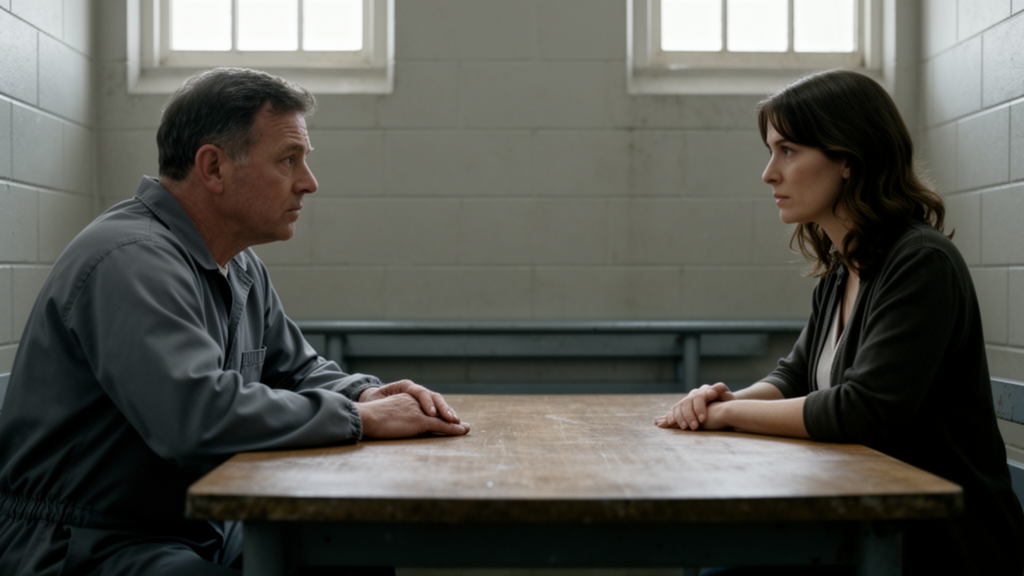
Image Credits: AI Generated

DOI: 10.1186/s40359-026-05843-1

Keywords: forgiveness, self-forgiveness, apology, incarceration, qualitative research, moral psychology, stigma, desistance, gender differences, rehabilitation, shame, guilt

Cite Scienmag News

Glenn Wilkins. (October 24, 2026). Apology and forgiveness seen as uncertain moral horizons among incarcerated men and women. Scienmag. https://scienmag.com/apology-and-forgiveness-seen-as-uncertain-moral-horizons-among-incarcerated-men-and-women/


Glenn Wilkins. "Apology and forgiveness seen as uncertain moral horizons among incarcerated men and women." Scienmag, 24 October 2026, https://scienmag.com/apology-and-forgiveness-seen-as-uncertain-moral-horizons-among-incarcerated-men-and-women/. Accessed 24 October 2026.

Glenn Wilkins. "Apology and forgiveness seen as uncertain moral horizons among incarcerated men and women." Scienmag. October 24, 2026. https://scienmag.com/apology-and-forgiveness-seen-as-uncertain-moral-horizons-among-incarcerated-men-and-women/

Tags: apologyapology as moral actdesistanceemotional experiences of inmatesforgivenessforgiveness uncertaintygender differencesguiltIncarcerated individualsincarcerationinterpersonal forgiveness dynamicsmoral horizons in prisonmoral psychologymoral responsibilityprisoner rehabilitationqualitative analysis of apology and forgivenessqualitative researchrehabilitationrepair and acknowledgmentself-forgivenessshamestigmastigma and moral worth
Share26Tweet16
Previous Post

Snake Bean and Cucumber Show Strong Salinity Tolerance at Germination in Coastal Bangladesh Study

Next Post

Breast Cancer Around Pregnancy Linked to Poorer Survival in Chinese Cohort

Related Posts

Online Classes Show Lower Attention, Motivation and Retention in University Students
Psychology & Psychiatry

Online Classes Show Lower Attention, Motivation and Retention in University Students

October 24, 2026
Caregiver burden and family ties shape anticipatory grief in cancer caregiving
Psychology & Psychiatry

Caregiver burden and family ties shape anticipatory grief in cancer caregiving

October 24, 2026
Fathers’ Breastfeeding Confidence Linked to Stronger Infant Bonds Through Mood
Psychology & Psychiatry

Fathers’ Breastfeeding Confidence Linked to Stronger Infant Bonds Through Mood

October 24, 2026
Poverty, Tradition and Law Converge to Sustain Child Marriage in Iran
Psychology & Psychiatry

Poverty, Tradition and Law Converge to Sustain Child Marriage in Iran

October 24, 2026
Video psychiatry consultations rose more than fivefold in Australia as provision dispersed
Psychology & Psychiatry

Video psychiatry consultations rose more than fivefold in Australia as provision dispersed

October 24, 2026
Measuring the Quiet Acceptance of Death: Review Maps 12 Psychological Scales and Their Evidence
Psychology & Psychiatry

Measuring the Quiet Acceptance of Death: Review Maps 12 Psychological Scales and Their Evidence

October 24, 2026
Next Post
Breast Cancer Around Pregnancy Linked to Poorer Survival in Chinese Cohort

Breast Cancer Around Pregnancy Linked to Poorer Survival in Chinese Cohort

  • Mothers who receive childcare support from maternal grandparents show more optimized

    Mothers who receive childcare support from maternal grandparents show more parental warmth, finds NTU Singapore study

    27656 shares
    Share 11059 Tweet 6912
  • University of Seville Breaks 120-Year-Old Mystery, Revises a Key Einstein Concept

    1061 shares
    Share 424 Tweet 265
  • Bee body mass, pathogens and local climate influence heat tolerance

    682 shares
    Share 273 Tweet 171
  • Researchers record first-ever images and data of a shark experiencing a boat strike

    546 shares
    Share 218 Tweet 137
  • Groundbreaking Clinical Trial Reveals Lubiprostone Enhances Kidney Function

    531 shares
    Share 212 Tweet 133
Science

Embark on a thrilling journey of discovery with Scienmag.com—your ultimate source for cutting-edge breakthroughs. Immerse yourself in a world where curiosity knows no limits and tomorrow’s possibilities become today’s reality!

RECENT NEWS

  • Breast Cancer Around Pregnancy Linked to Poorer Survival in Chinese Cohort
  • Apology and forgiveness seen as uncertain moral horizons among incarcerated men and women
  • Snake Bean and Cucumber Show Strong Salinity Tolerance at Germination in Coastal Bangladesh Study
  • Random-Forest Phasing Tool Nearly Doubles Contiguity of Diploid Genome Assemblies

Categories

  • Agriculture
  • Anthropology
  • Archaeology
  • Athmospheric
  • Biology
  • Biotechnology
  • Blog
  • Bussines
  • Cancer
  • Chemistry
  • Climate
  • Earth Science
  • Editorial Policy
  • Marine
  • Mathematics
  • Medicine
  • Pediatry
  • Policy
  • Psychology & Psychiatry
  • Science Education
  • Science News
  • Social Science
  • Space
  • Technology and Engineering

Subscribe to Blog via Email

Enter your email address to subscribe to this blog and receive notifications of new posts by email.

Join 5,152 other subscribers

© 2025 Scienmag - Science Magazine

Welcome Back!

Login to your account below

Forgotten Password?

Retrieve your password

Please enter your username or email address to reset your password.

Log In
No Result
View All Result
  • HOME
  • SCIENCE NEWS
  • CONTACT US

© 2025 Scienmag - Science Magazine

Discover more from Science

Subscribe now to keep reading and get access to the full archive.

Continue reading