


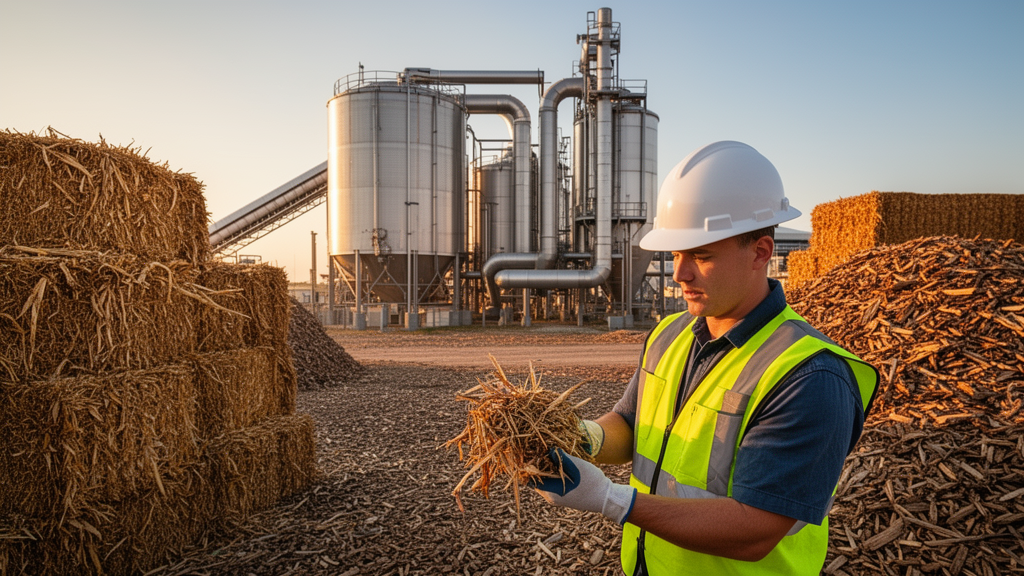
Lignocellulosic biomass is increasingly recognised as a sustainable feedstock for biofuel production, with an estimated global availability of approximately 200 billion tons annually. A new review published in Discover Sustainability examines why, despite this abundance and years of technological progress, large-scale commercialisation of lignocellulosic biofuels remains elusive. The authors, led by Ncumisa Mpongwana, critically evaluate global progress in biorefinery development, focusing on technological advances, policy interventions and the enabling factors that support biofuel deployment.
The review documents considerable variation in technological maturity across conversion pathways. Bioethanol production and anaerobic digestion have both reached Technology Readiness Level 9, the highest level, indicating proven operation in commercial environments. Syngas fermentation, by contrast, remains at TRL 6 to 7, meaning the technology has been demonstrated at relevant scales but has not yet achieved full commercial deployment. These differences in maturity help explain why some lignocellulosic conversion routes have advanced further toward the market than others.
Global liquid biofuel production has reached approximately 175 to 180 billion litres in 2024, with bioethanol accounting for about 75 percent of that volume and biodiesel the remaining 25 percent. The market is heavily concentrated: the United States contributes roughly 50 percent of global bioethanol production, while Brazil accounts for approximately 39 percent. This concentration highlights how a small number of countries dominate current supply, even as interest in lignocellulosic feedstocks spreads more widely.
Despite these technological advances and successful pilot- and commercial-scale demonstrations, the review finds that widespread biorefinery deployment continues to be constrained by a combination of technical, economic, policy and infrastructural barriers. The authors examine these principal obstacles to large-scale implementation in detail, arguing that no single barrier alone explains the slow pace of commercialisation. Instead, the interaction between conversion challenges, unfavourable economics, inconsistent policy support and inadequate infrastructure has collectively limited the number of biorefineries reaching full commercial operation.
To address these constraints, the review proposes strategies for accelerating the commercialisation and long-term sustainability of lignocellulosic biorefineries. While the specific policy and technical recommendations are detailed in the full paper, the overall message is that closing the gap between demonstrated technology and widespread deployment will require coordinated action across the technical, economic and regulatory dimensions simultaneously. As global demand for alternatives to fossil fuels grows, the authors argue that lignocellulosic biomass remains a promising route, provided the identified barriers are systematically overcome.
Subject of Research: Production constraints and policy influences on the global commercialisation of lignocellulosic biofuels
Article Title: Production constraints and policy influences on the global commercialisation of lignocellulosic biofuels and future prospects
Article References: Mpongwana, N., Ndaba, B., Patel, B., & Liganiso, L. Z. (2026). Production constraints and policy influences on the global commercialisation of lignocellulosic biofuels and future prospects. Discover Sustainability. https://doi.org/10.1007/s43621-026-04984-y
Image Credits: AI Generated
DOI: 10.1007/s43621-026-04984-y
Keywords: lignocellulosic biomass, biofuels, bioethanol, biorefinery, anaerobic digestion, syngas fermentation, technology readiness level, biofuel policy, commercialisation barriers, sustainable energy, Production, constraints
Cite Scienmag News
Violet Maxwell. (October 24, 2026). Lignocellulosic Biofuels Face Steep Commercial Barriers Despite Technological Maturity. Scienmag. https://scienmag.com/lignocellulosic-biofuels-face-steep-commercial-barriers-despite-technological-maturity/
Violet Maxwell. "Lignocellulosic Biofuels Face Steep Commercial Barriers Despite Technological Maturity." Scienmag, 24 October 2026, https://scienmag.com/lignocellulosic-biofuels-face-steep-commercial-barriers-despite-technological-maturity/. Accessed 24 October 2026.
Violet Maxwell. "Lignocellulosic Biofuels Face Steep Commercial Barriers Despite Technological Maturity." Scienmag. October 24, 2026. https://scienmag.com/lignocellulosic-biofuels-face-steep-commercial-barriers-despite-technological-maturity/


