


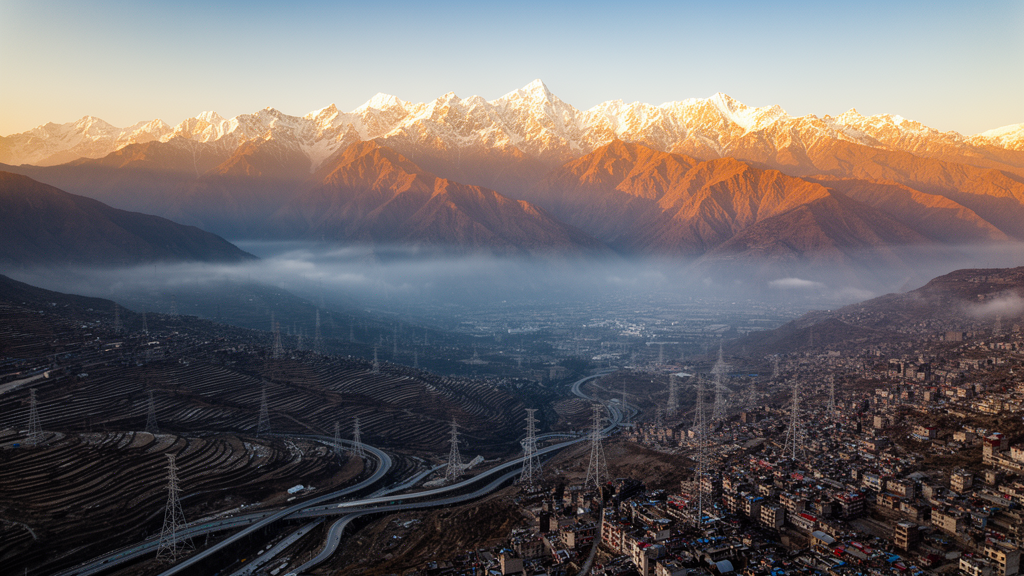
More than 60 percent of the world's mountain ranges are exposed to elevated human pressure, and the intensification of that pressure between 2000 and 2020 was associated with the loss of 71.69 million hectares of natural mountain habitat, according to a new global assessment published in Nature Communications. Mountains host rich biodiversity and often act as last refuges for species under growing human pressure, yet the extent and recent trajectory of anthropogenic impacts on mountain biodiversity had remained poorly understood at the global scale. To close that gap, Jianfeng Sun and colleagues evaluated spatio-temporal changes in human pressure across 6717 mountain ranges worldwide from 2000 to 2020, quantifying both the current footprint and the pace of change over two decades.
The team then projected future exposure to anthropogenic pressures under three Shared Socioeconomic Pathways, scenarios that describe alternative global development trajectories. They identified mountain ranges where high biodiversity importance coincides with limited protection and elevated future exposure to land-use change, and found that the priority rankings of these ranges remained broadly consistent across the different socioeconomic scenarios, suggesting the identified priorities are robust to uncertainty about which development path the world follows. Vertebrates emerged as a particular concern.
The analysis found that 4234 mountain vertebrate species have less than 10 percent of their mountain-specific area of habitat represented within protected areas, and that 1165 of these species are classified as threatened. This representation gap means that existing protected-area networks capture only a small fraction of the mountain habitat on which thousands of vertebrate species depend. Protected areas themselves provided incomplete buffering from human pressure.
The study found that human activities still penetrate many designated sites, weakening the assumption that formal protection alone insulates mountain biodiversity from surrounding development, even where conservation designations exist on paper. By pinpointing ranges where high biodiversity value, protection gaps, and future pressure overlap, the researchers highlight mountain systems where future conservation action could contribute to global biodiversity targets. The results identify persistent conservation gaps and provide a spatial basis for deciding where expanded protection and targeted management could deliver the greatest benefit for mountain vertebrates under an uncertain range of socioeconomic futures.
Subject of Research: Intensified human pressures threaten global mountain vertebrate biodiversity
Article Title: Intensified human pressures threaten global mountain vertebrate biodiversity
Article References: Sun, J., Li, G., Cao, Y., Zhang, Y., Watson, J. E. M., & Liu, J. (2026). Intensified human pressures threaten global mountain vertebrate biodiversity. Nature Communications. https://doi.org/10.1038/s41467-026-78392-1
Image Credits: AI Generated
DOI: 10.1038/s41467-026-78392-1
Keywords: Intensified, human, pressures, threaten, global, mountain, vertebrate, biodiversity, scientific research
Cite Scienmag News
Margaret Porter. (October 24, 2026). Human Pressure Intensifies Across Most of the World’s Mountain Ranges. Scienmag. https://scienmag.com/human-pressure-intensifies-across-most-of-the-worlds-mountain-ranges/
Margaret Porter. "Human Pressure Intensifies Across Most of the World’s Mountain Ranges." Scienmag, 24 October 2026, https://scienmag.com/human-pressure-intensifies-across-most-of-the-worlds-mountain-ranges/. Accessed 24 October 2026.
Margaret Porter. "Human Pressure Intensifies Across Most of the World’s Mountain Ranges." Scienmag. October 24, 2026. https://scienmag.com/human-pressure-intensifies-across-most-of-the-worlds-mountain-ranges/


